


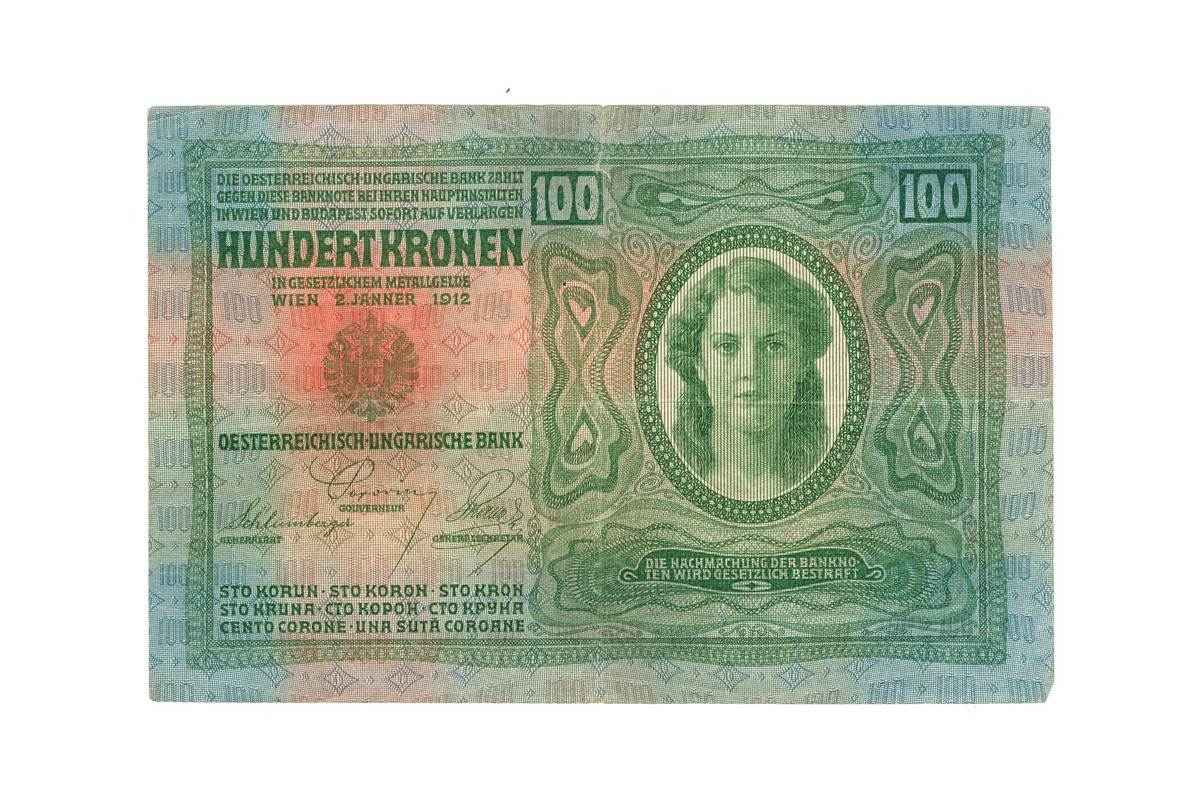
The crown (krone) was the monetary unit of Austria-Hungary from 1892 to 1918; it also circulated in the Ukrainian territories that were part of the empire. After the formation of the Western Ukrainian People’s Republic on former Austrian lands it served as a temporary monetary unit alongside the hryvnia. The issuance of 100 crown banknotes began in 1902. Their dominant elements were idealized female portraits. The absence of watermarks was its characteristic feature. The sheets featured dark, multi-colored pseudo-relief protective grids and background inscriptions of the number "100." The primary color is green.
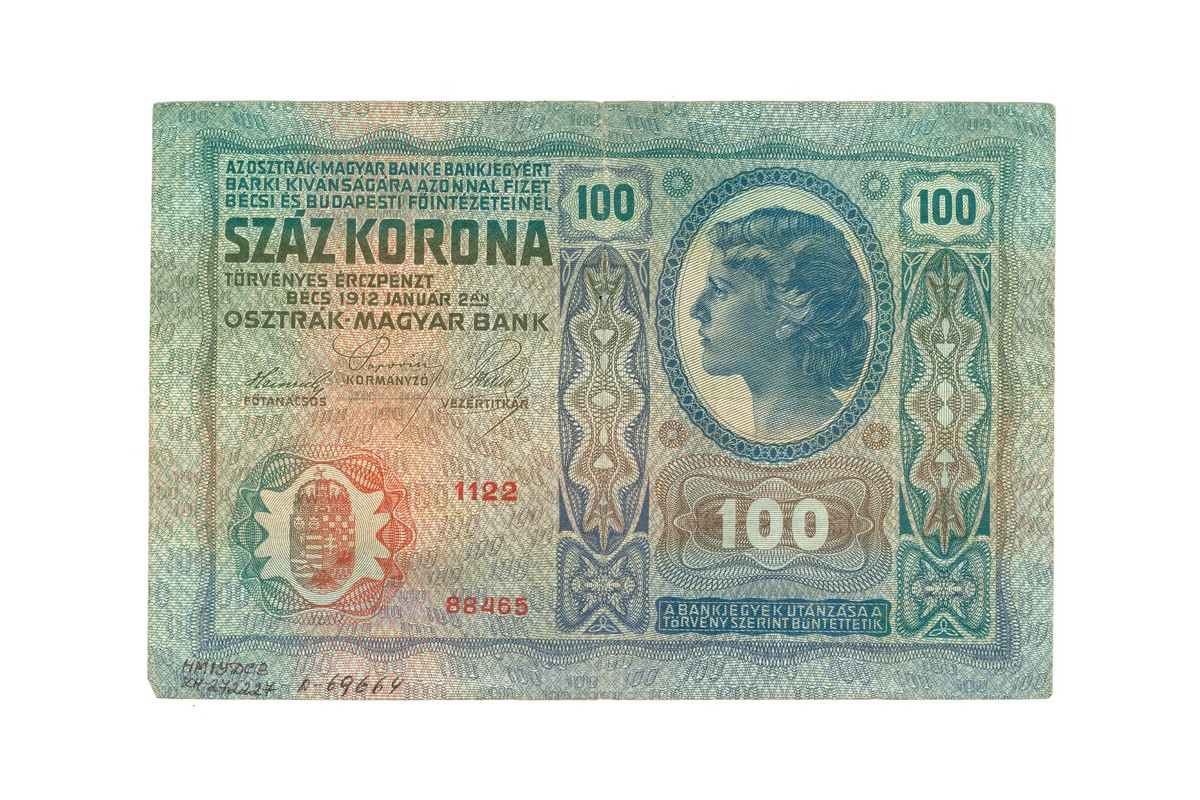
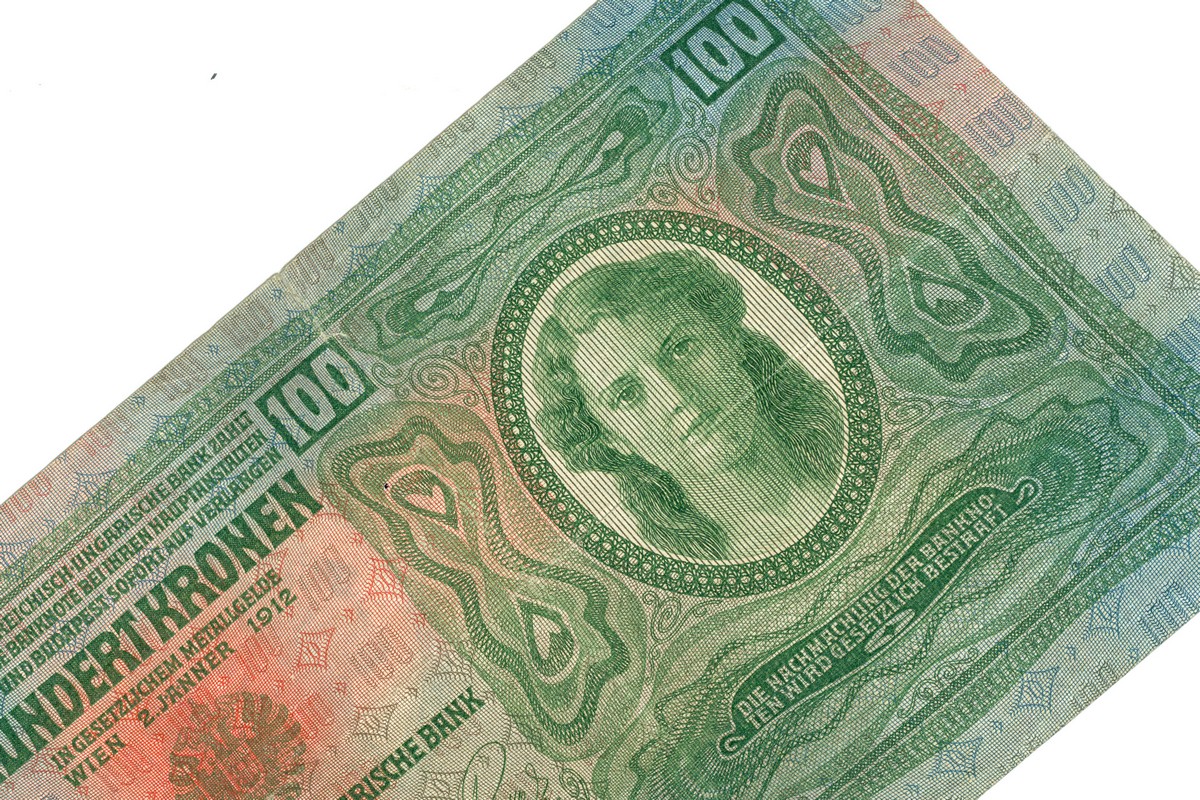
Obverse (Austrian side): In the center of the left section there is the small coat of arms of Austria. Above it there are the inscriptions: "Austro-Hungarian Bank," "Banknote valid at the main branches in Vienna and Budapest," "One hundred crowns," "Equivalent to metallic currency," and the date "January 2, 1912." Below the coat of arms there is the inscription: “Austro-Hungarian Bank” and the signatures of the bank`s board members. At the bottom, the currency name is listed in the various languages of the empire’s peoples. On the right, within an oval, there is a full-face portrait of a woman; above it, the denomination is repeated in numerals. At the bottom there is the warning: "Counterfeiting banknotes is punished by law."
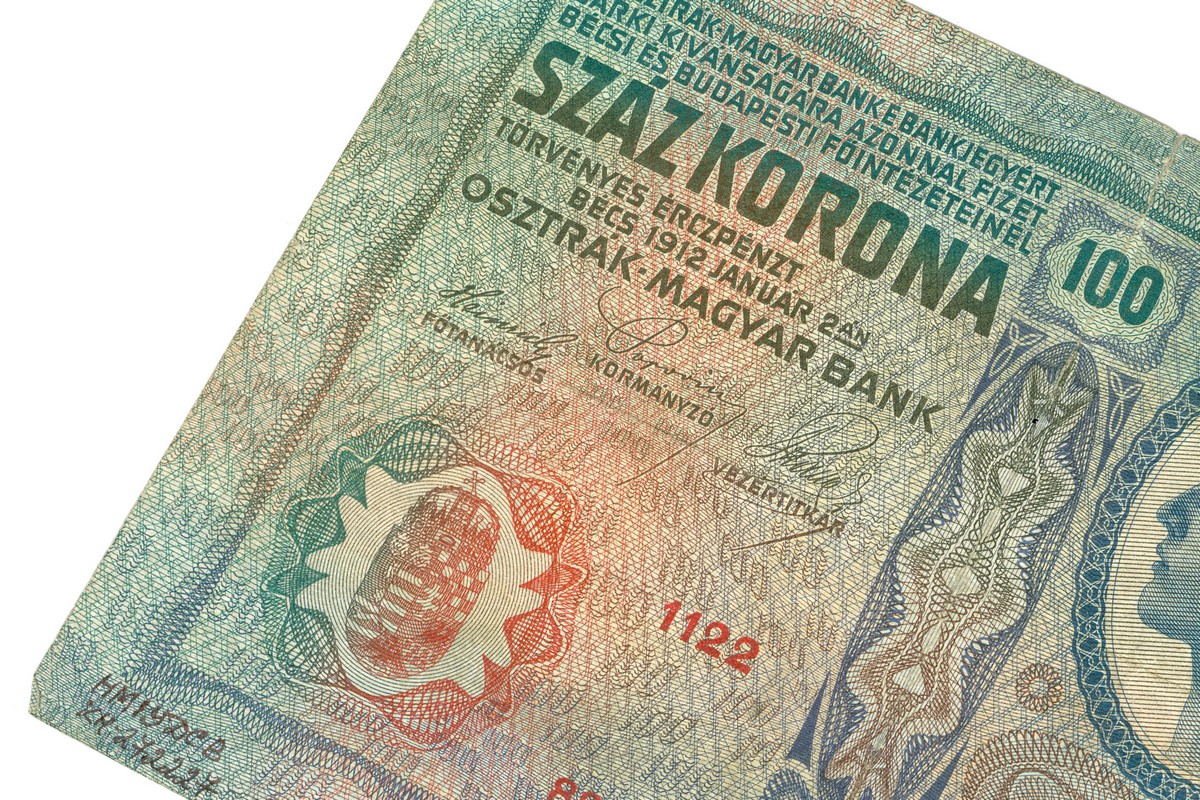
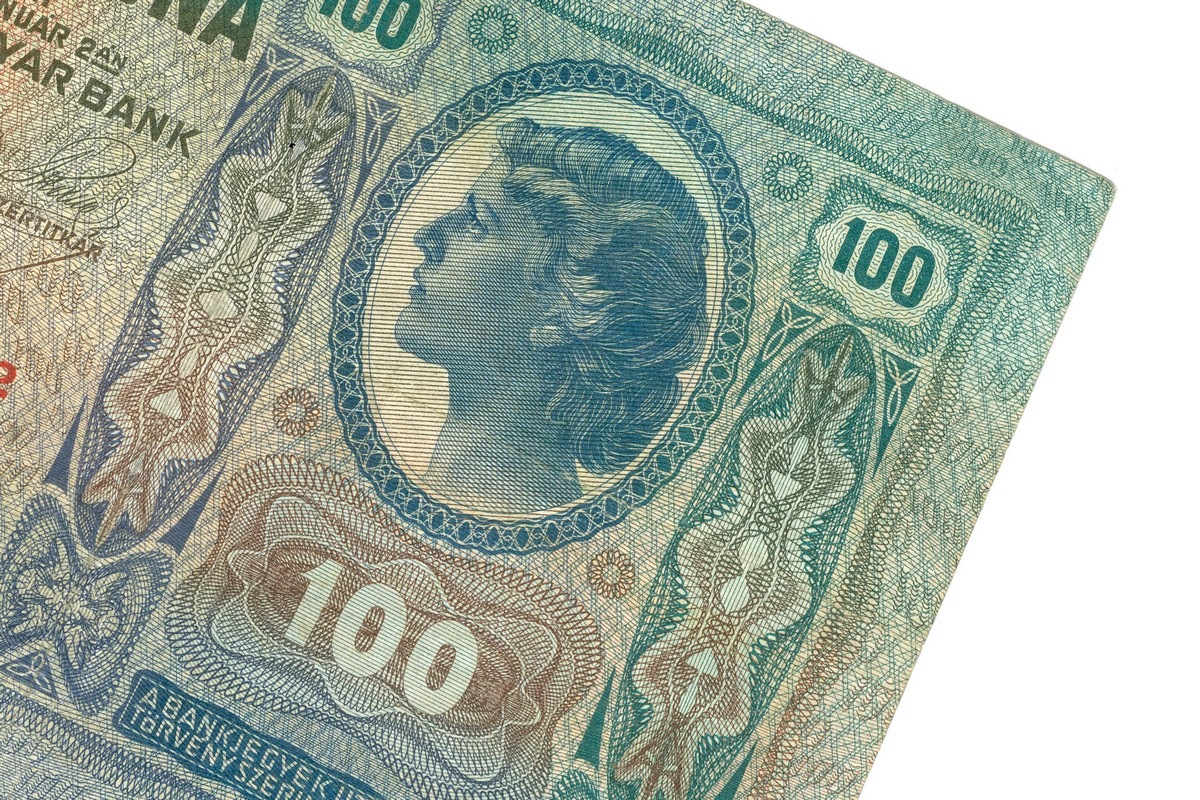
Reverse (Hungarian side): On the left there are inscriptions similar to those on the Austrian side. At the bottom there is the small coat of arms of Hungary, along with the series and serial number (1122 No. 88465). On the right within an oval there is a profile portrait of a woman. The denomination is repeated in numerals above and below the portrait. At the bottom is the Hungarian warning: "Counterfeiting banknotes is punished by law