


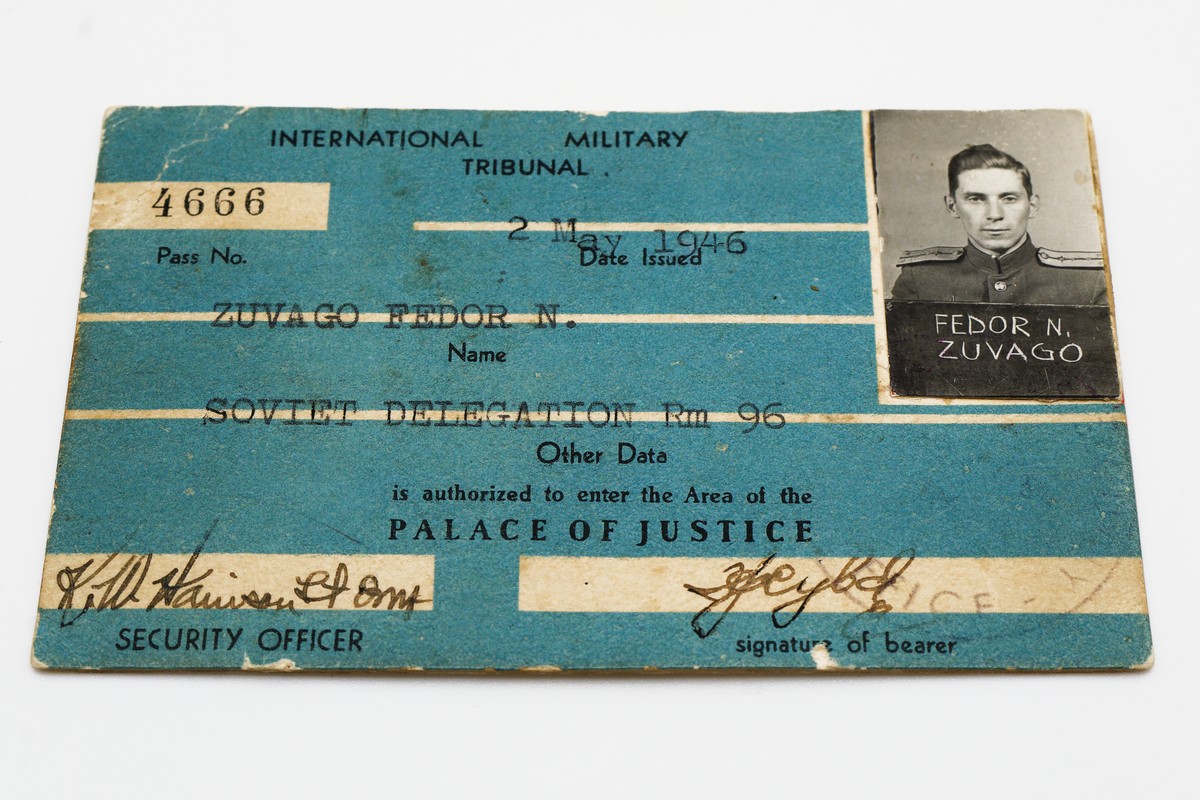
Fedor Zhuvago was born in the city of Izyum, in the Kharkiv region. He graduated from the Kyiv Military School of Communications. During World War II, he fought in Ukraine and across Europe. By 1945, Captain Fedor Zhuvago served as the head of radio communications for the 66th Separate Communications Regiment. As part of this regiment, he helped maintain the communications hub for the Potsdam Conference. There, he ensured the uninterrupted operation of information transmission channels for the Soviet delegation during the preparation and execution of the International Military Tribunal against Nazi war criminals.
The Nuremberg Trials were an international tribunal prosecuting representatives of the Third Reich for planning and executing invasions of other countries, alongside other World War II crimes. During the London Conference held from June 26 to August 8, 1945, the USSR, the USA, Great Britain, and France developed the agreement establishing the International Military Tribunal and its statute. This jointly developed document reflected the positions of all 23 participating nations, and the principles of the statute were subsequently approved by the UN General Assembly. During the trials, which lasted from November 20, 1945, to October 1, 1946, the court held 216 hearings. The International Military Tribunal prosecuted 21 of Nazi Germany’s top surviving political, military, and economic leaders, along with six German organizations. The Nuremberg Trials examined and formally condemned numerous testimonies of the Third Reich’s aggressive actions and colonial policies toward Ukraine. These included mass robbery, plunder, racism, genocide against the population, and unprecedented crimes committed in Nazi concentration camps and prisons. The proceedings were extensively covered by the international press from over 20 countries.
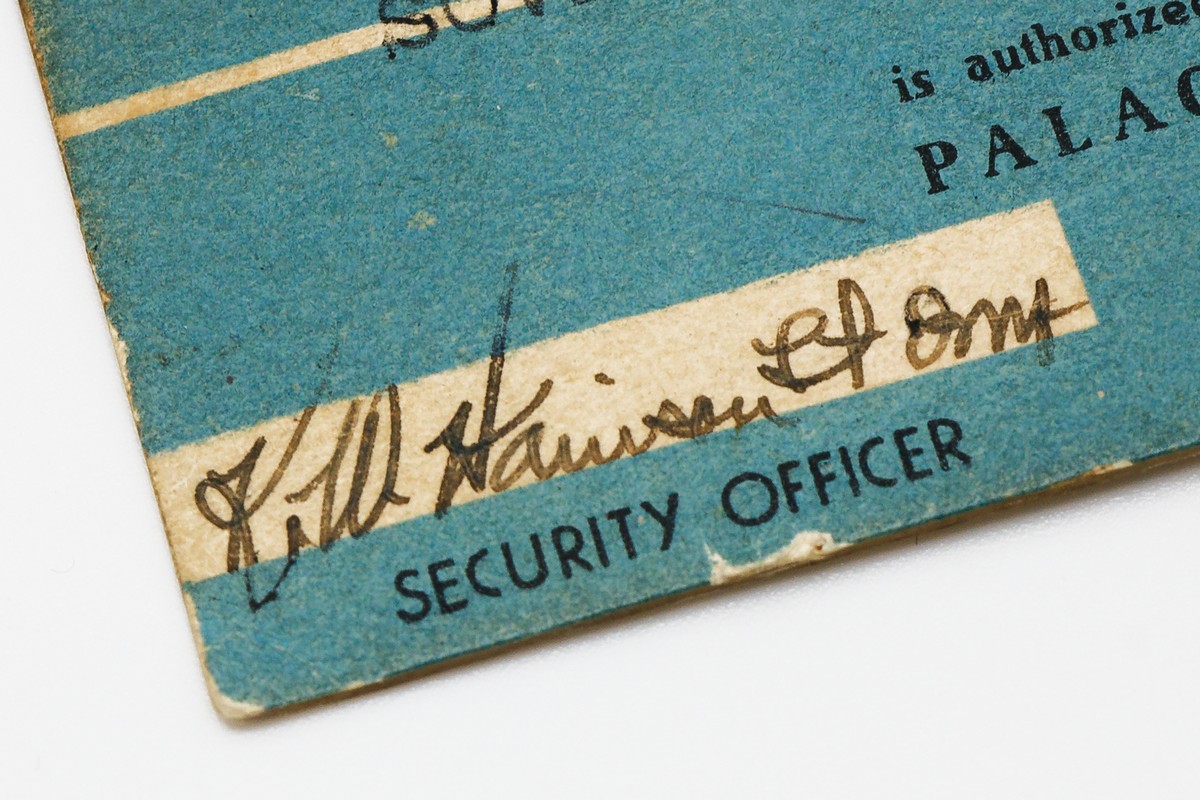
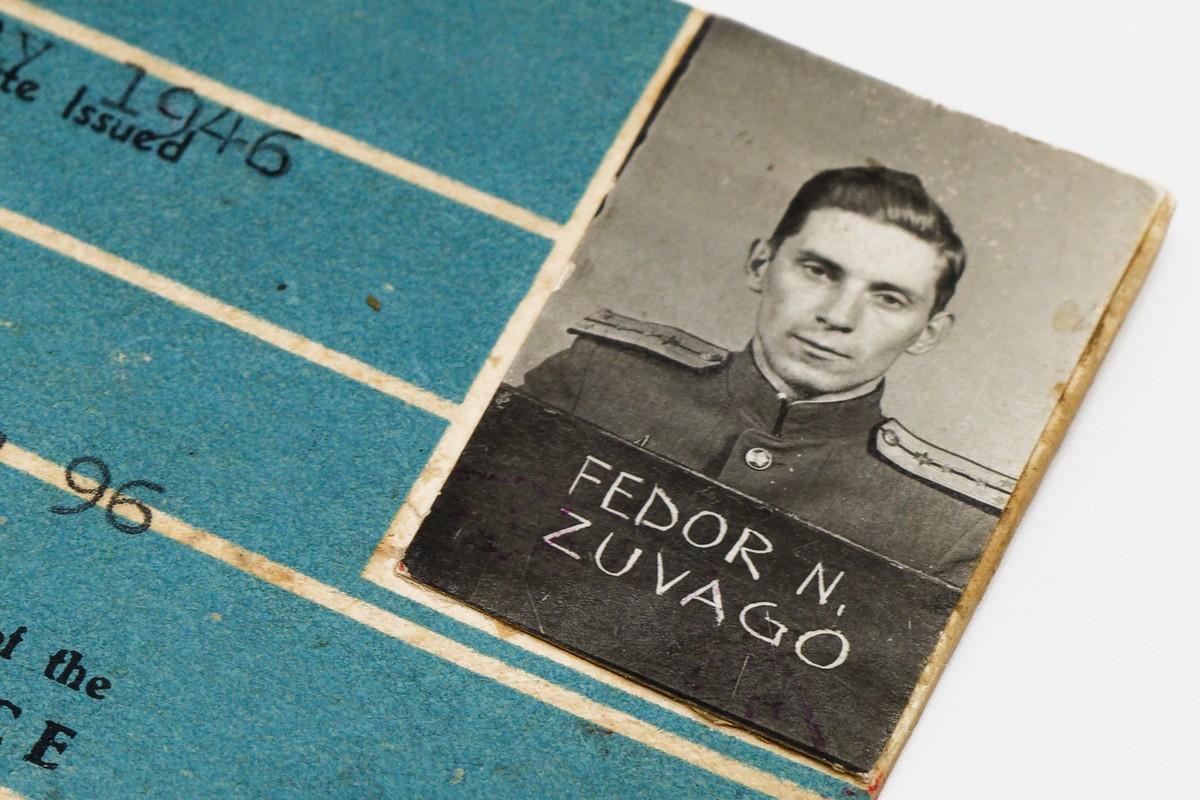
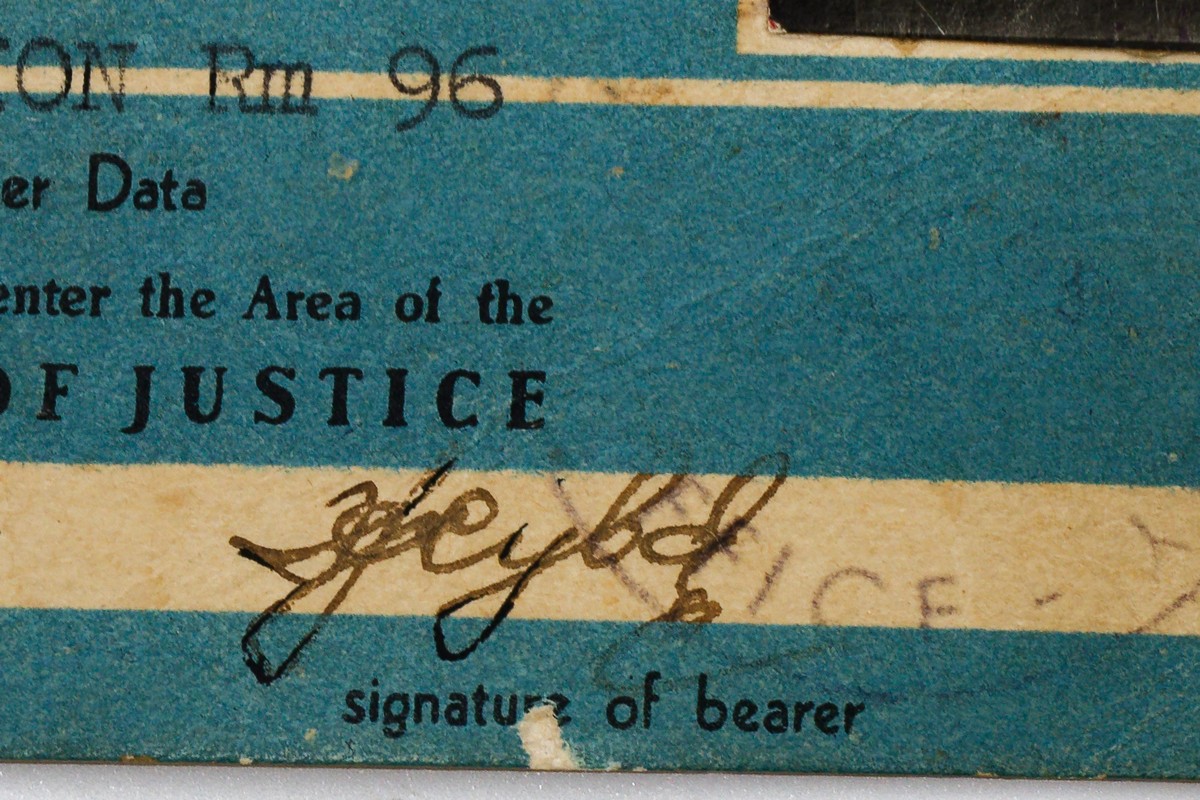
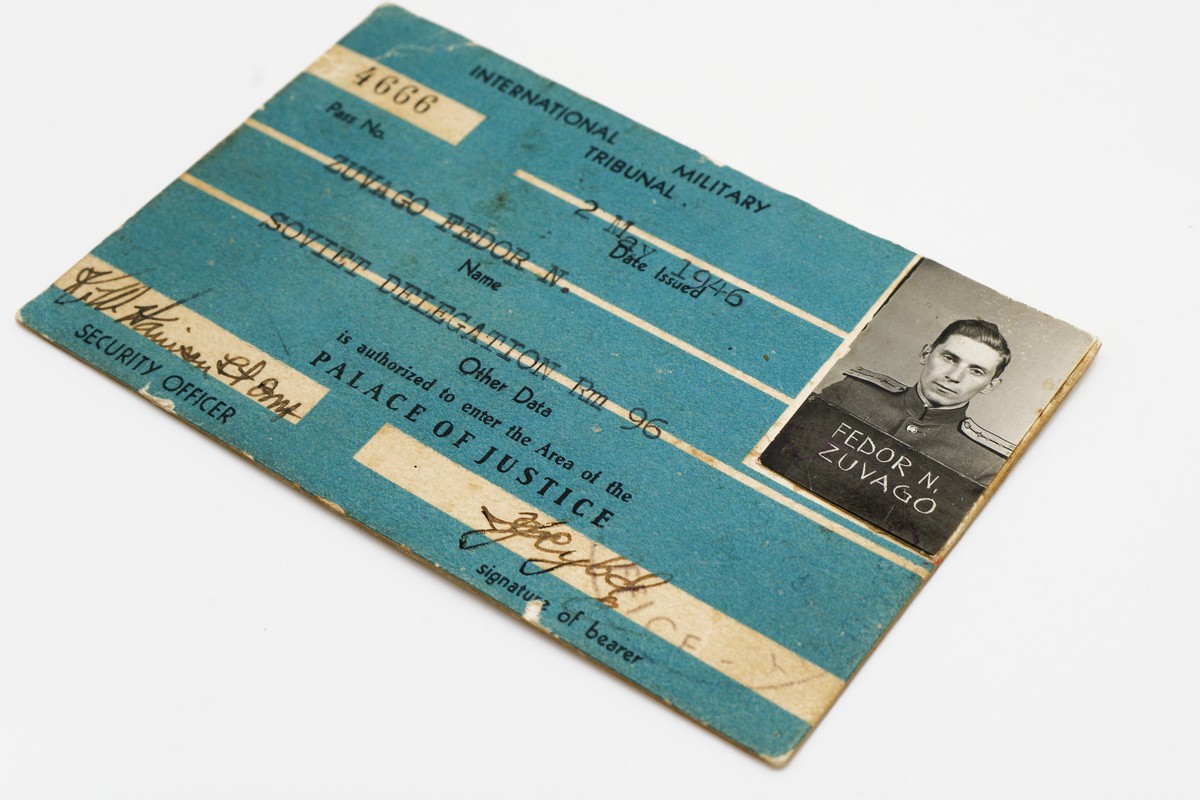
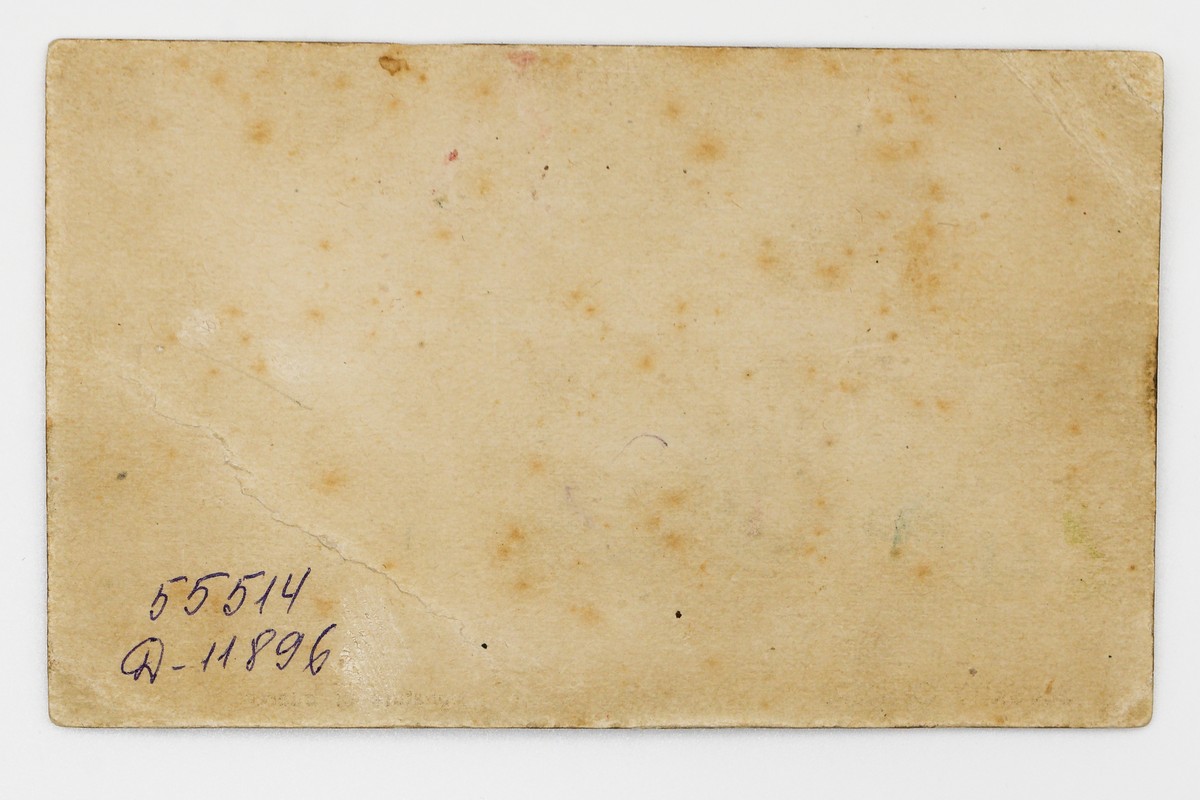
The tribunal pass is single-sided and printed typographically on a small sheet of thick blue paper featuring narrow, horizontal white stripes. It bears the name of the judicial body, "International Military Tribunal," and the document number 4666. The pass is filled out in black typescript, stamped with an official seal, and signed by both the guard and the document owner. In the upper right corner is a black-and-white portrait photograph of Fedor Zhuvago measuring 3.6 x 2.4 cm. The full-face image shows him without headwear, dressed in a military tunic with captain’s epaulets. According to the text on the pass, Fedor Zhuvago was authorized to enter the Palace of Justice.