


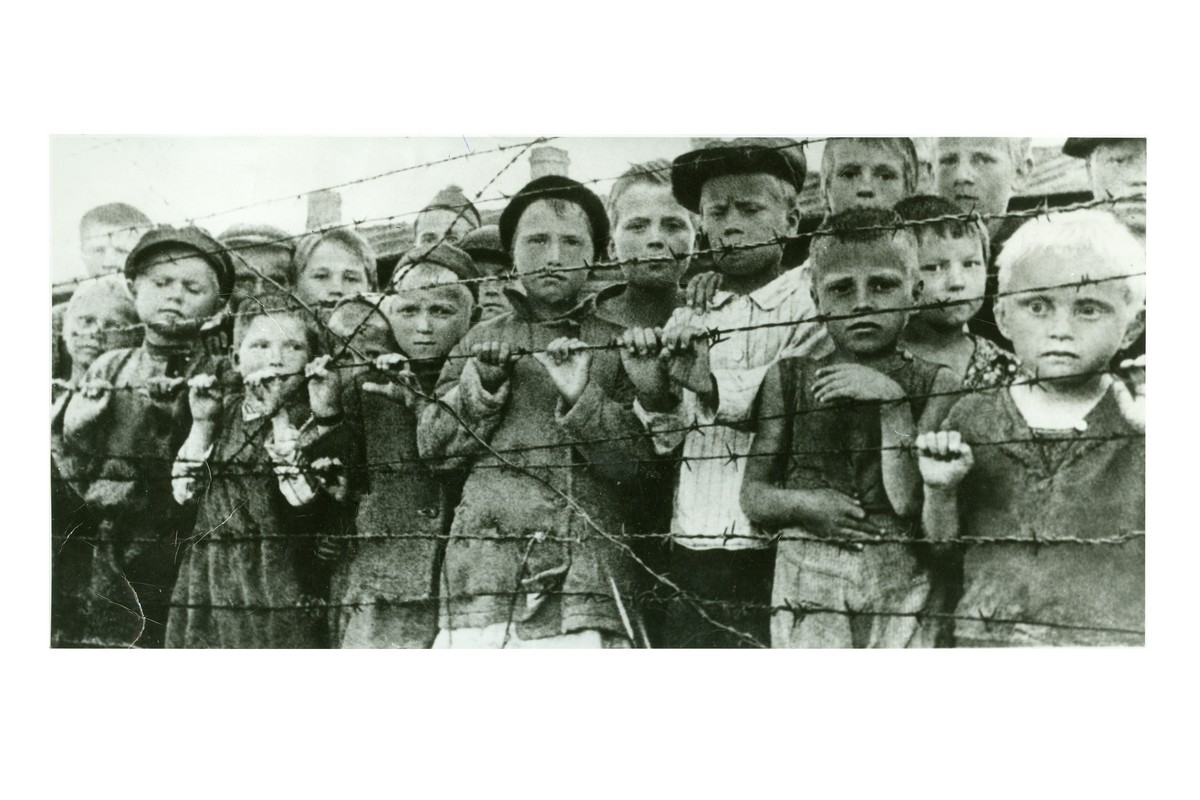
During the Second World War, approximately 2.5 million children were held in Nazi concentration camps. The conditions were extremely harsh: hunger, cold, forced labor, and epidemics. Imprisoned children suffered from exhaustion and disease; a significant proportion of them did not survive their imprisonment. According to claims made by the Soviet “Extraordinary State Commission for the Establishment and Investigation of the Crimes of the German-Fascist Invaders,” in such camps blood was regularly taken from children for wounded German servicemen, which ultimately led to their deaths.
A copy of this photograph is also included in the photo album The Great Patriotic War of 1941–1945 in Photographs and Film Documents. 1944 on the page 341. The photograph is captioned in Russian: “In July 1944, the Hitlerites deported about 40,000 children from the occupied countries to Germany and placed them behind barbed wire. The purpose? — To take blood from them for the treatment of the wounded, to conduct experiments on them with new poisons developed for the mass extermination of the populations of these countries. The photograph was found on a killed fascist who collected such ‘souvenirs’.”.
*Великая Отечественная война в фотографиях и кинодокументах. 1944. Фотоальбом. - Москва: Планета, 1979. - С.341.
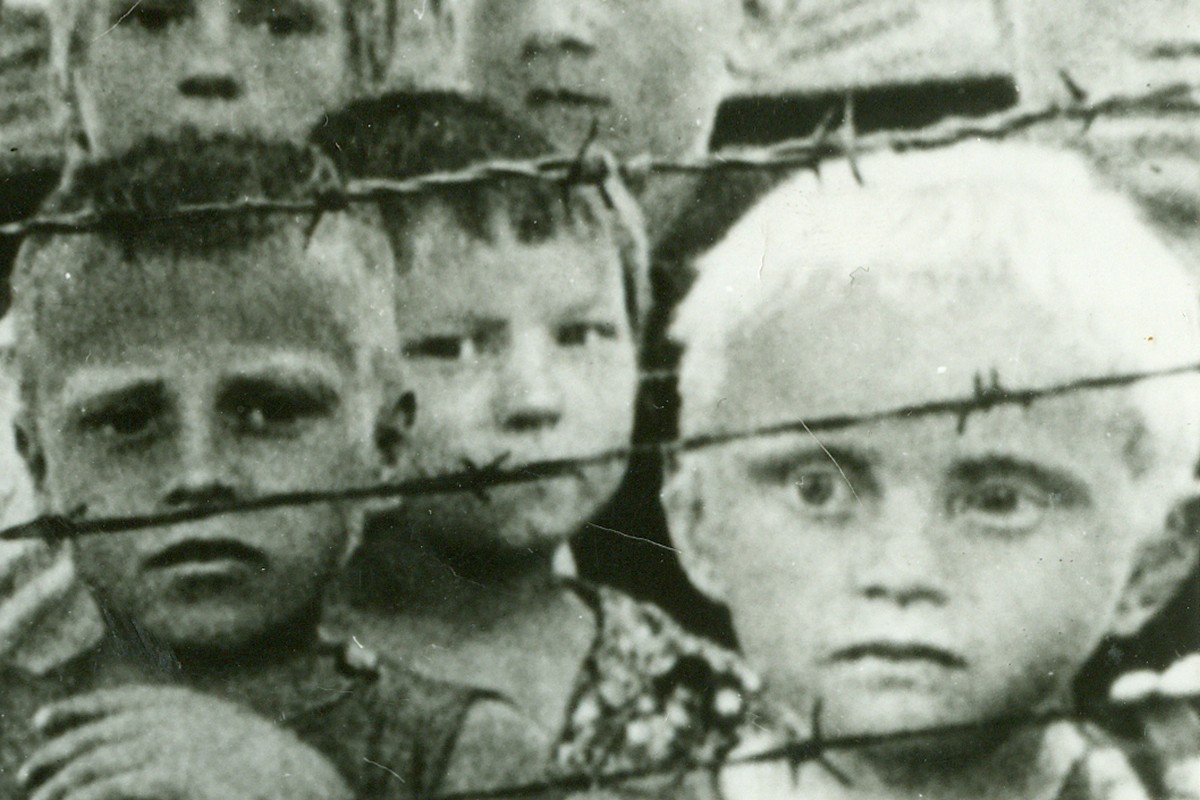
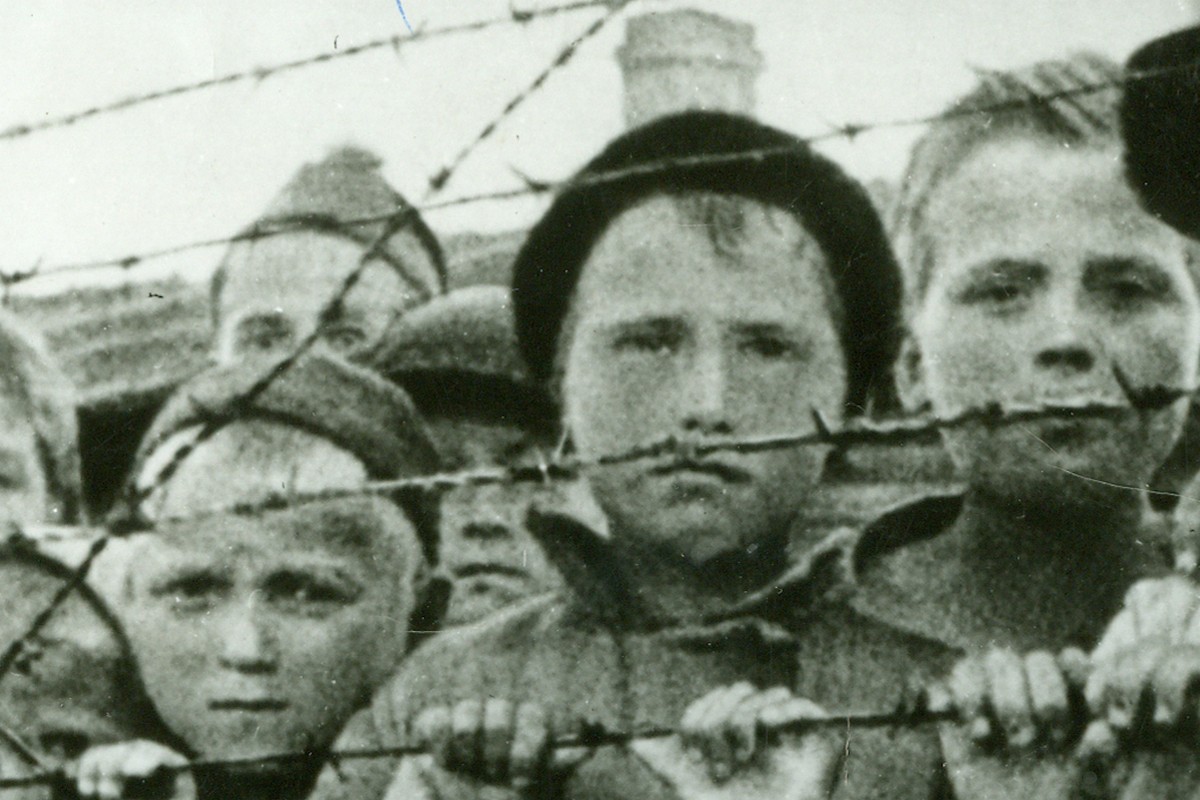
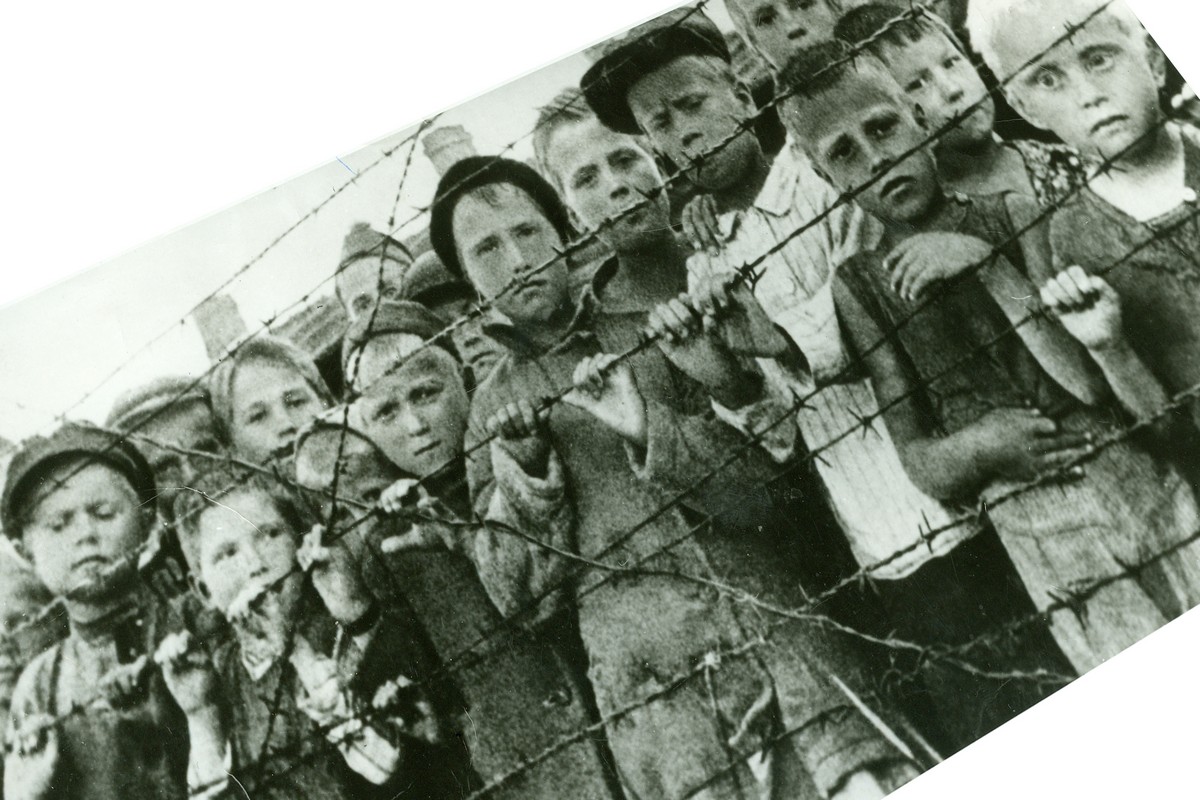
The photograph is black and white and horizontal. It depicts a group of children of different ages standing close together against a barbed-wire fence. Their faces appear emaciated; their clothing is simple and worn, and some of the children are wearing caps or hats. Several children are holding onto the wire with their hands. In the background, there is a pipe and the roof of a building. The composition is arranged so that the barbed wire runs directly at the level of the children’s faces.