


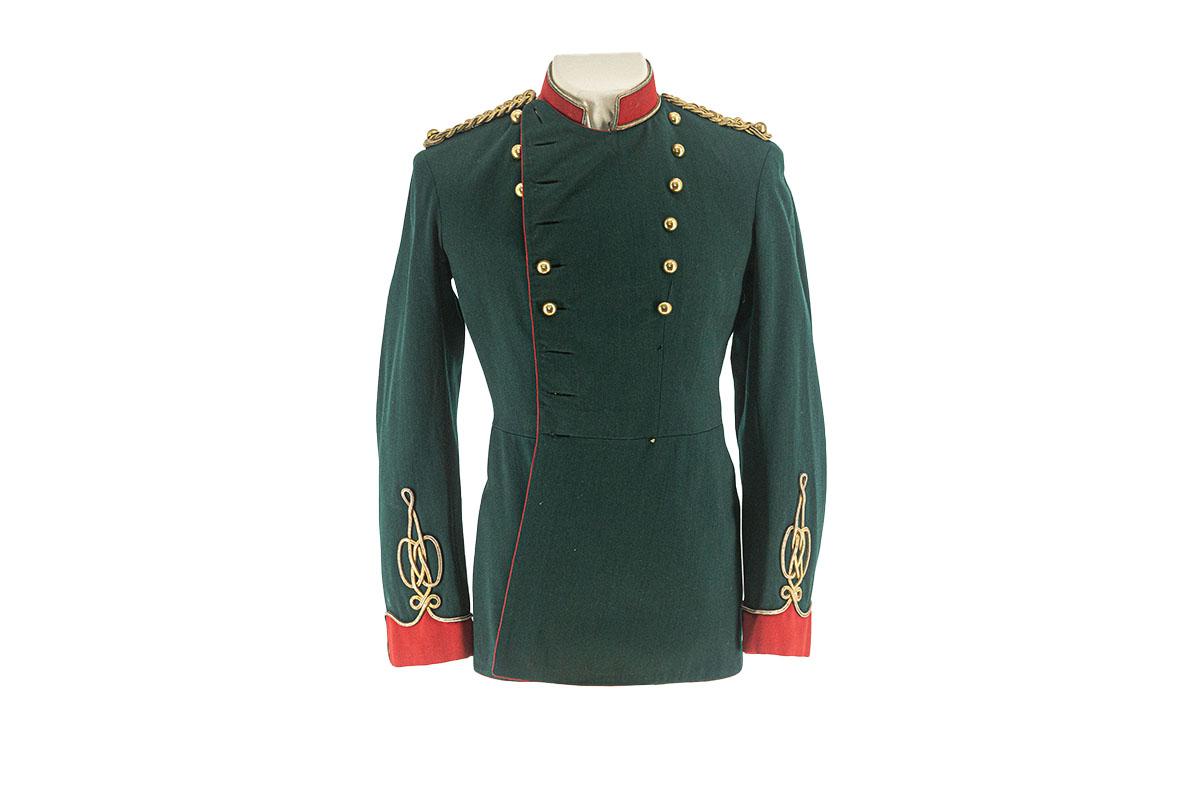
On February 23, 1945, the "Exhibition of Captured Weapons and Equipment in Kyiv" was opened, laying the foundation for the collection of the War Museum. Among its exhibits was the dress tunic of an officer of the Royal Hungarian Gendarmerie, model 1885.
The Hungarian Gendarmerie was established in 1876. Its main purpose was to maintain order in rural areas and suppress social unrest. In 1885, Hungary introduced its own gendarmerie uniform, consisting of a dark green fitted double-breasted tunic and blue trousers. During World War I, this uniform was also worn by members of the field gendarmerie. In that case, a black-and-yellow armband was added to the uniform.
From 1919 onward, the uniform of the Hungarian gendarme underwent significant changes, becoming almost identical to the Hungarian Army uniform of that time in both cut and color. The uniform of the Royal Hungarian Gendarmerie (1885–1919) was not merely clothing, but a symbol of state authority that combined Austrian military austerity with national Hungarian style.
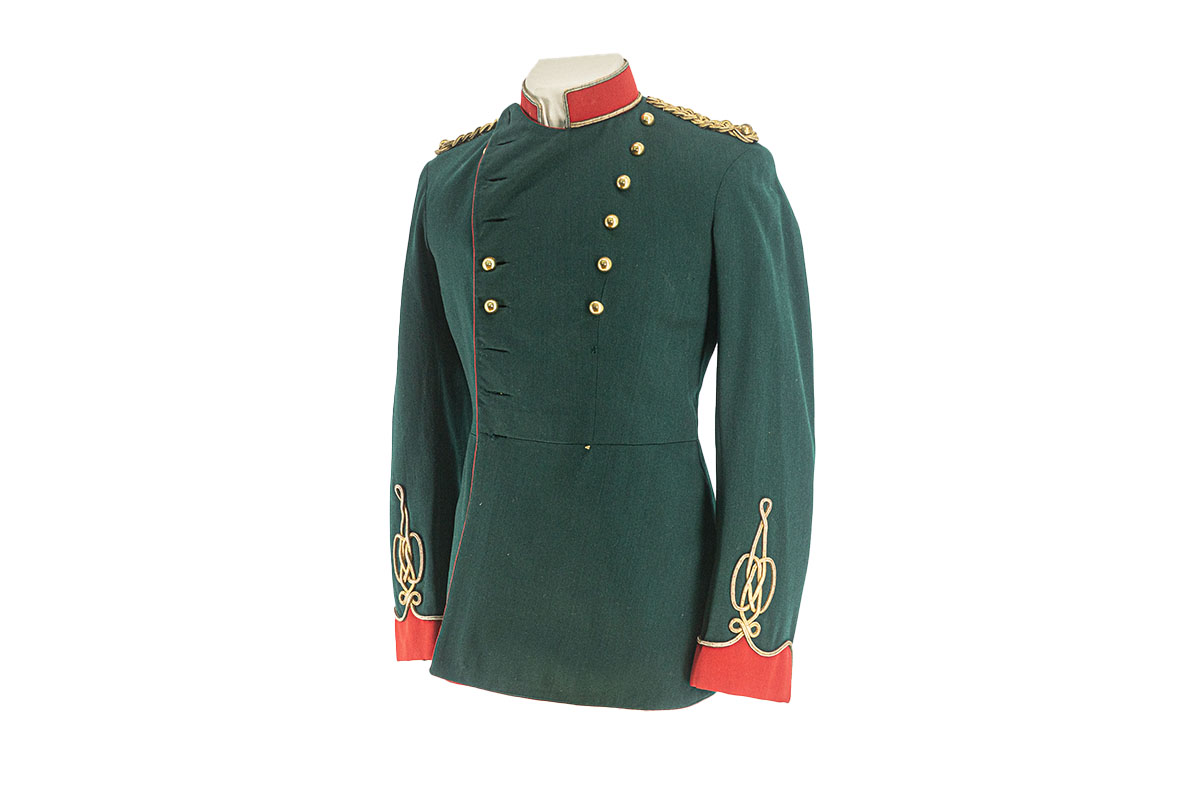
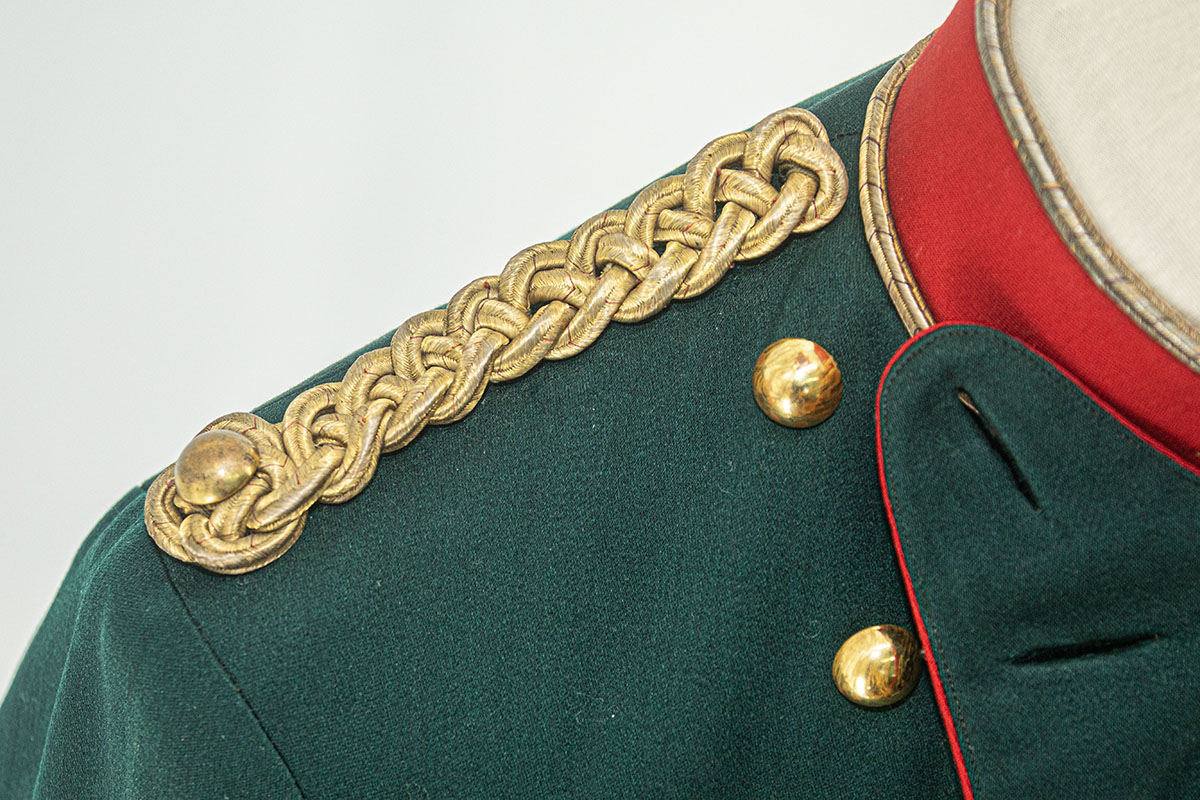
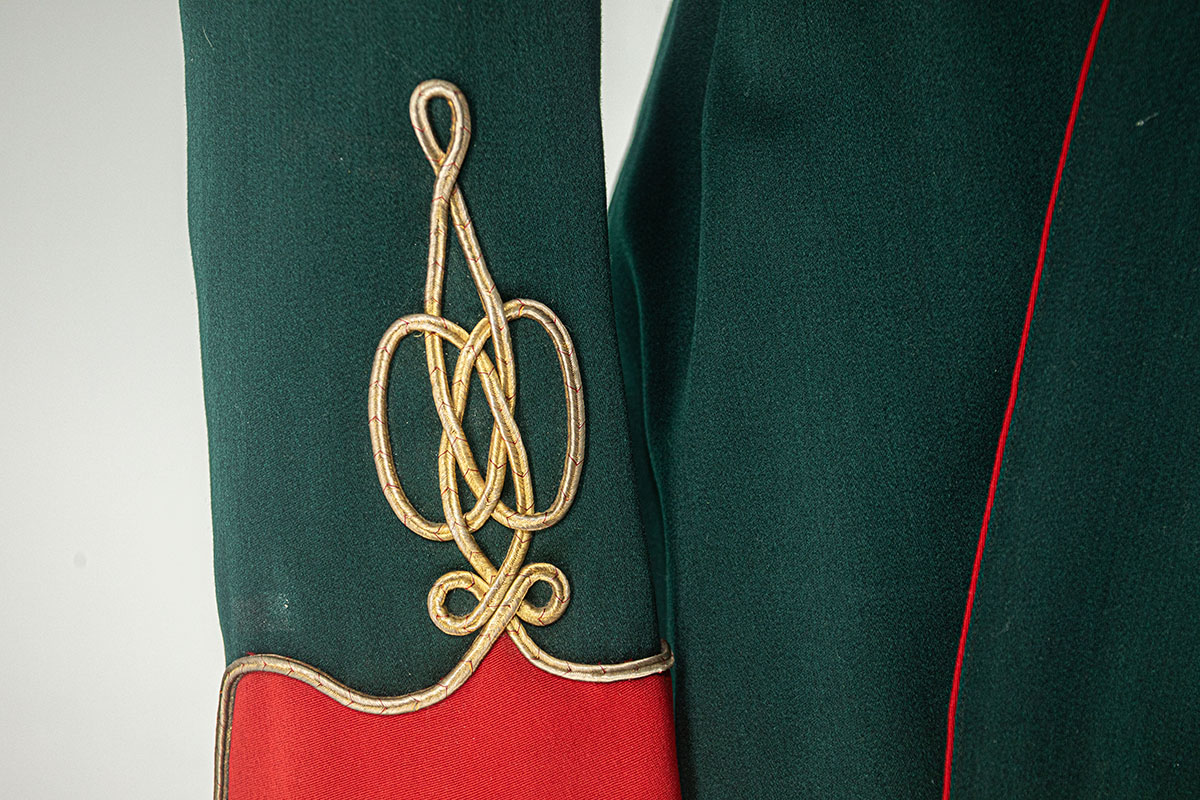
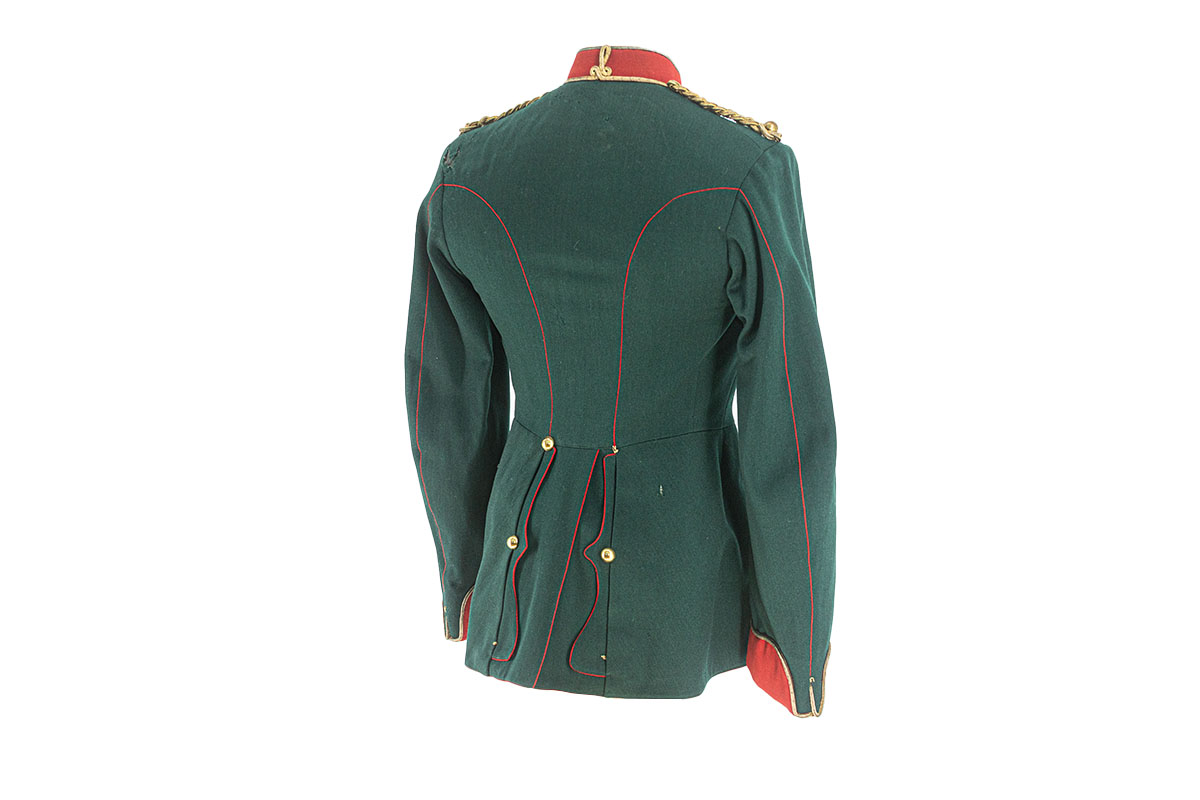
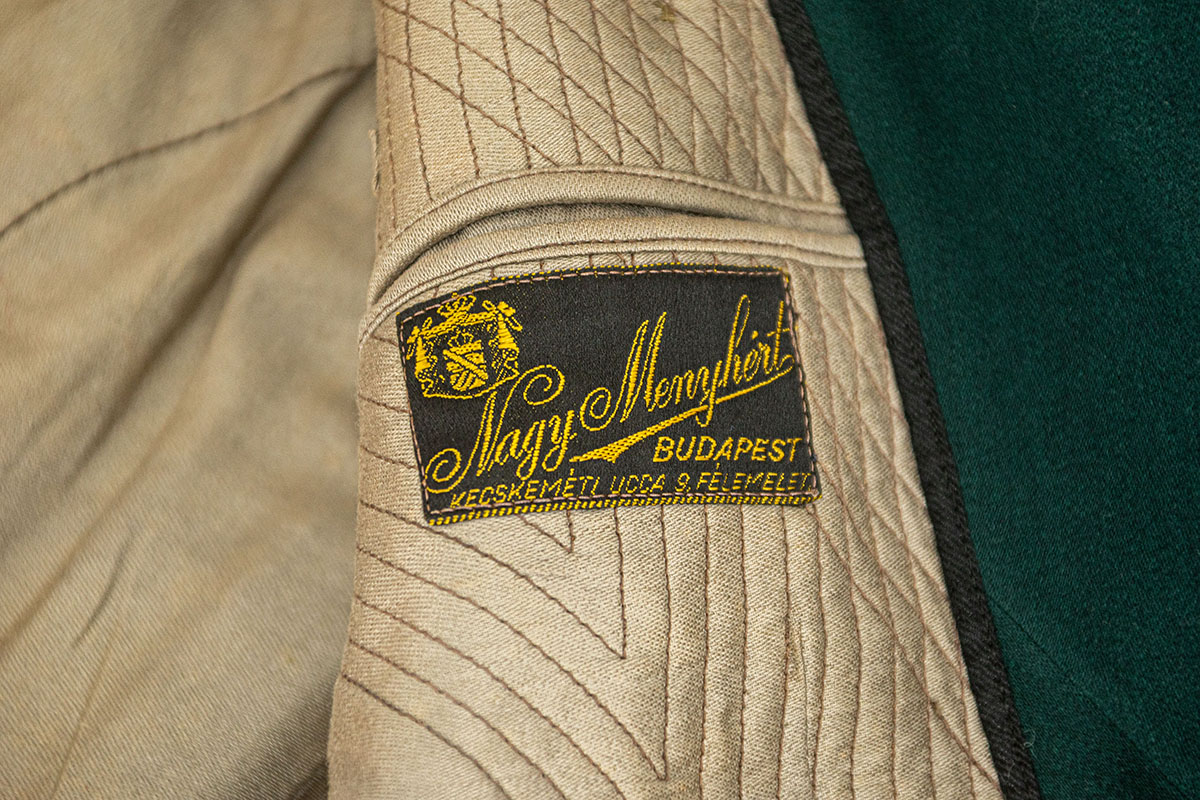
The double-breasted tunic is made of dark green woolen fabric, featuring piping, a collar, and cuffs in madder-red wool. The tunic fastens with nine gold-colored buttons, while another nine form a parallel decorative row. The sleeves are embroidered with gold-colored cord. On the shoulders, the tunic features characteristic braided gold cords ("knots"). The lining is made of red, gray, and white cotton fabric. Inside, there is a label containing the manufacturer’s name and address.