


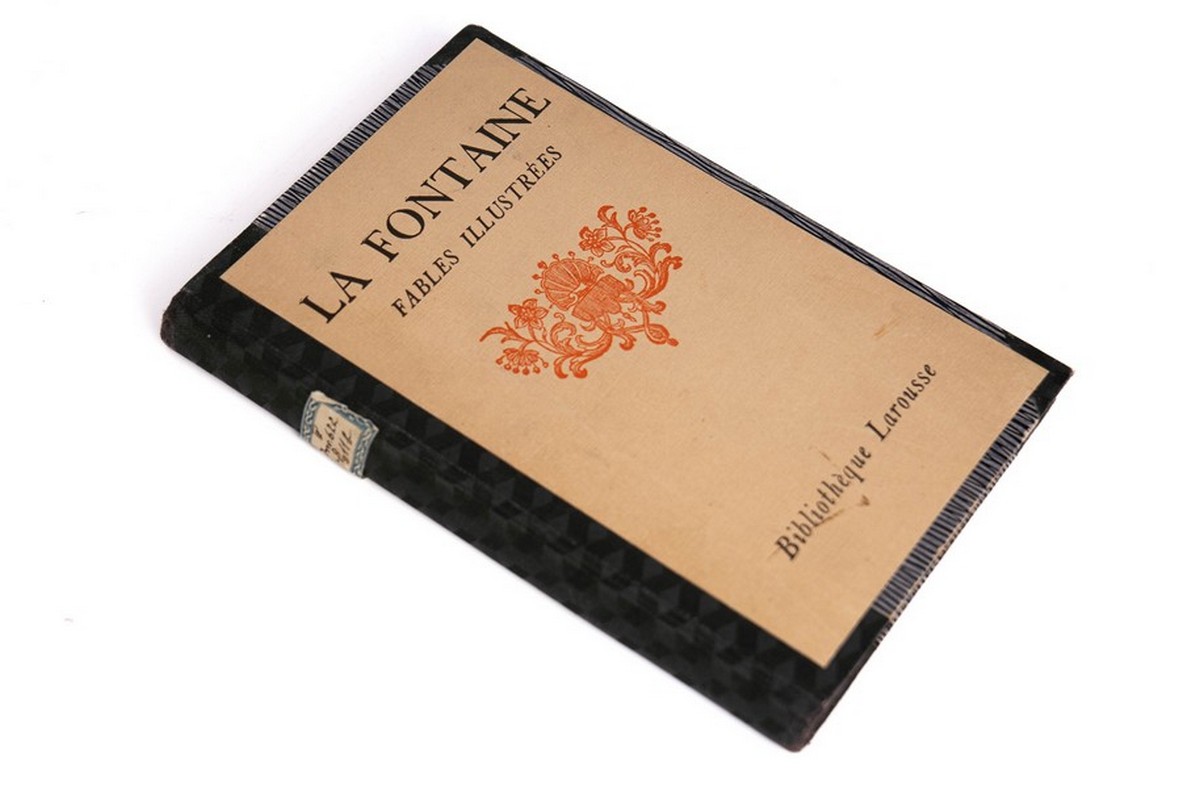
The author of the book is Jean de La Fontaine (1621–1695), an outstanding French poet and the founder of a new genre of literary fable. His works combine sophisticated artistic language, deep allegorical content, humor, satire, and philosophical reflections. La Fontaine’s fables reflect 17th-century French society, human vices, and moral values. The characters include animals, birds, plants, and humans, through whose images the author skillfully ridicules societal shortcomings.
This edition of Illustrated Fables is part of the Bibliothèque Larousse series—a famous collection by the French publishing house Larousse, which was founded by Pierre Larousse in 1852. The series combined educational, encyclopedic, and artistically designed publications that were popular in French schools during the first half of the 20th century.

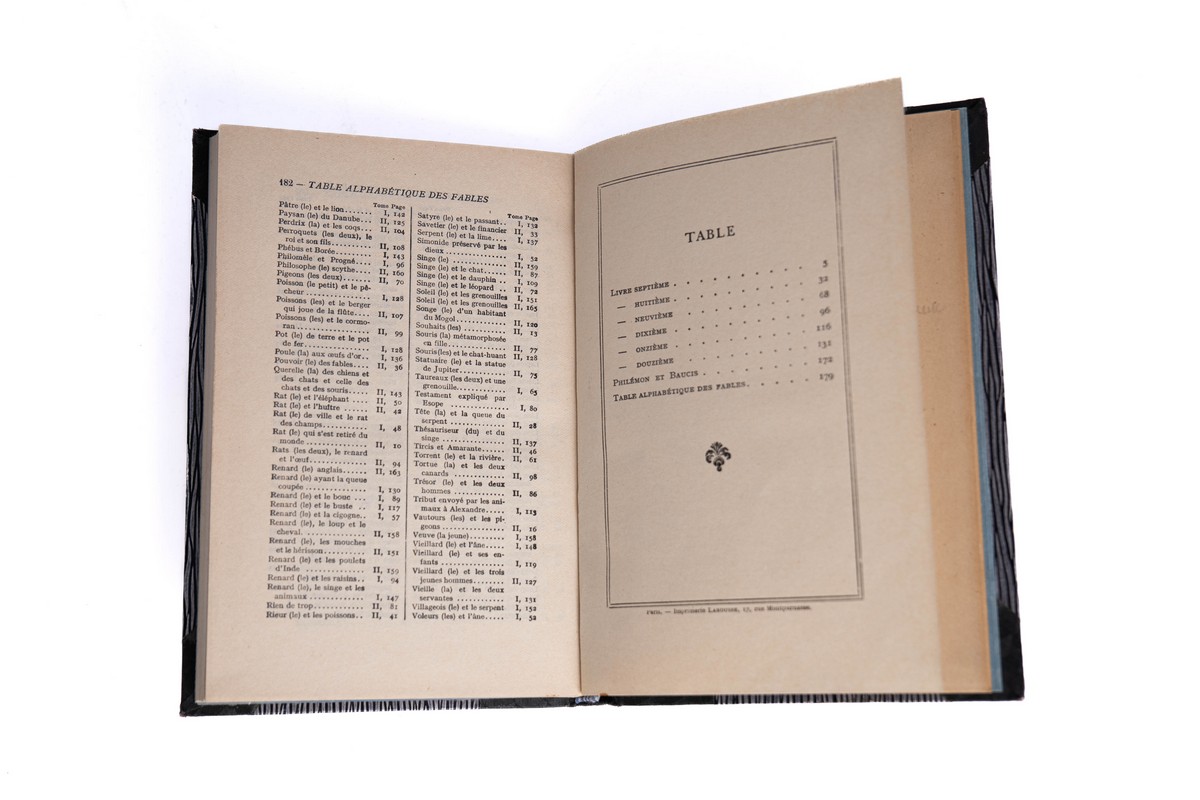
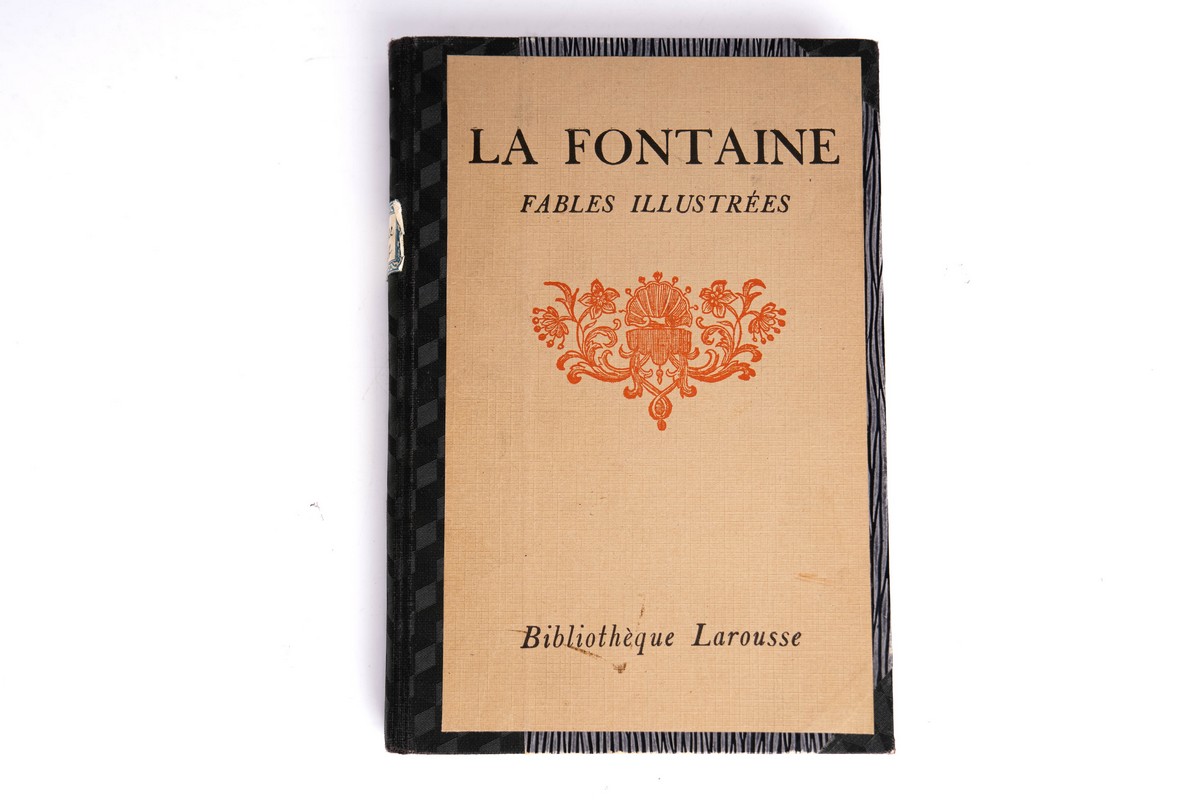

This second volume is supplemented with notes and commentary by Maurice Morel, an associate professor at the University of Paris who served as the scientific editor of the publication. His explanations helped readers better understand the historical context of the fables, their allegories, moral lessons, and complex 17th-century vocabulary. The copy contains the later books of fables (Books V–XII), which reflect La Fontaine’s mature work. It features eight black-and-white engravings that enhance the satirical and artistic content of the text. These drawings emphasize the criticism of society, courtly flattery, and insincerity, while depicting social interactions. The style of the illustrations is classical, with Baroque or Rococo elements that correspond to La Fontaine’s era, showing meticulous attention to the details of clothing and interiors. The drawings help reveal the multifaceted nature of the fables, transforming them into vivid visual stories about human nature.