
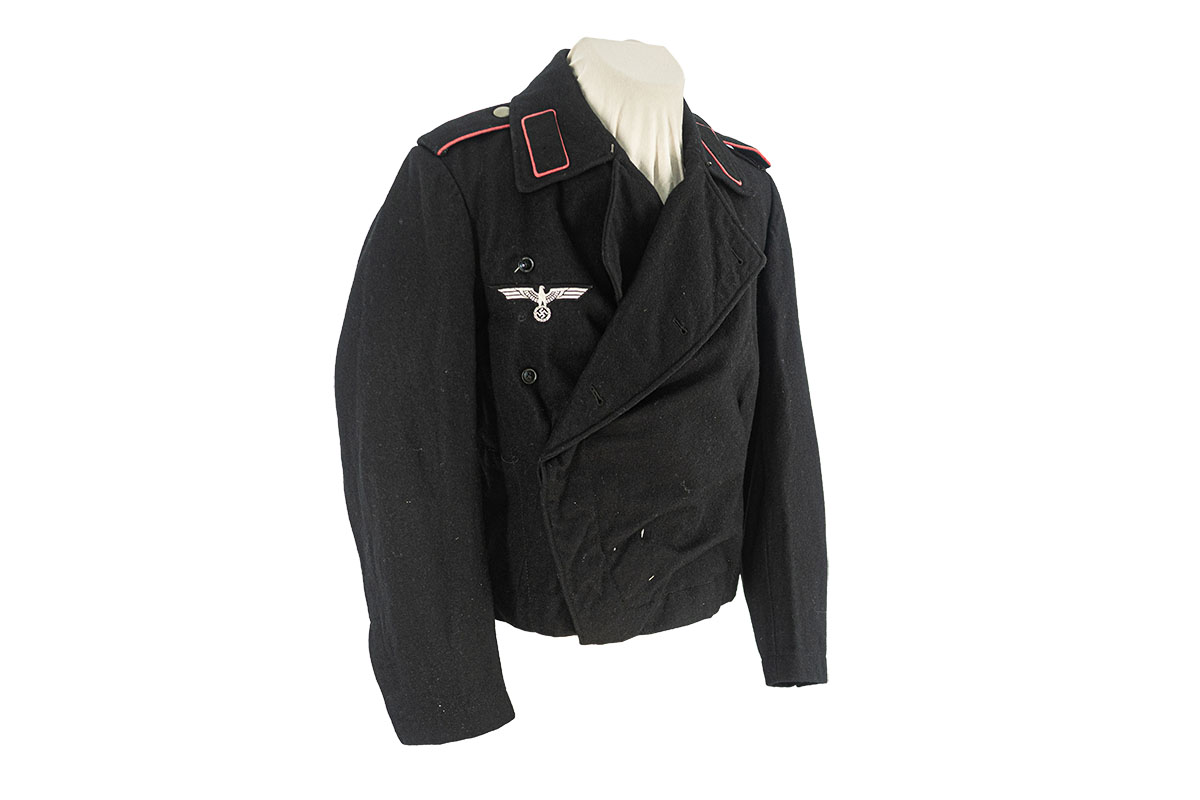
In 1946 the exhibition “Partisans of Ukraine in the Fight against the German-fascist invaders” was opened in Kyiv which among other things laid the foundation for the War Museum’s fund collection. Among its exhibits was a black Wehrmacht armored forces jacket, known as the Panzerjacke or Panzer-Schutzmütze (frequently referred to as the Panzerwrap). It was a standard uniform item for German armored vehicle crews during World War II. Such jackets were used in combats across almost all territories where Wehrmacht tank units operated. Specifically, on the territory of Ukraine, they were worn by tank crews belonging to Army Groups South and Center, which participated in the battles for Kyiv, Kharkiv, Donbas, and the Kursk Bulge. This uniform was considered highly prestigious; even servicemen who were not part of tank units but worked with armored vehicles (such as self-propelled artillery) sought to obtain it.
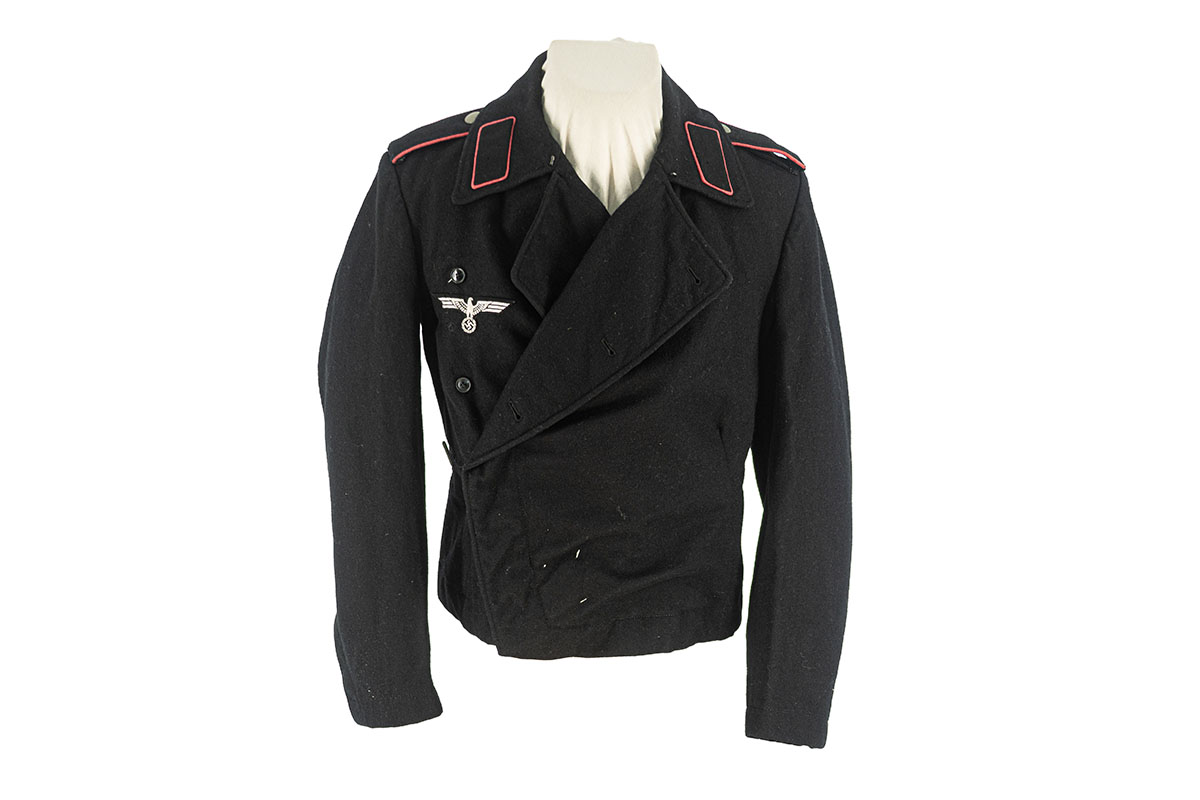
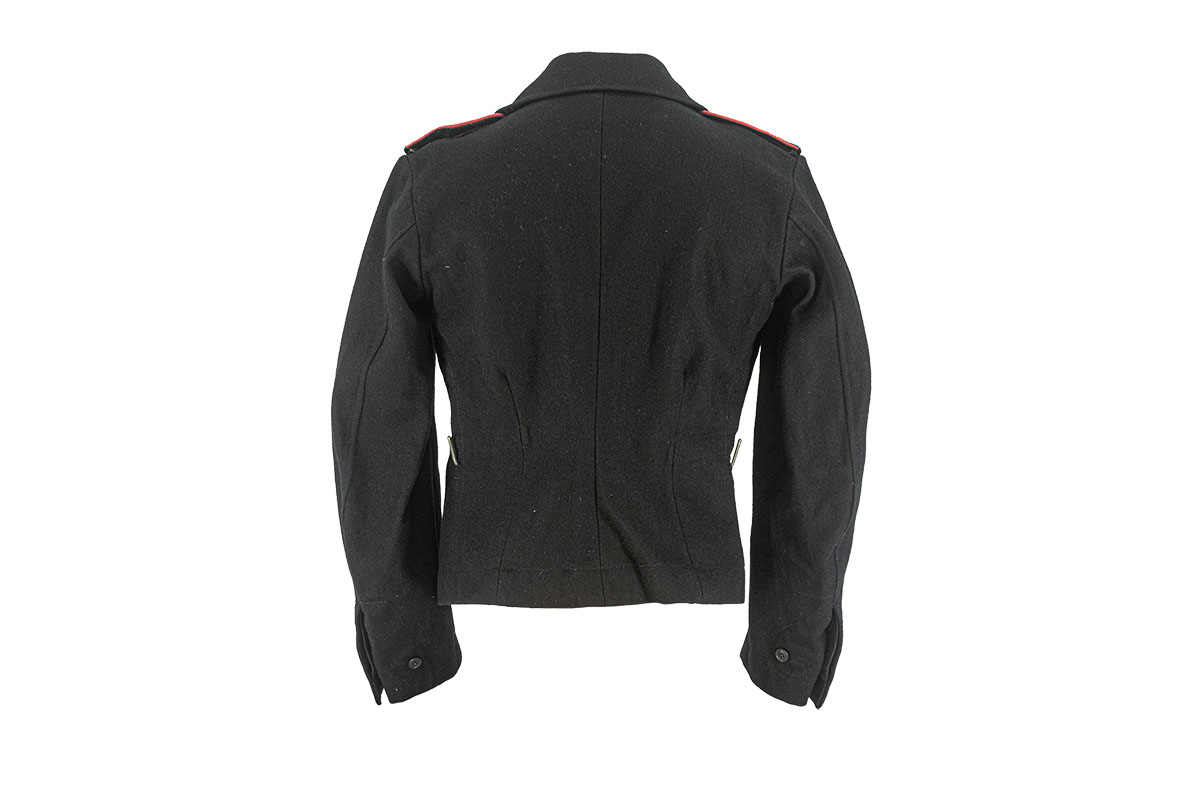
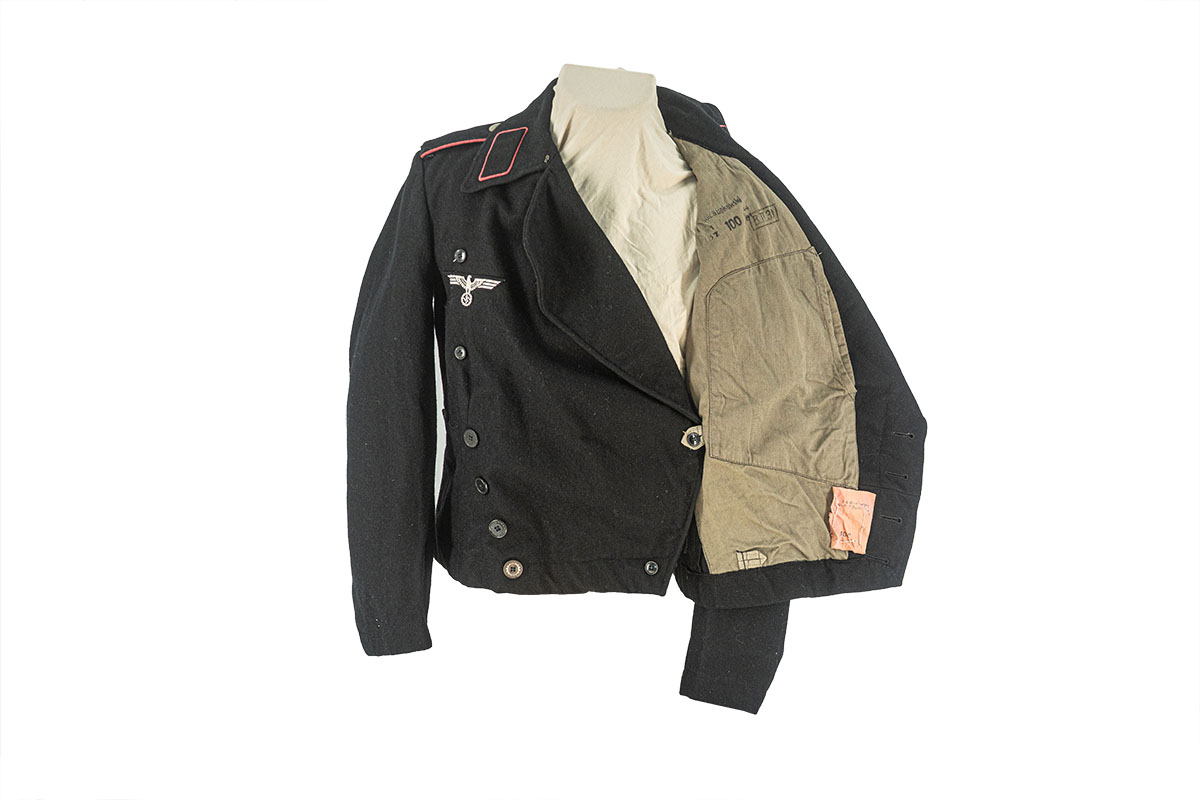
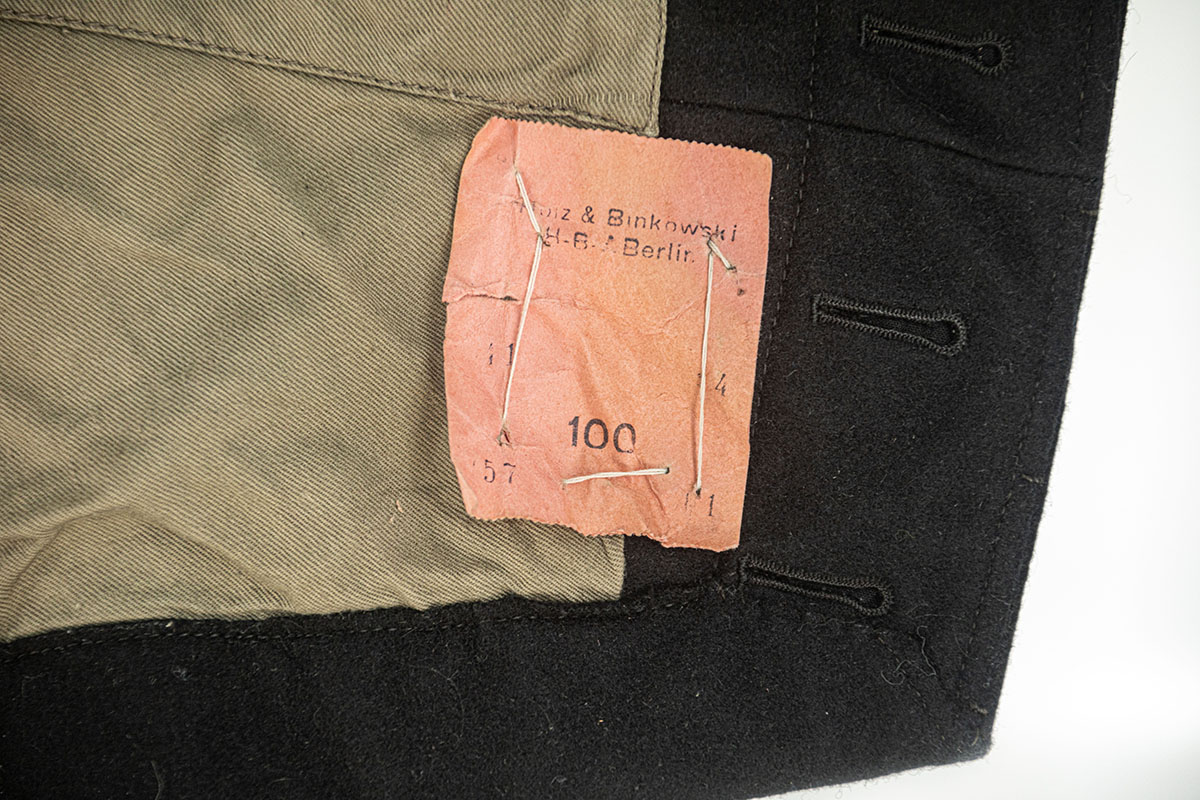
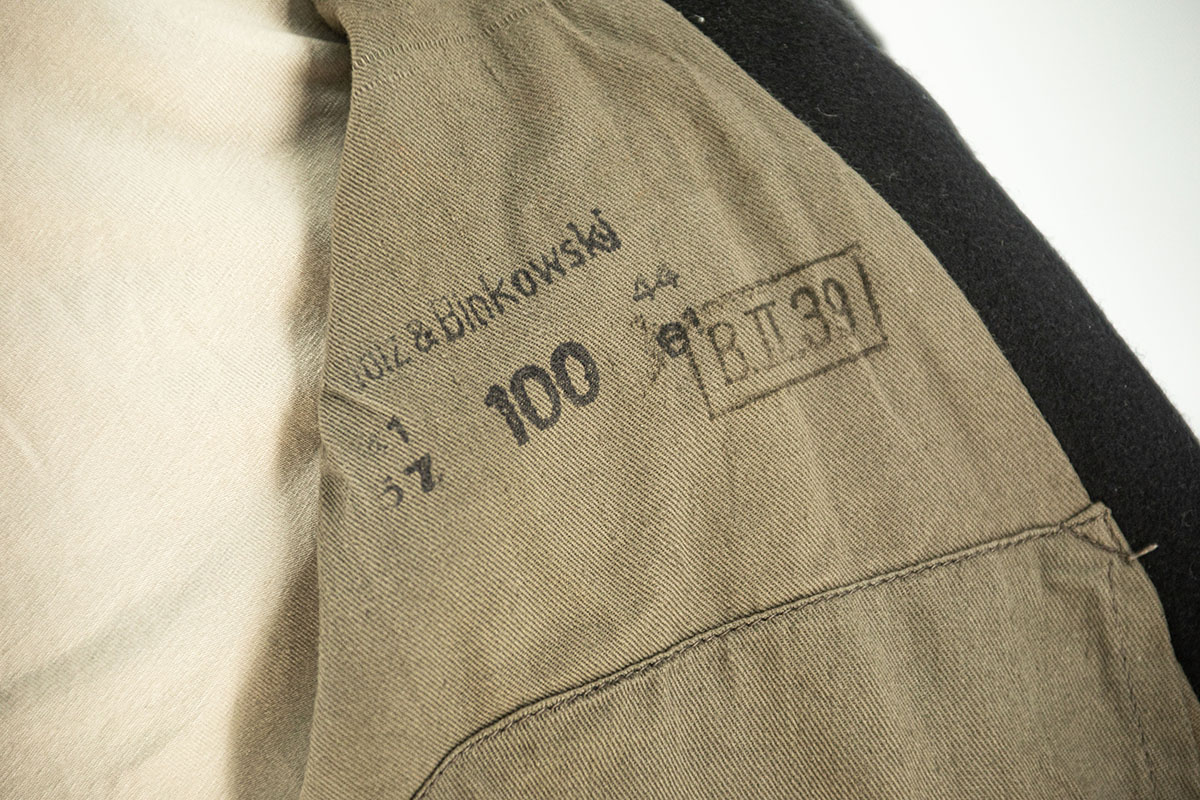
The jacket features a short, double-breasted style fastening with internal and external buttons. The collar has sewn-on collar tabs (Litzen) without the skull emblem (Totenkopf), featuring rose-pink piping that designated the armored troops (Panzertruppe). On the right breast there is an embroidered emblem—an eagle (Parteiadler) with outstretched wings, its head turned to the left (the party emblem used until 1936). The inner lining is made of grey-olive fabric and includes internal pockets. The belt loops are preserved. This style ensured the jacket fit tightly to the body without unnecessary details that could snag on equipment within the cramped space of a tank. The black color was also chosen intentionally: it effectively concealed traces of fuel, lubricants, dust, and dirt.