


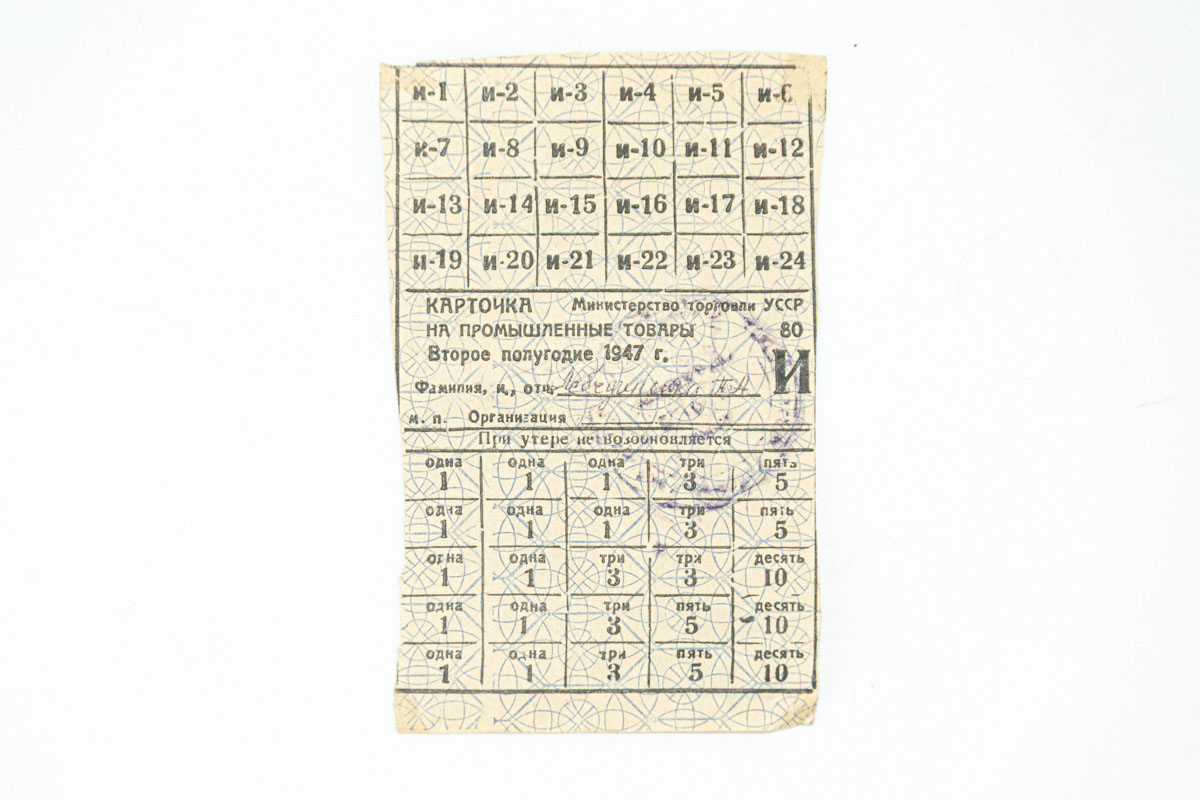
Industrial goods cards were personal rationing documents issued by the Ministry of Trade of the Ukrainian SSR. These cards regulated the distribution of industrial goods during the acute post-war shortages, providing access to clothing, footwear, linens, and household items. Each tear-off coupon did not represent an abstract quantity but a specific, essential item: a pair of shoes, a length of fabric, a coat, or a warm sweater. Unlike food cards, industrial goods cards were used less frequently but they were no less valuable. Acquiring clothes or shoes often became a major event for which people prepared in advance: they saved coupons, stood in long queues and waited for goods to arrive. These cards were carefully stored sometimes kept alongside identity documents, because their loss meant the inability to legally purchase the necessary things. In the Ukrainian SSR, industrial cards appeared during the final stage of the rationing system – shortly before its abolition in December 1947 as part of the Soviet monetary reform in the USSR. Consequently, they became a short-lived but telling phenomenon of the post-war economy, marking the transition from wartime rationing to formally "free" trade.
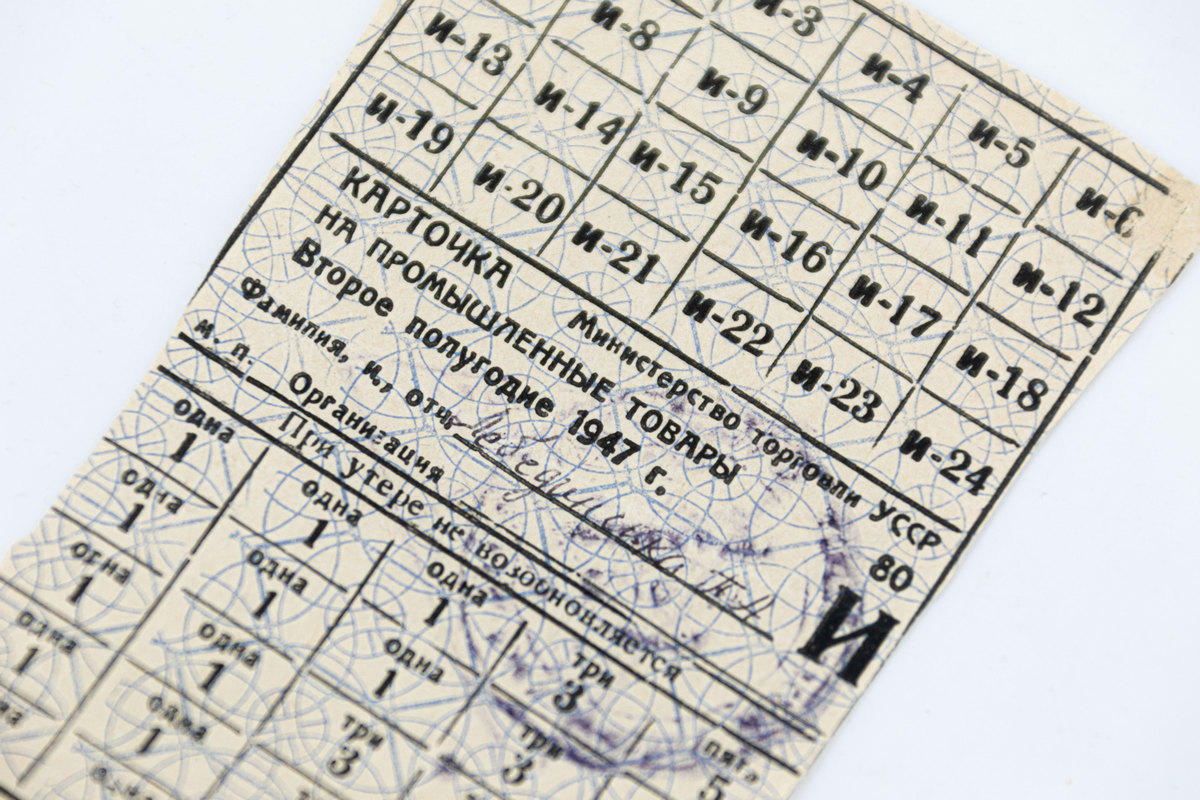
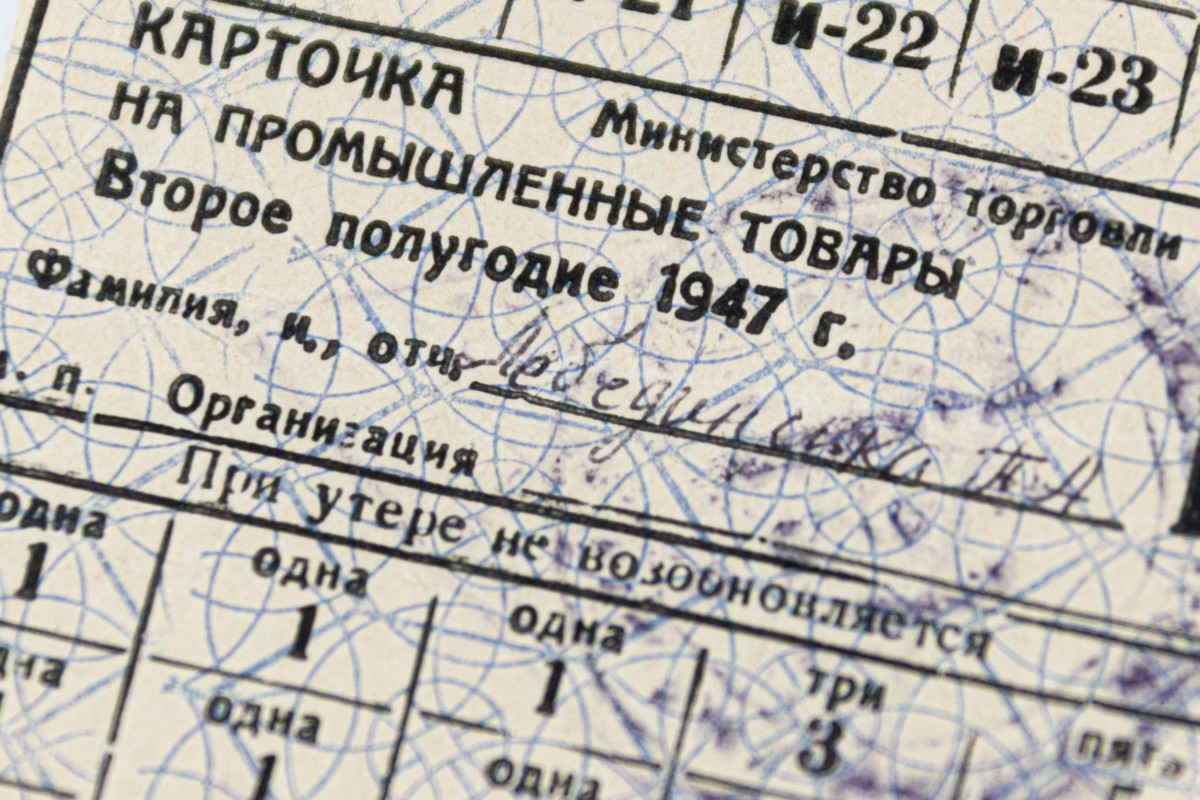
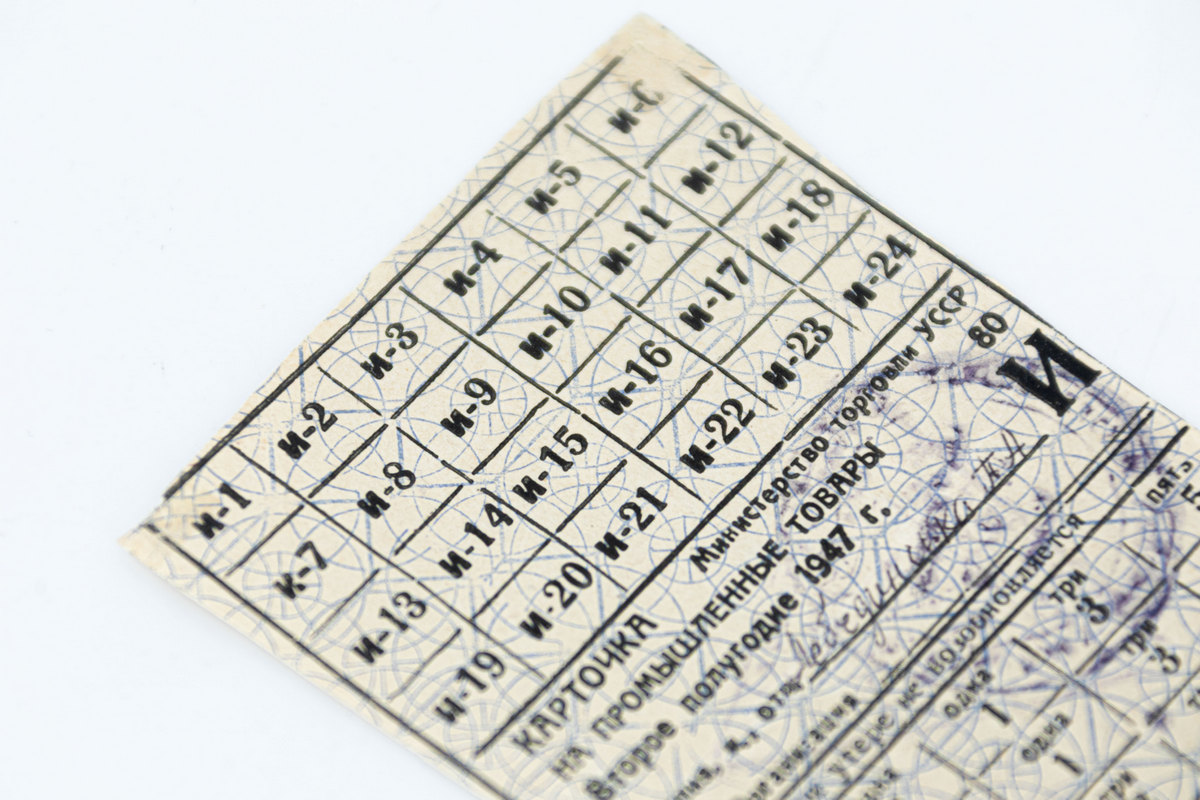
The card is single-sided, has a vertical format. Printed typographically in blue on thick yellow paper with a characteristic geometric background ornament, which performed a protective function and complicated counterfeiting. The front side is divided into tear-off coupons with denominations of 1, 3, 5 and 10. The card contains personal notes: the owner’s surname, handwritten with a black ballpoint pen (later), the category is indicated and there are stamps of trade bodies. The coupons were not used.