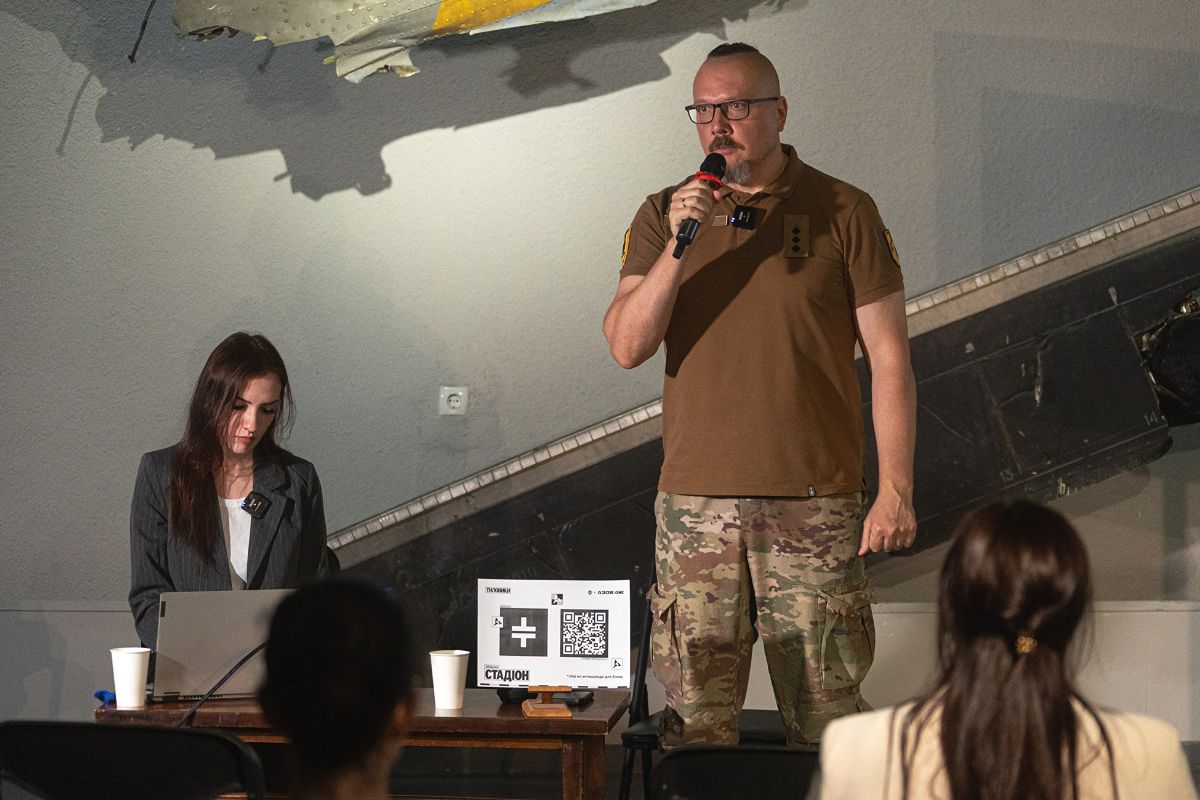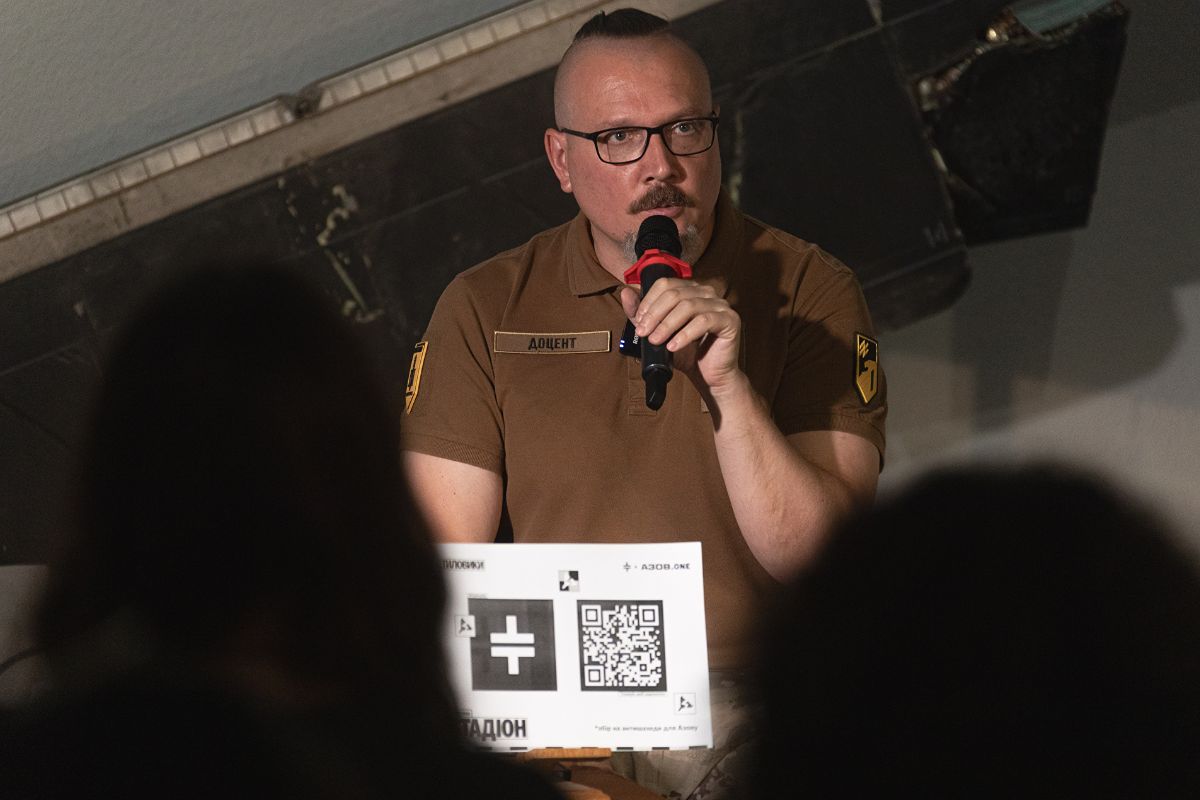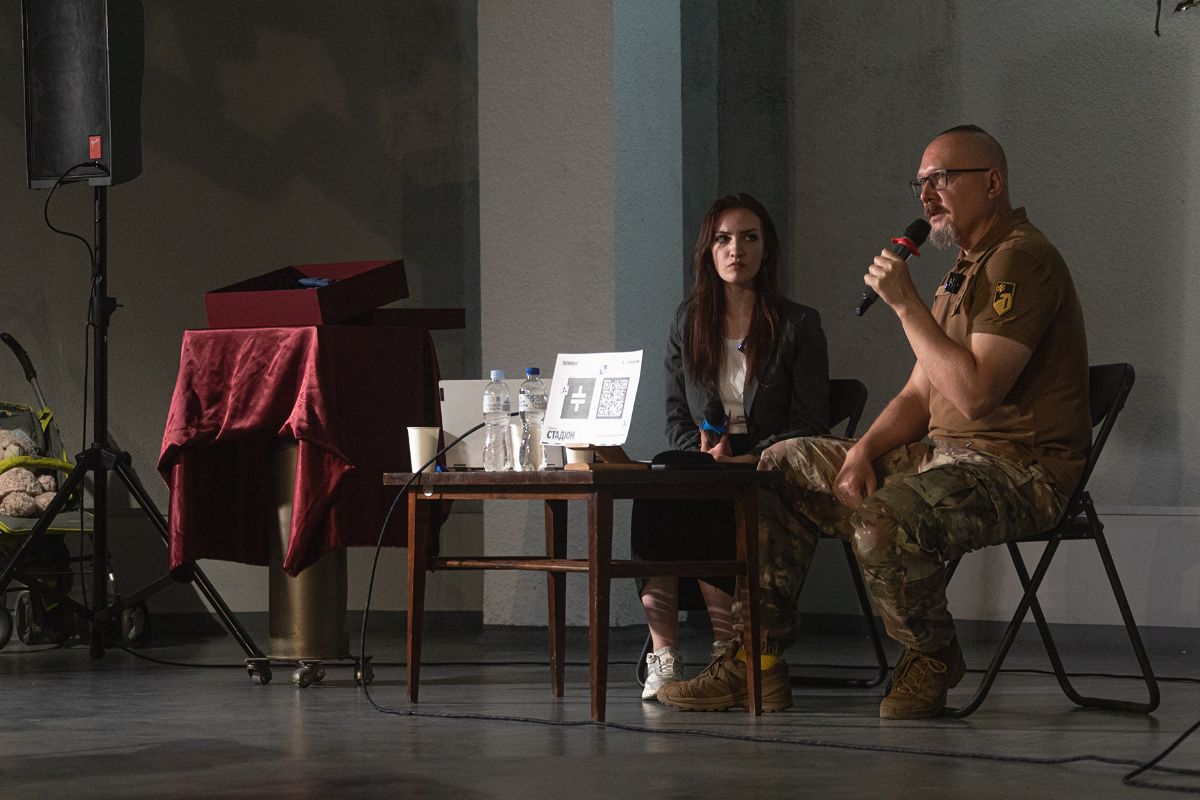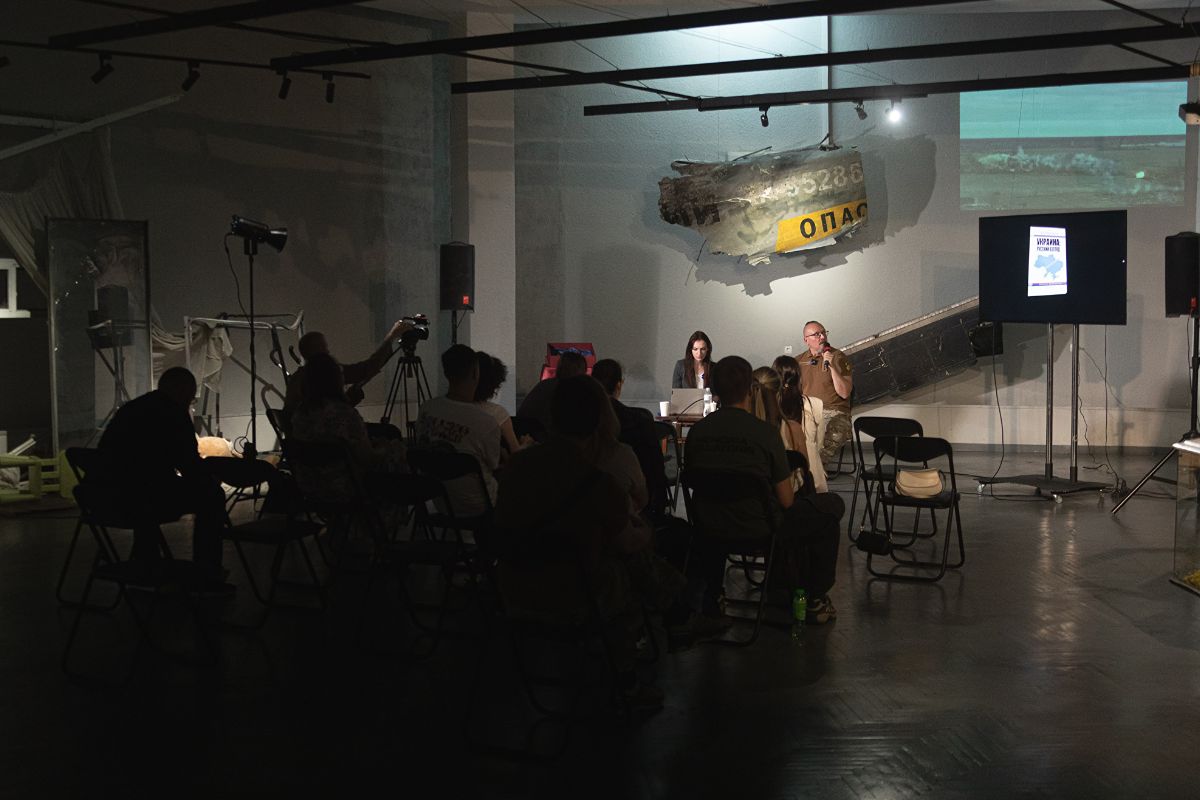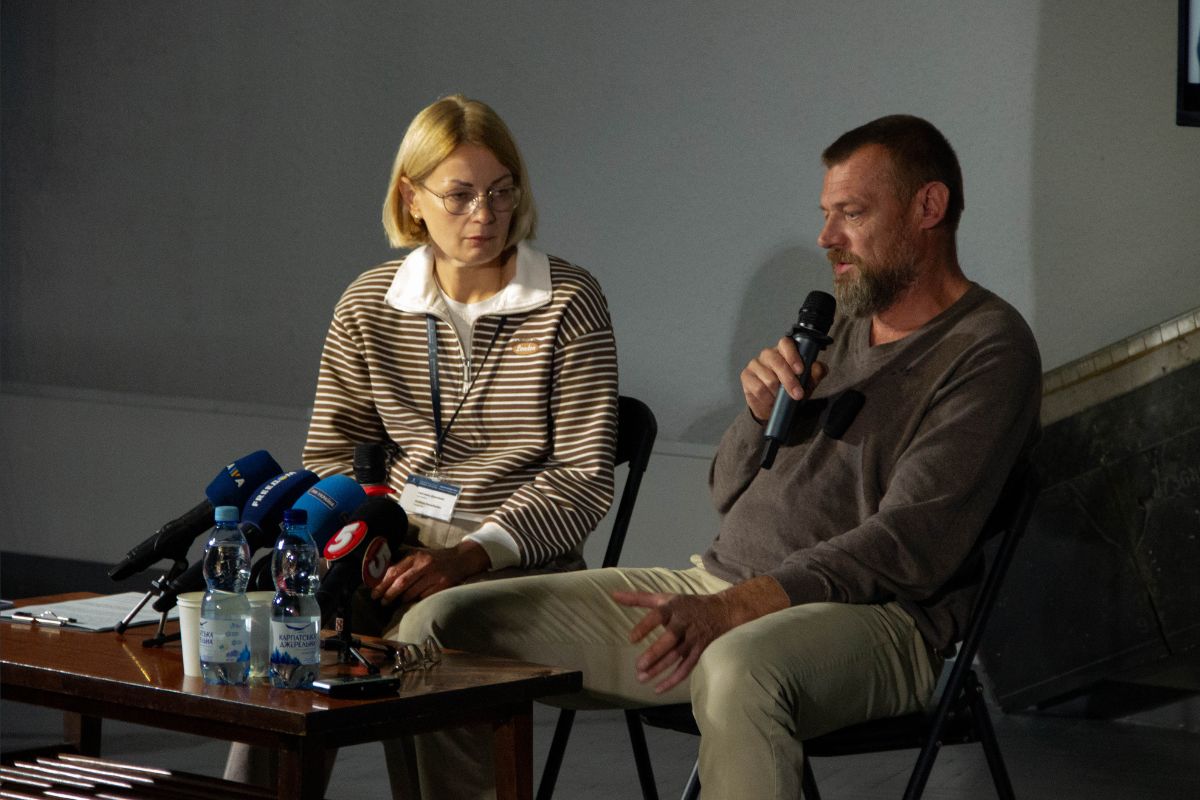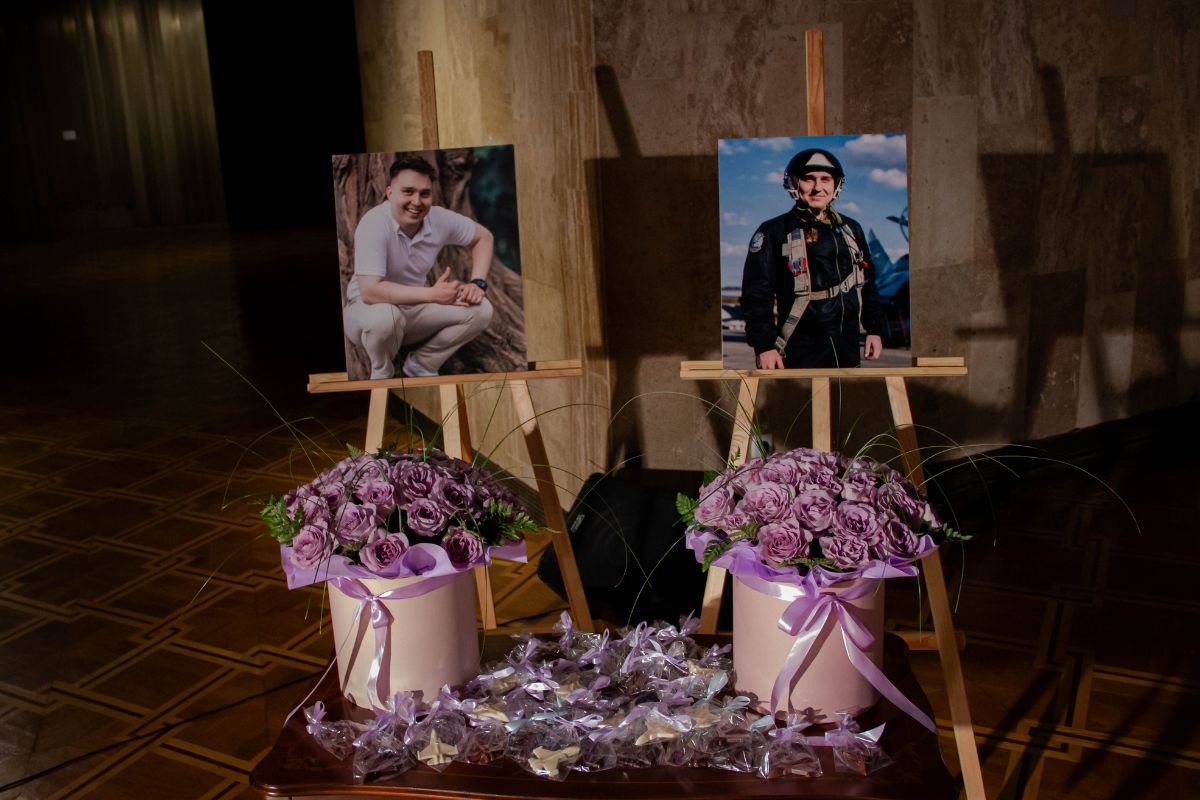


At the end of July, Ukraine commemorates one of the most tragic episodes of the ongoing war: the terrorist attack at Olenivka, which killed dozens of Ukrainian prisoners of war on the night of 28–29 July 2022. Those themes of memory, the experience of captivity, and the power of history as a source of strength shaped the open conversation with Vladyslav ‘Dotsent’ Dutchak at the War Museum.
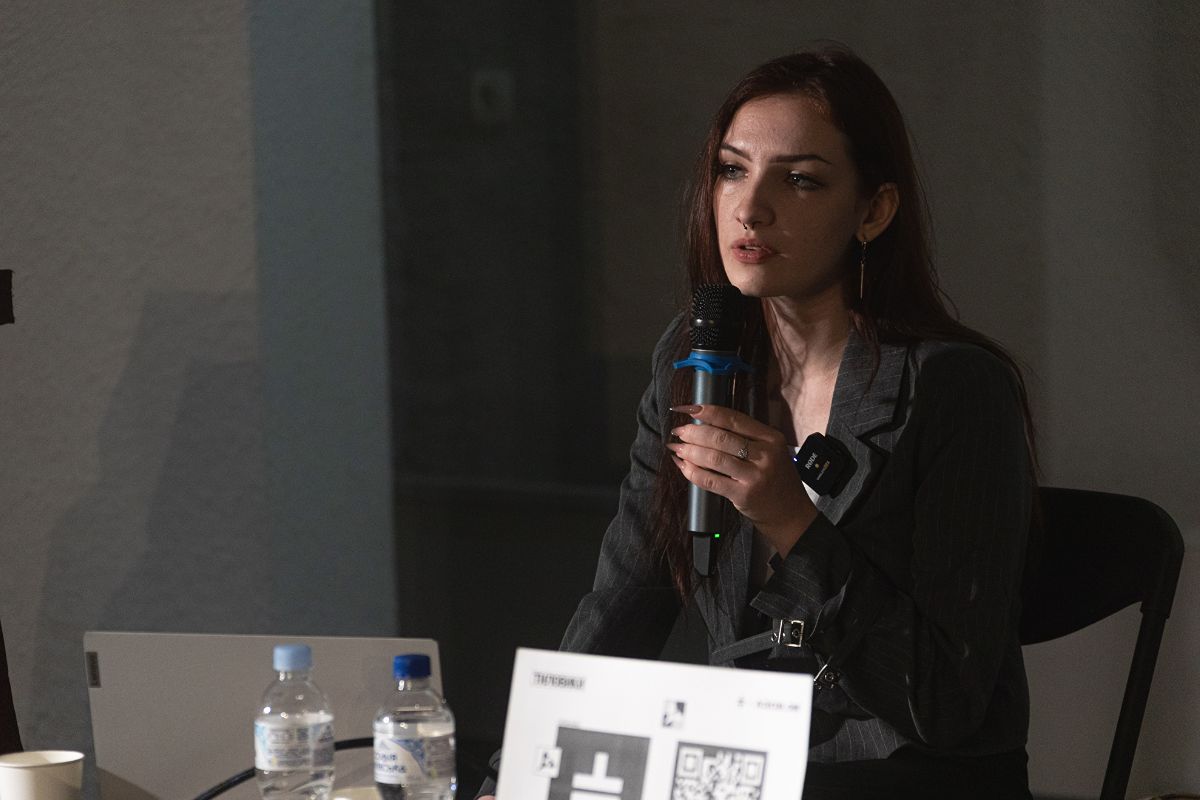
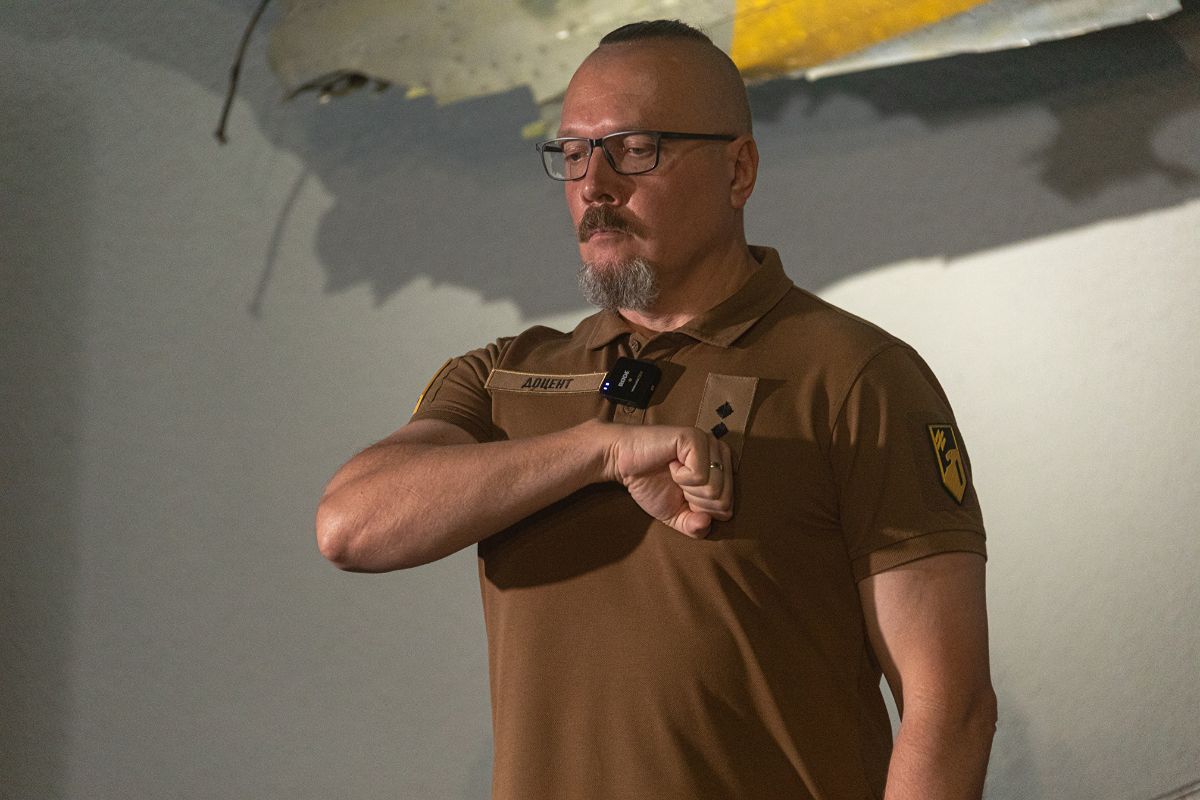
Vladyslav “Dotsent” Dutchak is a senior lieutenant in the National Guard of Ukraine, co-founder and director of the 1st Khorunzhyi School named after Lieutenant Colonel Stsiborskyi, part of the 1st Azov Corps of the National Guard of Ukraine, a defender of Mariupol, and a historian. The conversation was moderated by War Museum guide Anna Dombrovska.
The defence of Mariupol, and of Azovstal in particular, became a symbol of Ukrainian resilience in the struggle for freedom. Vladyslav Dutchak was among the defenders who, after carrying out the order to leave the steelworks, were taken into Russian captivity. His first place of detention was Olenivka, a prison colony that has become permanently etched in Ukraine’s collective memory as the site of one of Russia’s most horrific war crimes.
Drawing on his own experience, Vladyslav spoke about how the Russian system exerts psychological pressure on prisoners of war in an attempt to break their will and undermine their identity. At the same time, he emphasised that knowledge of history helps people understand the nature of these methods, resist manipulation, and maintain their inner resilience even in the most difficult circumstances.
The participants also discussed the Khorunzhyi service and its role in training the modern Ukrainian military. According to Vladyslav Dutchak, leadership, education, and the ability to work with people are just as important as military training. These very skills helped sustain the morale of prisoners of war: even behind bars, he gave lectures and held discussions on history for his fellow servicemen, turning knowledge into another form of resistance.
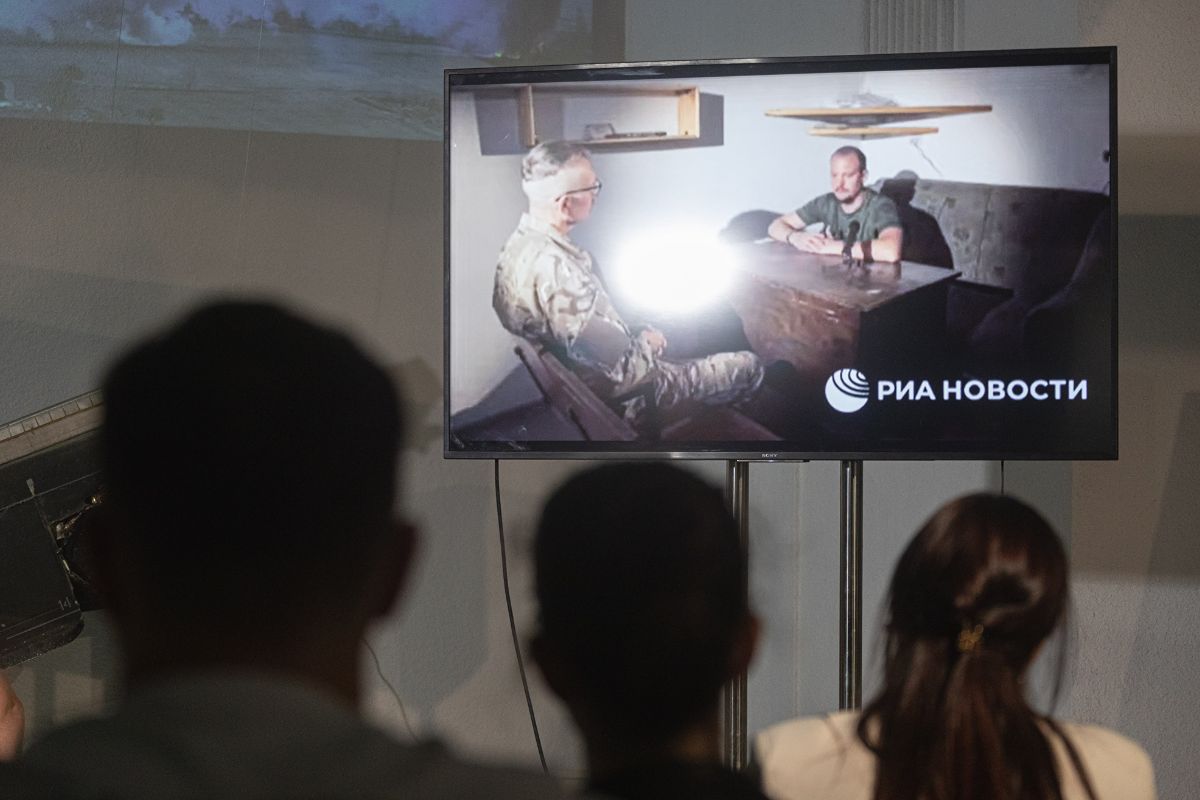
The discussion also addressed the issue of Russian propaganda. Vladyslav described how his principled stance while in captivity prompted the Russians to produce fabricated propaganda materials using manipulated video footage of prisoners of war. His experience once again demonstrated the importance of approaching information critically and not allowing the enemy to shape a distorted image of Ukrainian defenders.
The open conversation offered an opportunity not only to hear the personal story of a defender of Mariupol, but also to reflect on how historical memory, education, and human dignity can help people endure even the darkest of times.