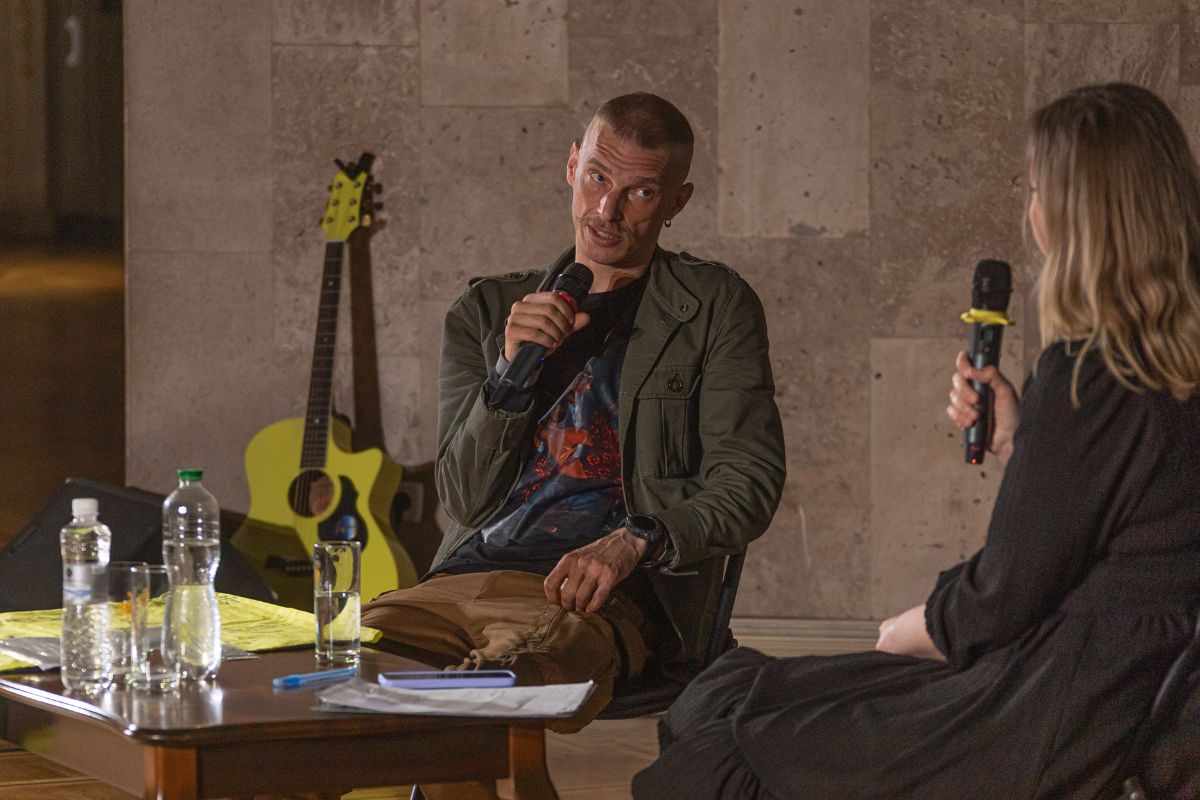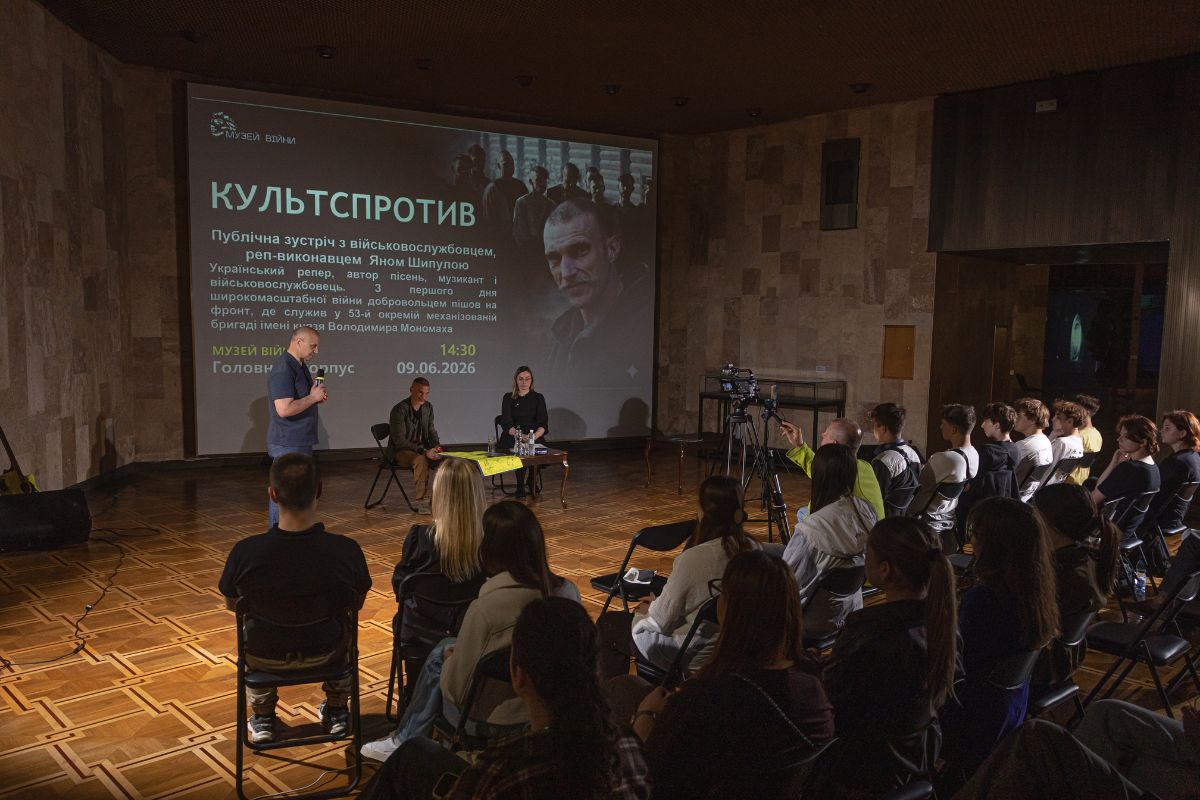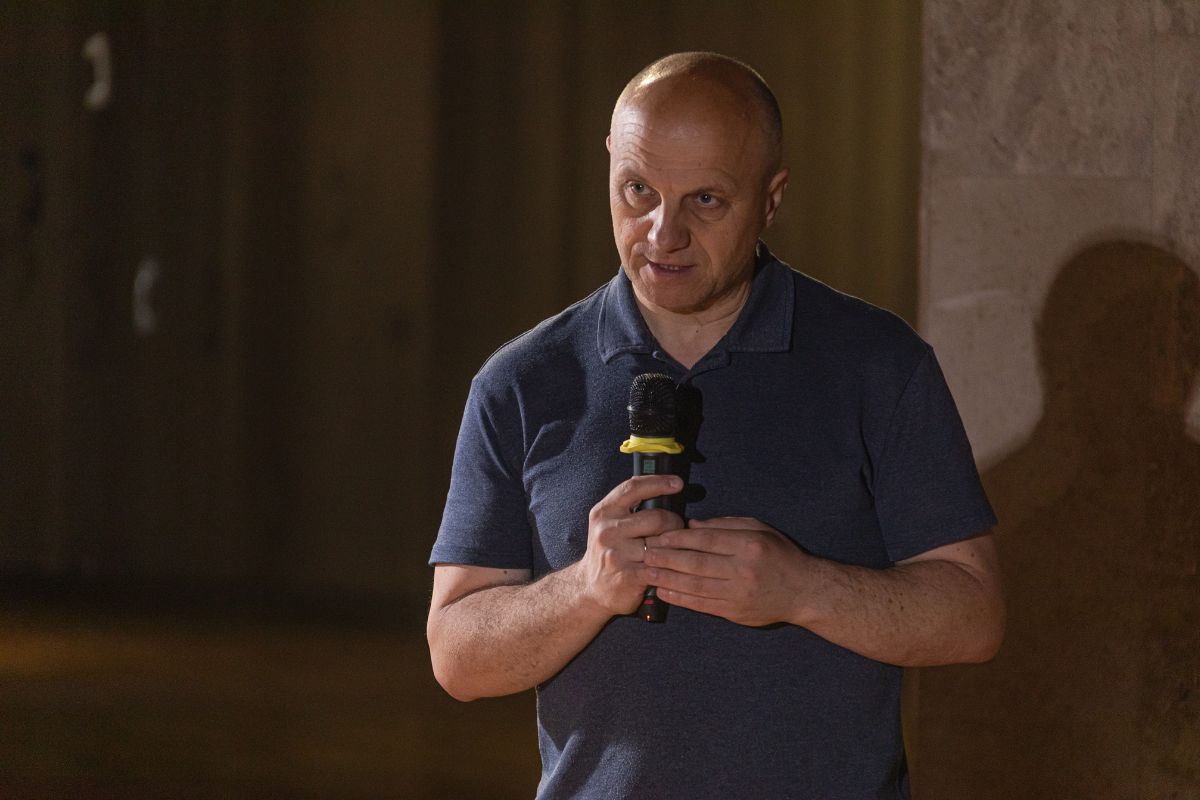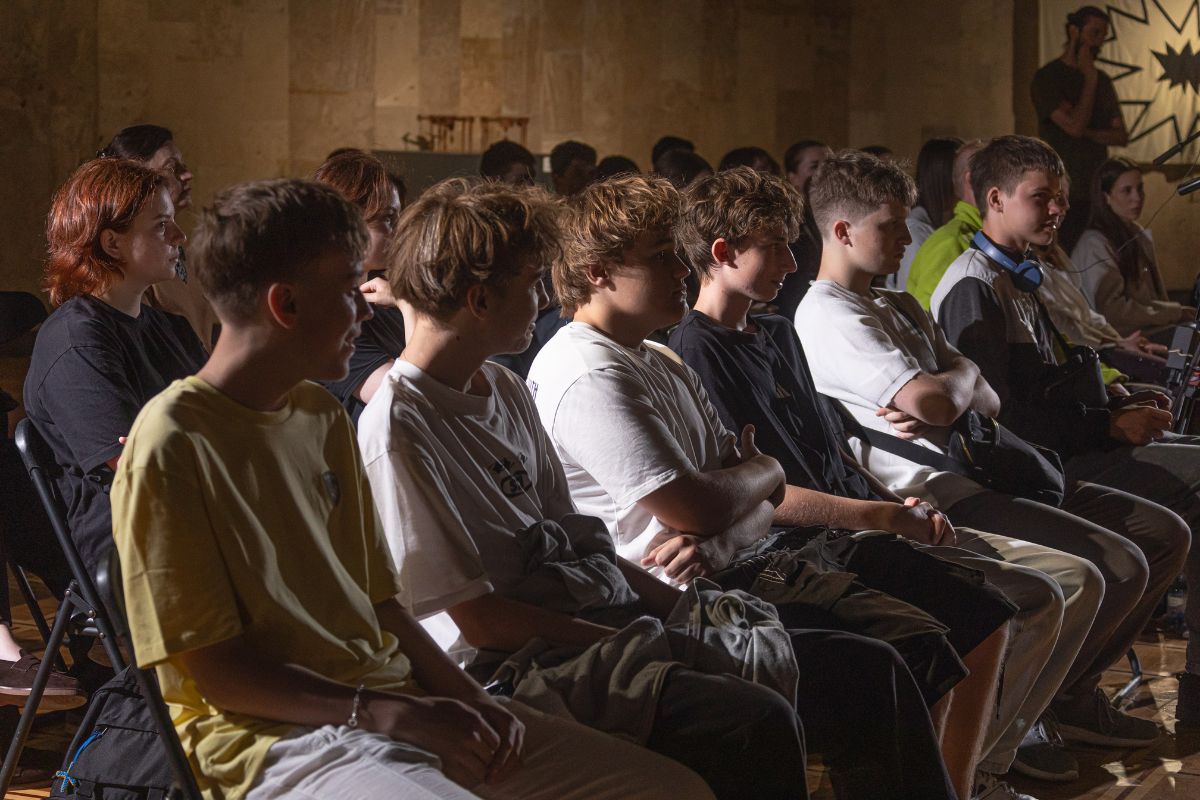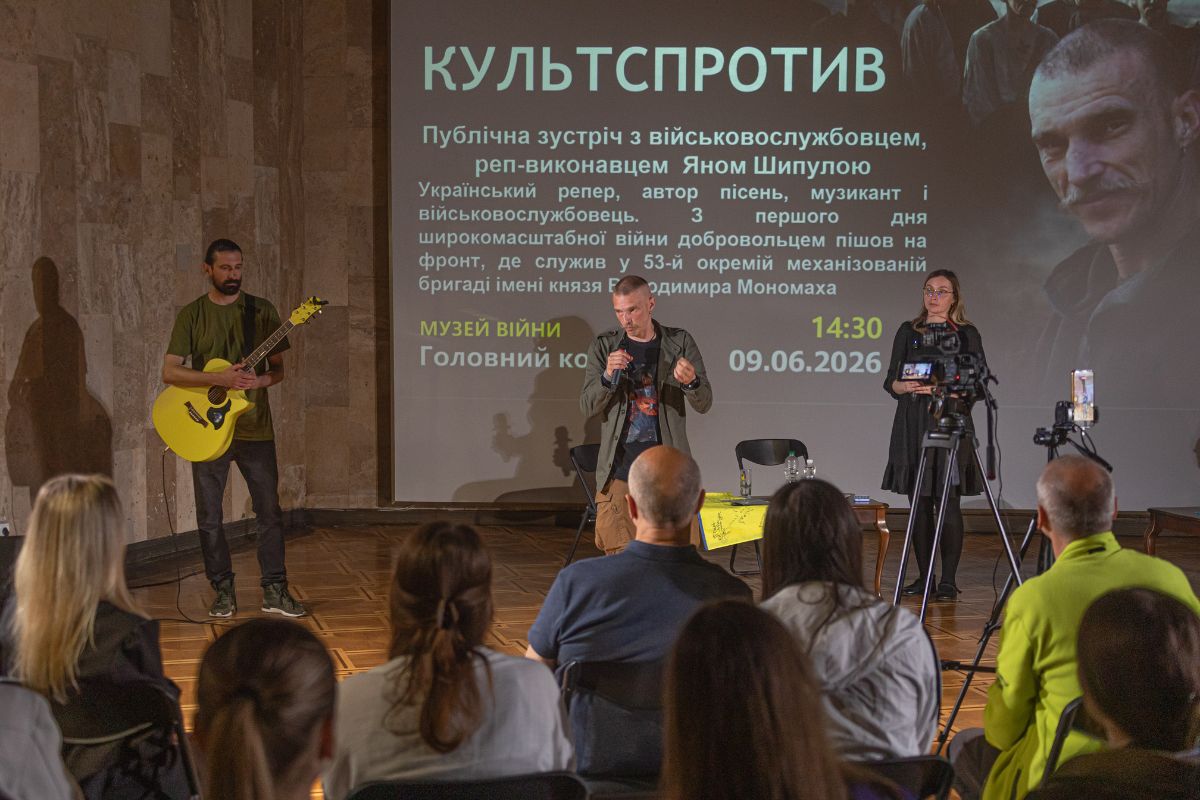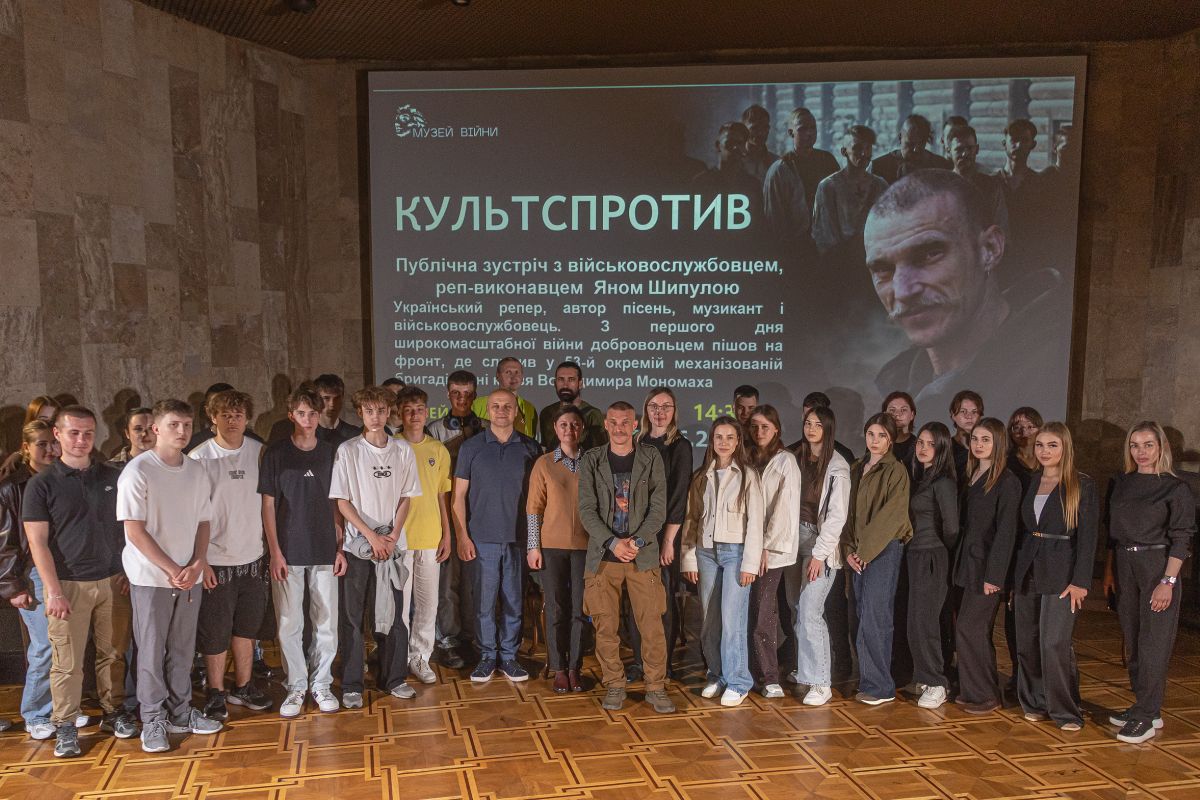


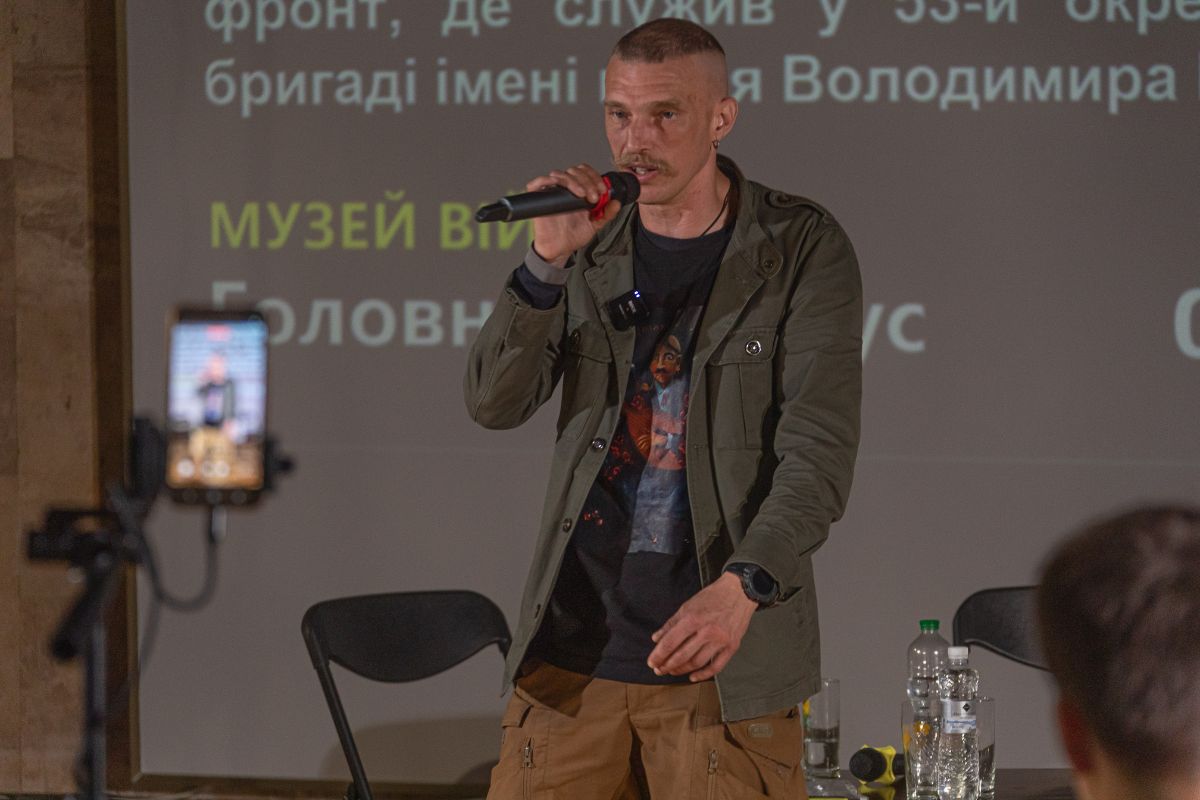
His songs are born from the experience of war, while his lyrics sound equally powerful on stage and among soldiers on the front line. As part of the KultSprotyv project, the War Museum welcomed Jan Shypula, whose call sign is Mamai – a service member, journalist, rap artist, and representative of the Cultural Forces of Ukraine.
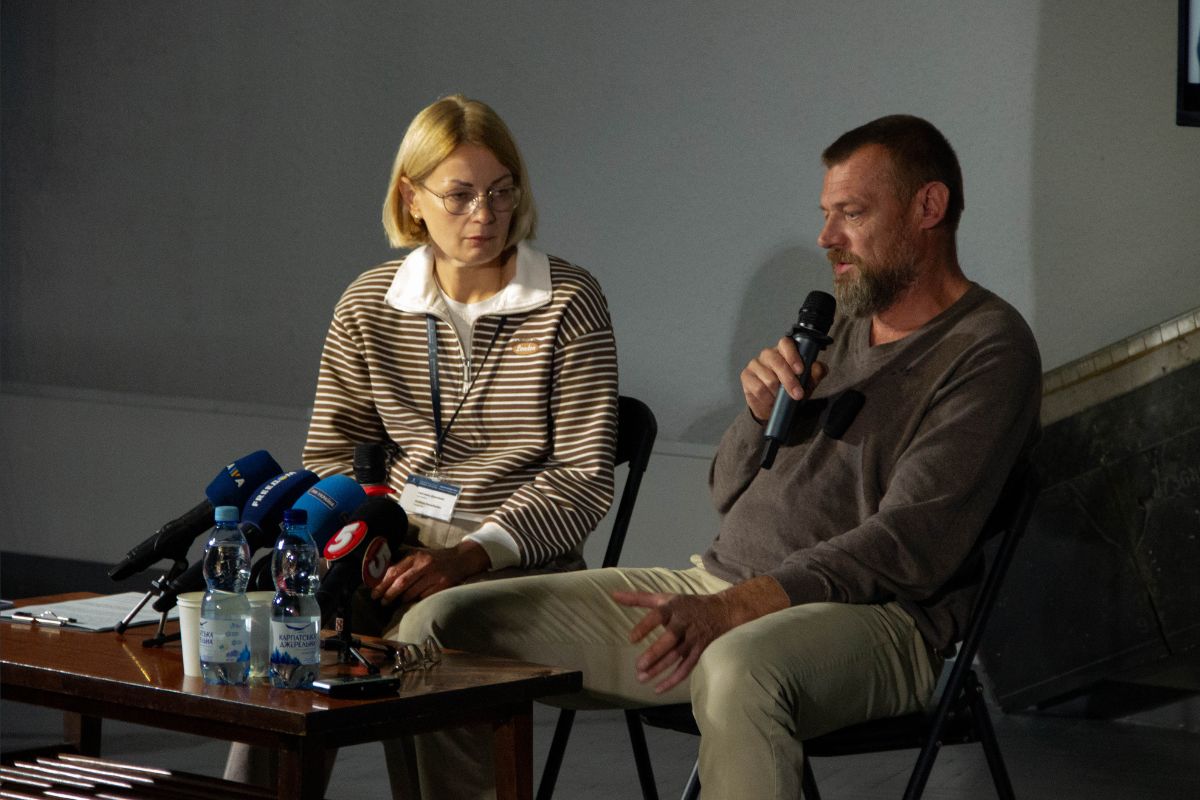
The conversation was open and lively. Jan spoke about his journey from his native Zaporizhzhia to the front, about Ukraine’s two revolutions, the Orange Revolution and the Revolution of Dignity, his service with the 53rd Separate Mechanized Brigade named after Prince Volodymyr Monomakh, and how the war has changed both him and his art.
Since the beginning of Ukraine’s resistance to Russia’s full-scale invasion, he has served in the Zaporizhzhia, Donetsk, and Kherson sectors. He served as an infantryman, was part of a sniper unit, and now, together with the Cultural Forces, supports Ukrainian soldiers, works with the wounded, and engages in cultural diplomacy.
“During the war, culture has a vital role to play, it helps us preserve our identity and endure these trials,” emphasized Jan Shypula.
The meeting also included a short concert. Together with his brother-in-arms Oleksandr, Mamai performed his own songs about war, comradeship, loss, and resilience. There was no embellishment in these songs, only an honest account of what the country is living through today. The artist noted that creativity helps support mental health during war.
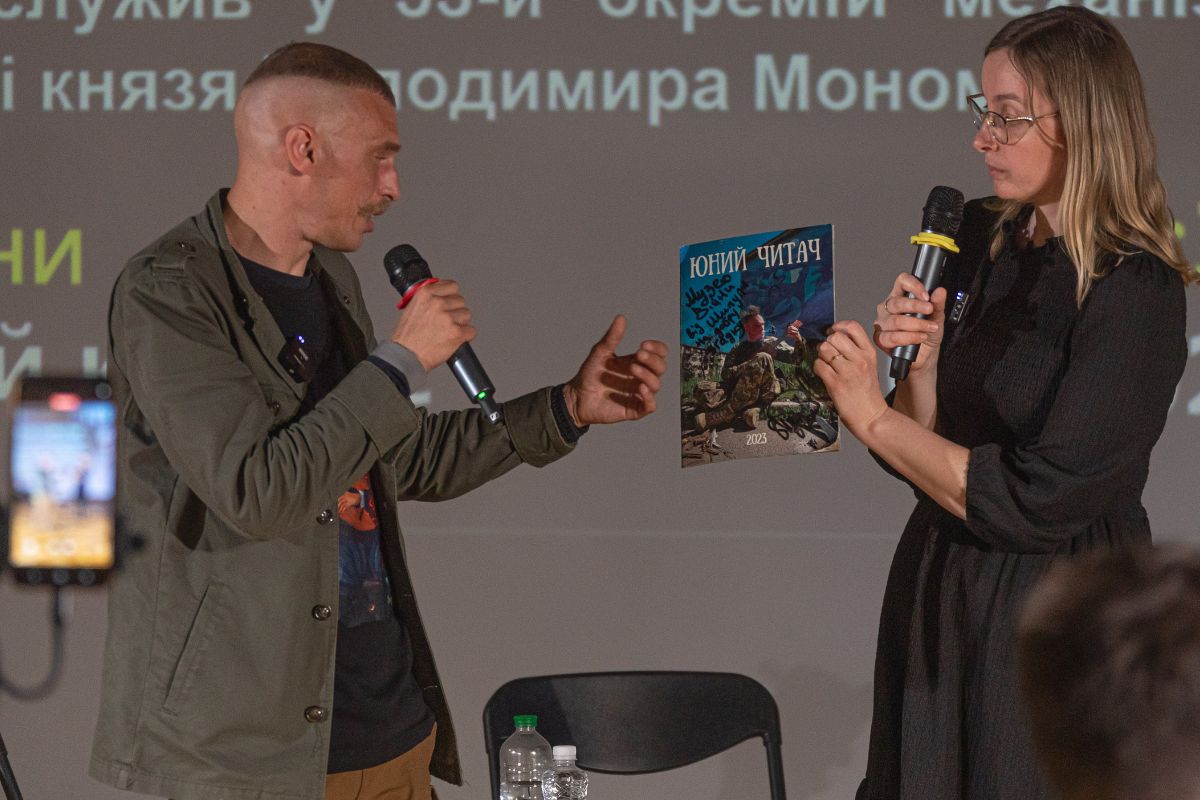
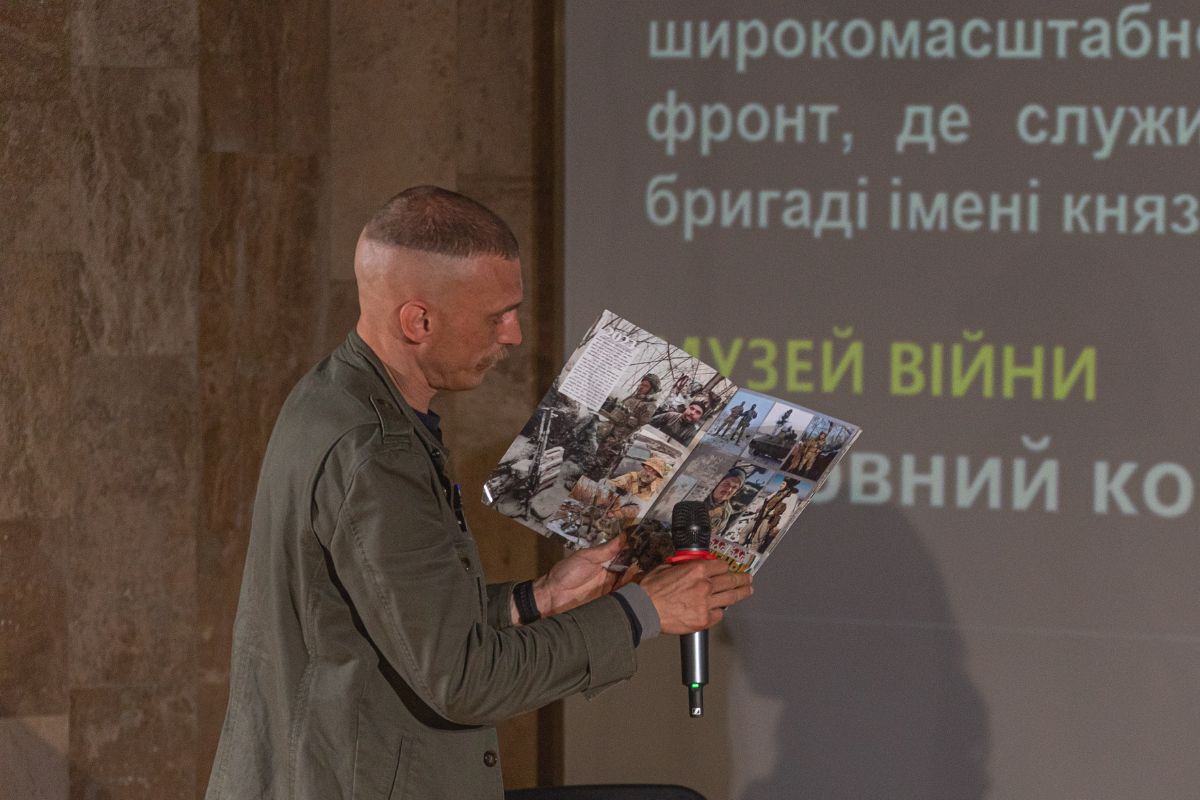
The memory of war is shaped not only by documents and photographs but also by culture. That is why an important addition to the Museum’s collection was the magazine “Yunyi Chytach” (“Young Reader”), donated by Jan and created by fans of the Zaporizhzhia football club Metalurh. The publication tells the stories of supporters who joined the Defense Forces of Ukraine after the beginning of Russia’s full-scale invasion. Mamai himself appears on the cover of the issue.
The War Museum thanks Jan Shypula for a sincere conversation, music without embellishment, and a reminder that culture, too, is part of Ukraine’s resistance.