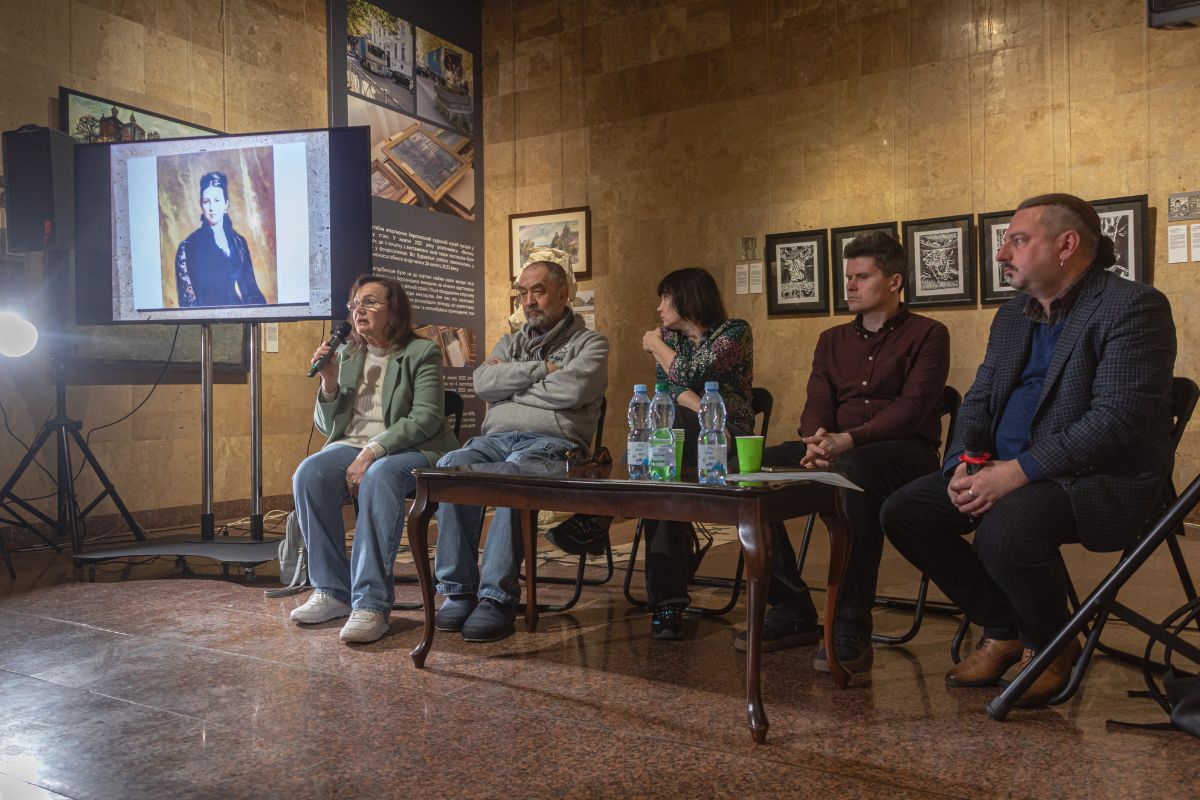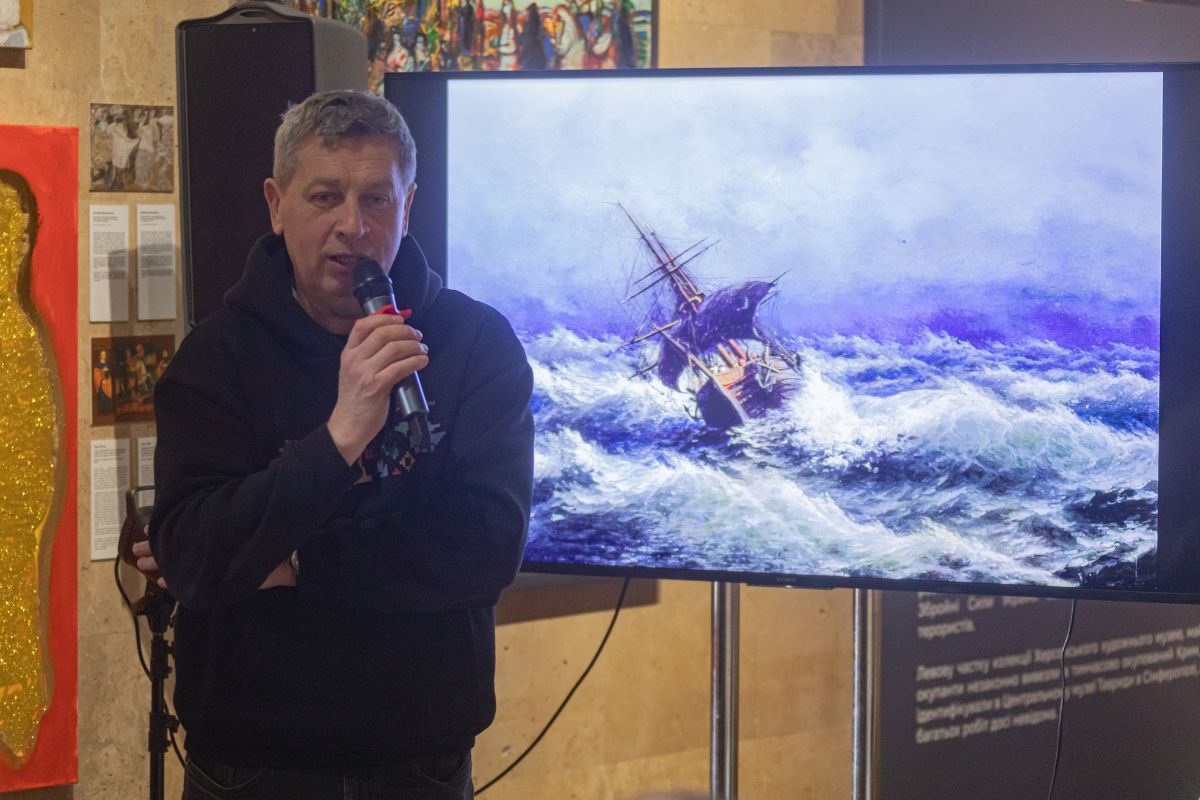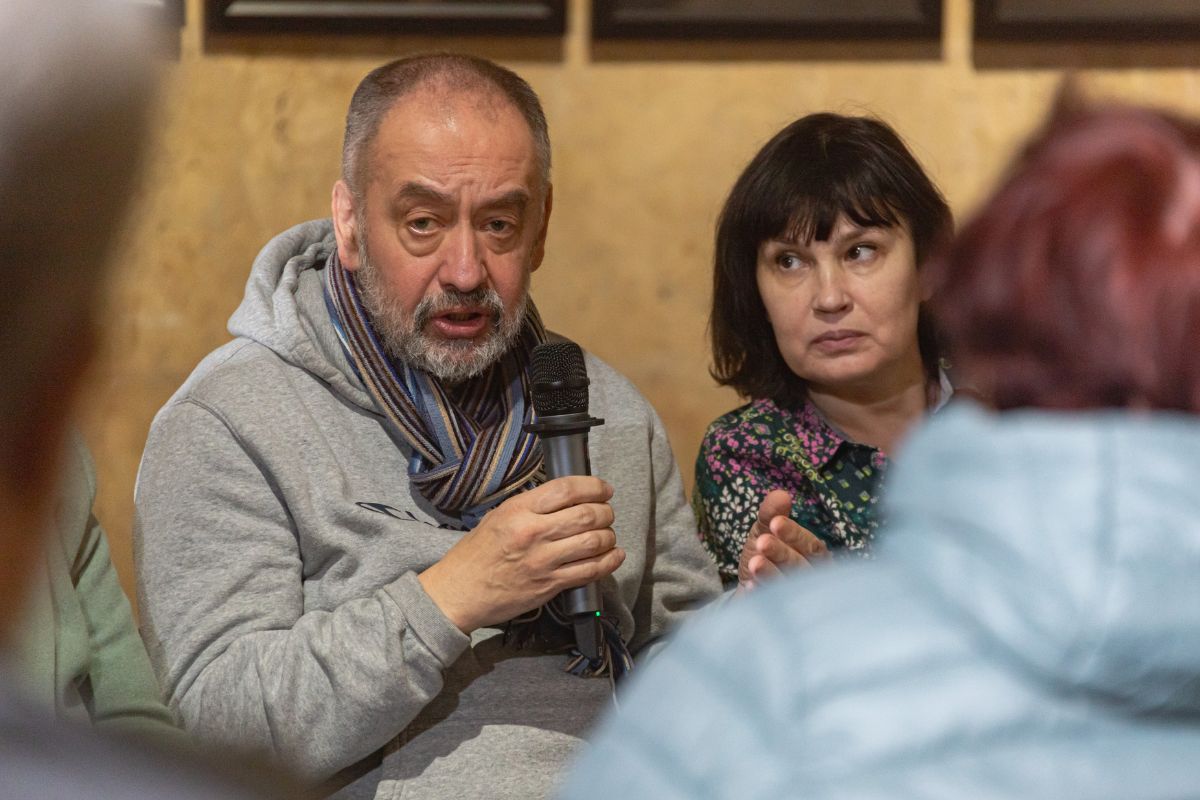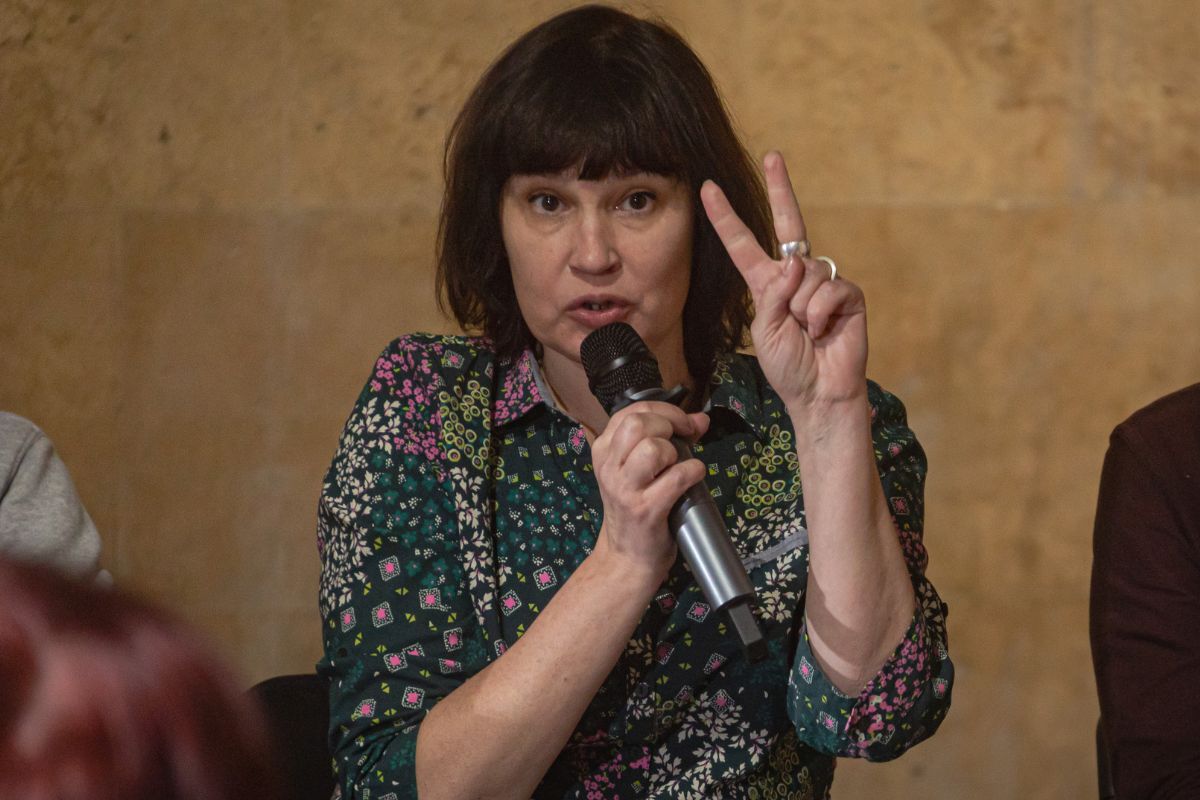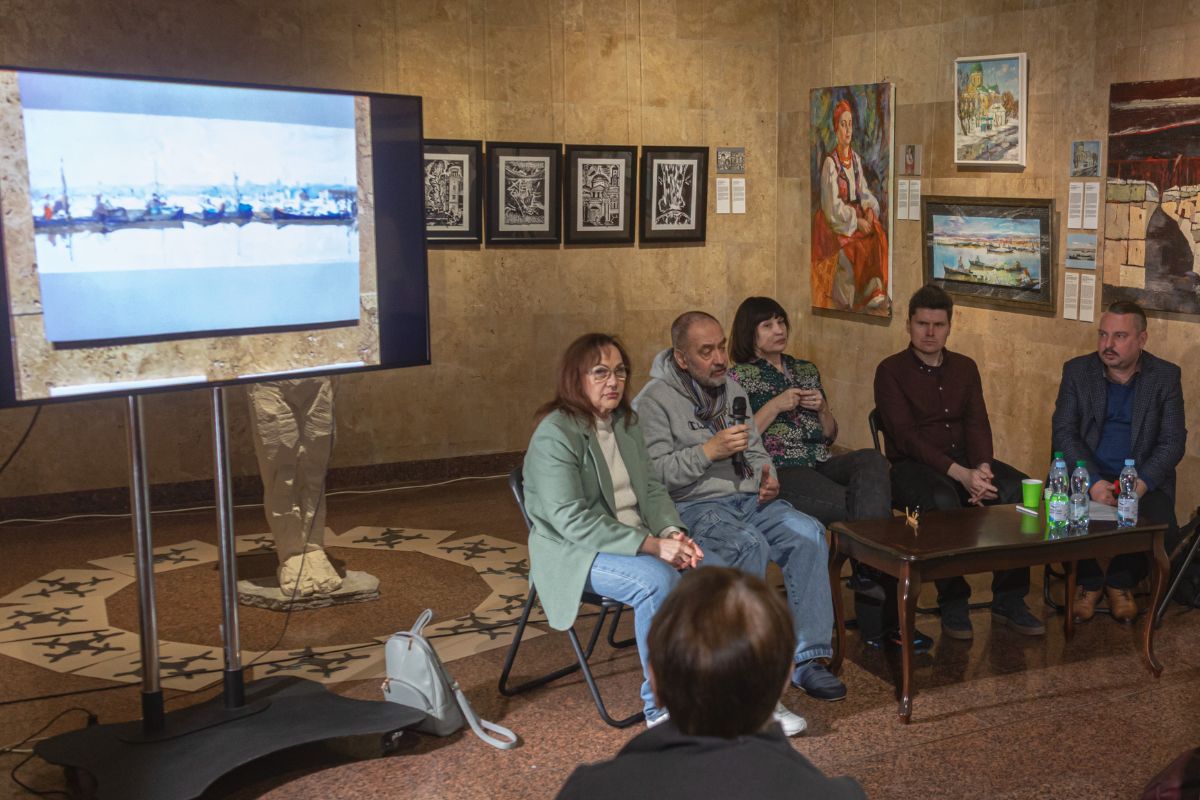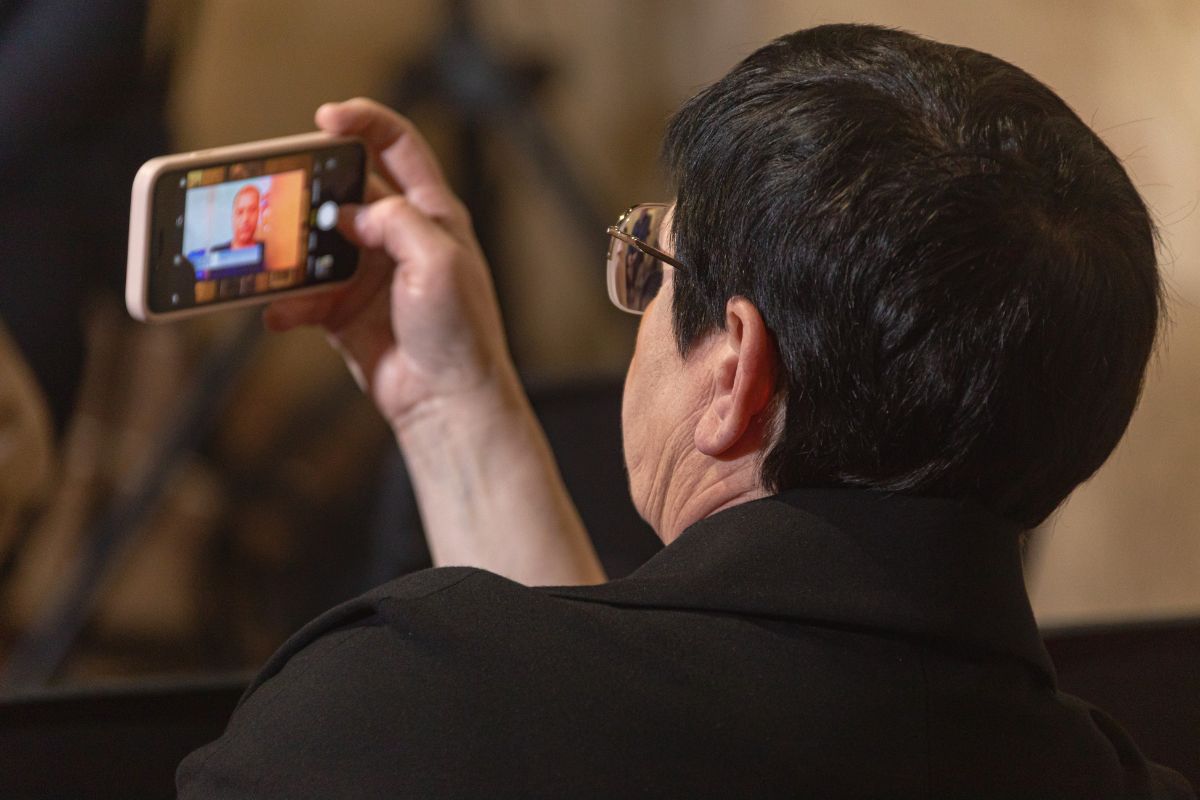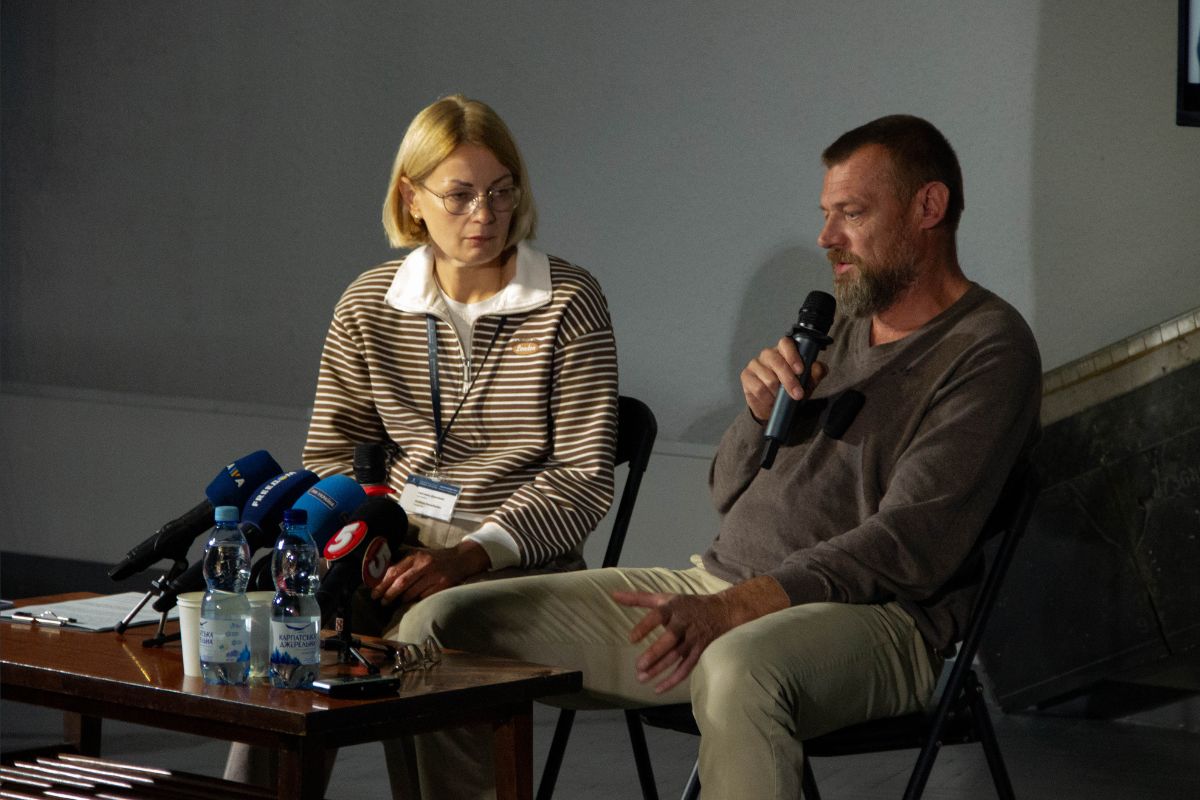


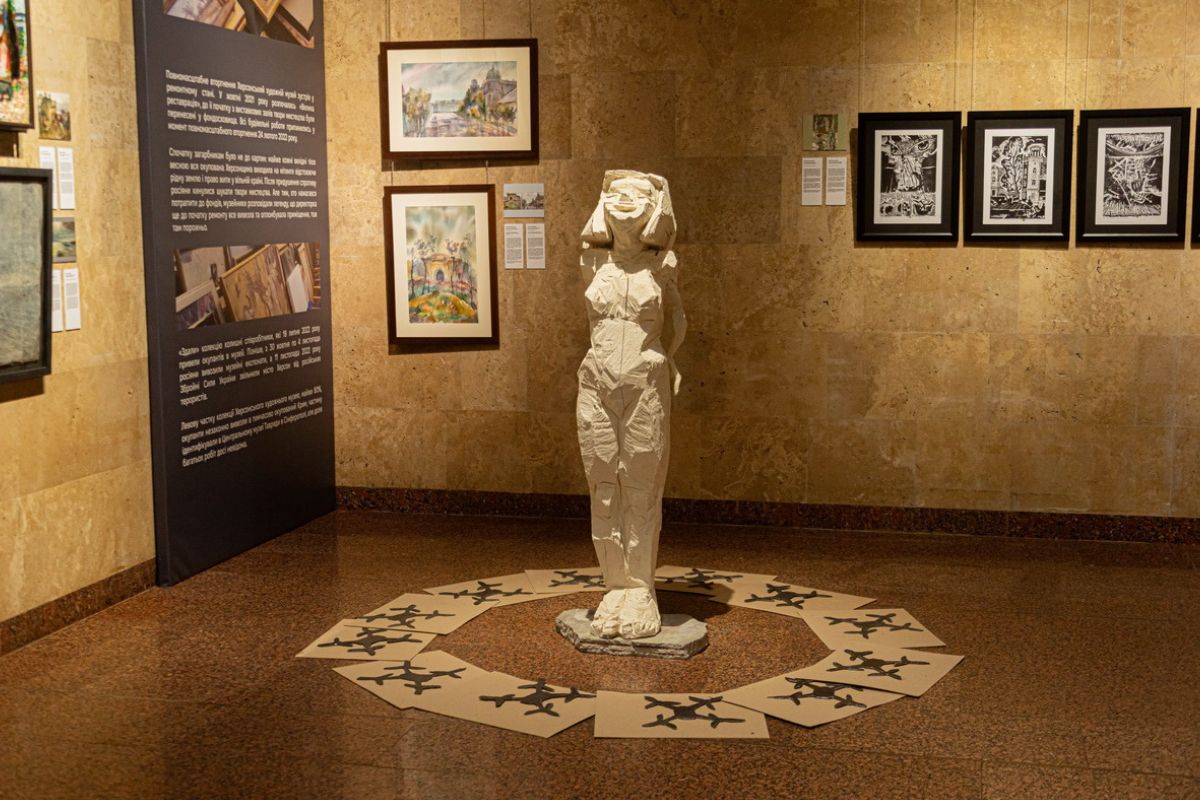
On March 29, 2026, the public discussion “Art of the Ukrainian South: Preventing Erasure” was held at the War Museum within the exhibition space “KHERSON: UN/STOLEN. Studies and Homages.”
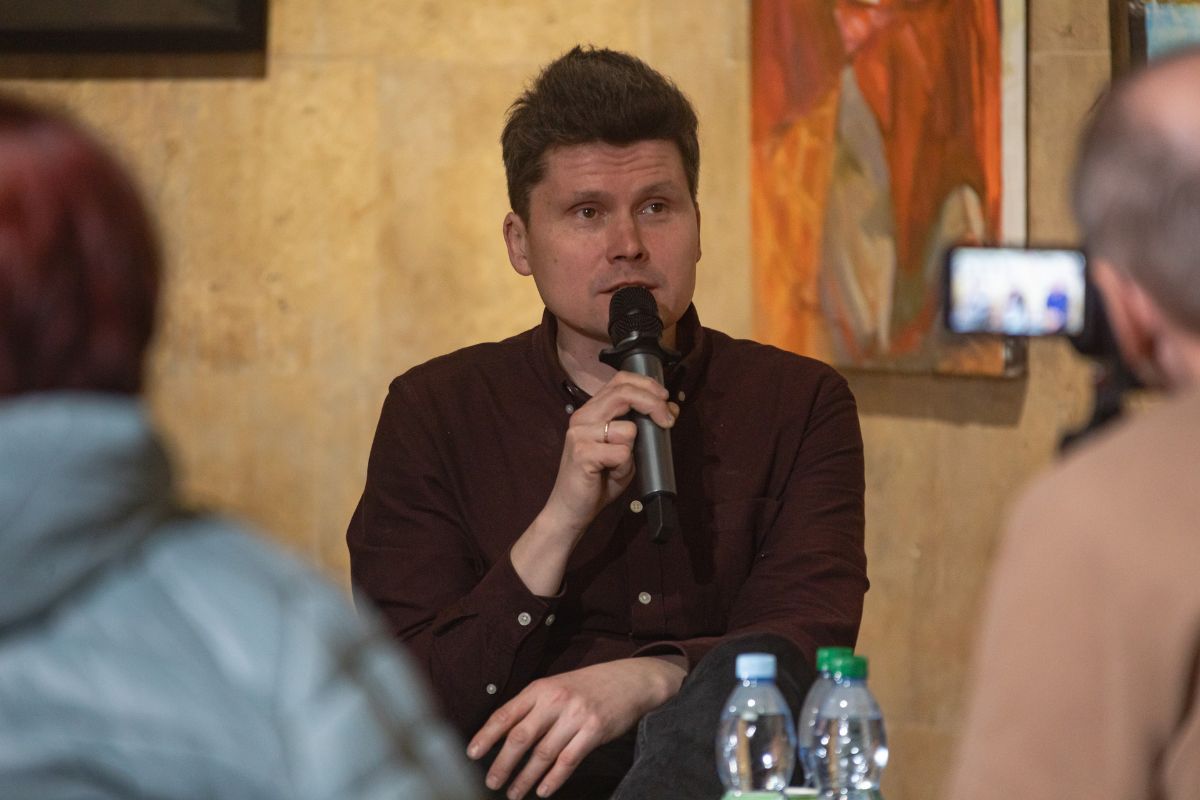
The participants included co-creators of the exhibition project. The conversation featured artist Matvii Vaisberh, journalist Olena Balaba (project co-curator), Alina Dotsenko, Director of the Oleksii Shovkunenko Kherson Regional Art Museum, and Anton Lohov, War Museum artist and author of the study of Volodymyr Chupryna’s 1992 painting “Monastery”. The discussion was moderated by Roman Kabachiy, a scholar at the War Museum.
The moderator outlined the scale of losses inflicted by russian aggression on museum institutions in Kherson, Mariupol, and Berdiansk since the beginning of the full-scale invasion. Specifically, approximately 11,000 paintings, icons, and decorative art objects were looted from the Oleksii Shovkunenko Kherson Regional Art Museum and transported to Crimea. Participants also viewed two reports from russian occupation television in Crimea, in which this theft was justified as a “rescue” mission.
Olena Balaba emphasized that russians use art as a weapon and have always done so. She cited the 2019 Hermitage exhibition in Europe as an example, where works by Illia Ripyn (Repin), such as “Ukrainian Girl by a Wicker Fence” and “Reply of the Zaporozhian Cossacks”, were presented as “russian.”
Matvii Vaisberh, despite never having visited Kherson or its art museum, joined in professional solidarity to support the people of Kherson. According to the artist, he proposed creating replicas (homages and studies) of the stolen paintings to renowned contemporary artists, including Mykola Solohub, Hanna Kryvolap, Oleksii Apollonov, Oleksa Mann, Polina Kuznetsova, and Vladyslav Shereshevskyi. The Director of the Kherson Art Museum expressed her admiration for the project’s concept and her readiness to provide participants with digitized copies of the canvases, a process which began back in 2012. Alina Dotsenko also recounted the circumstances of the primary collection’s theft, its value, geographical origins, and the unique characteristics of certain works.
The participants discussed the distinct features of fine arts in Southern Ukraine. Anton Lohov shared his perspective on the specific use of color and chiaroscuro: “I love the South of Ukraine for its sun and the clear air that rises like a haze over the sea. This warm palette and thirst for life are reflected in the works of artists born in this region.”
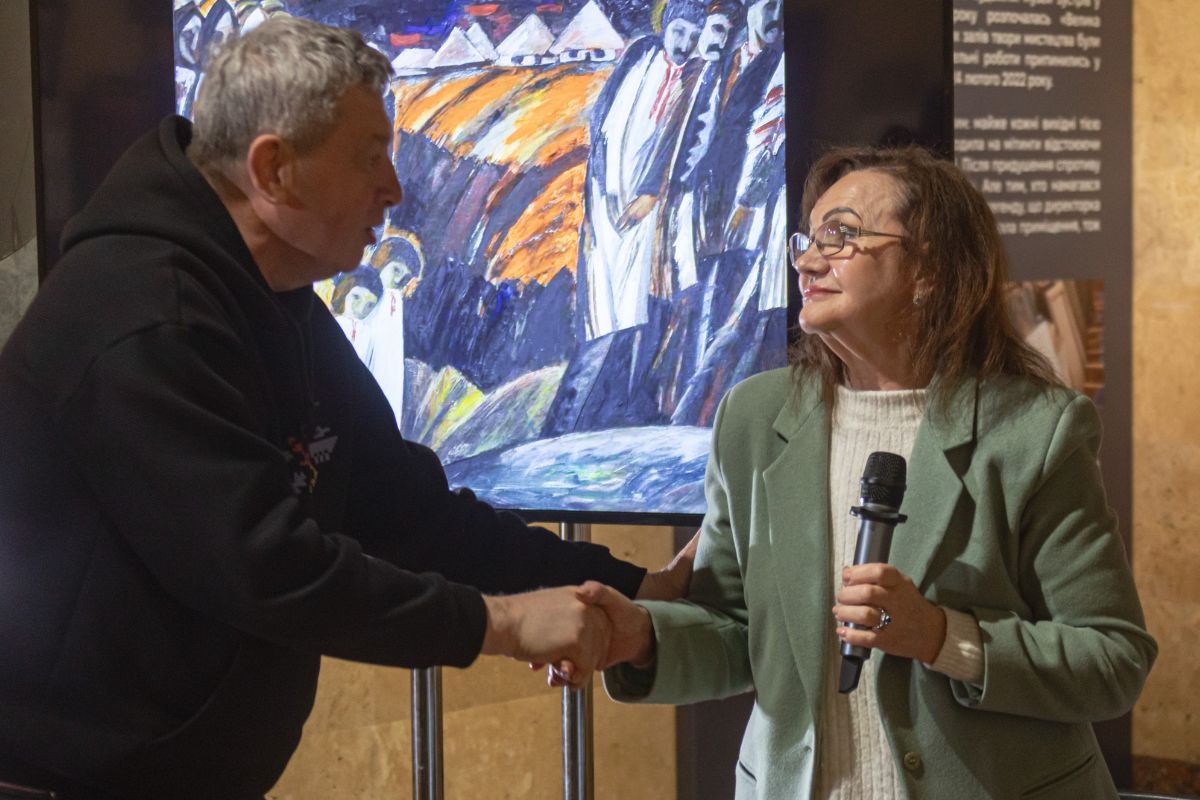
Yurii Savchuk, Director General of the War Museum, also joined the discussion. He expressed his gratitude for the project and spoke of its popularity among visitors: “We have provided not only a roof, but we have opened our hearts to you!”
We invite you to visit the exhibition and participate in future events within the framework of this project!