


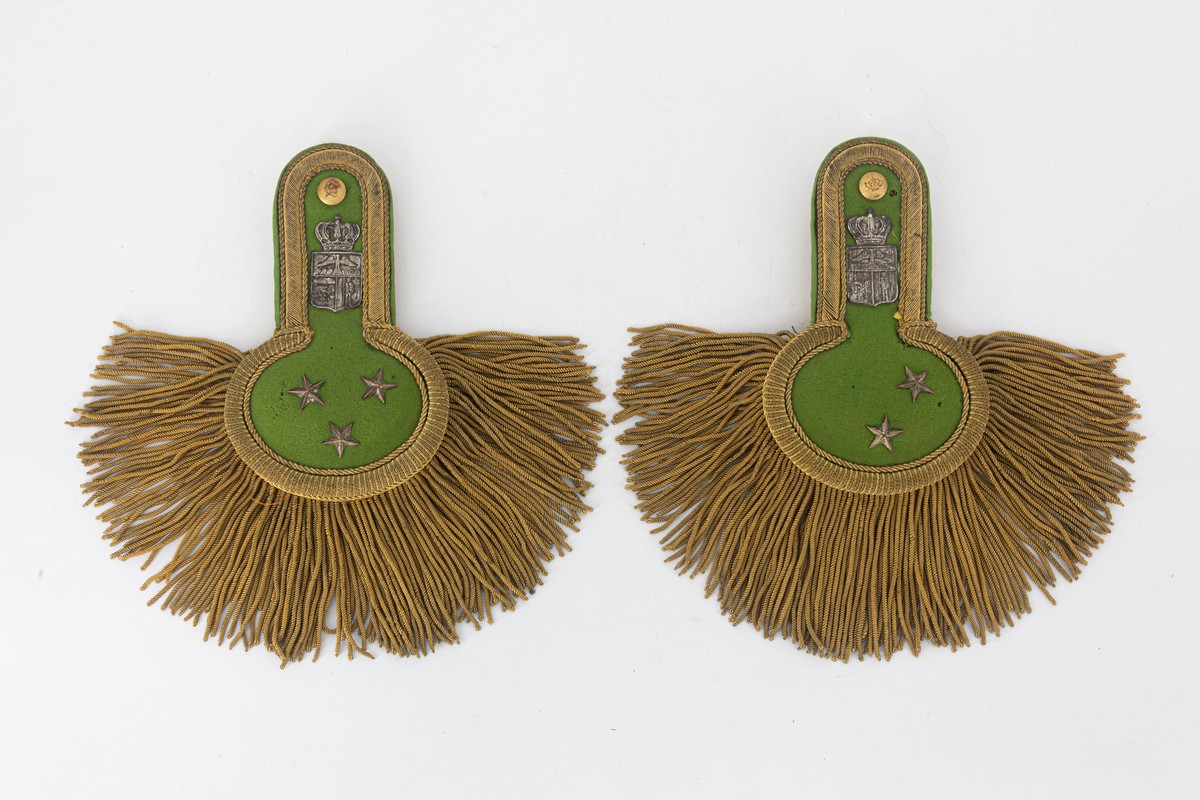
The Border Guard Corps (Corpul Grănicerilor) was established by order of King Ferdinand I of Romania on 26 February 1915. Throughout its existence, the Corps underwent a number of organizational reforms, during which Border Guard regiments and later brigades were successively formed. During the German–Soviet War, Border Guard units were reorganized into divisions and assigned to the field army, taking part in the campaigns for Odesa, the Crimean Peninsula, and Stalingrad. Following the coup d’état of 23 August 1944 and the Kingdom of Romania’s alignment with the Allied powers, Border Guard units participated in combat operations against the Wehrmacht. After the end of the war, the Border Guard Corps remained largely unchanged until the abolition of the Romanian monarchy in 1947 and the establishment of a pro-Soviet regime.
The uniform of the Border Corps servicemen underwent changes multiple times, yet shoulder straps and epaulettes with green facing cloth in a gold border remained among its permanent elements. Epaulettes with green facing cloth were an element of the full dress uniform for senior officers until the early 1930s.
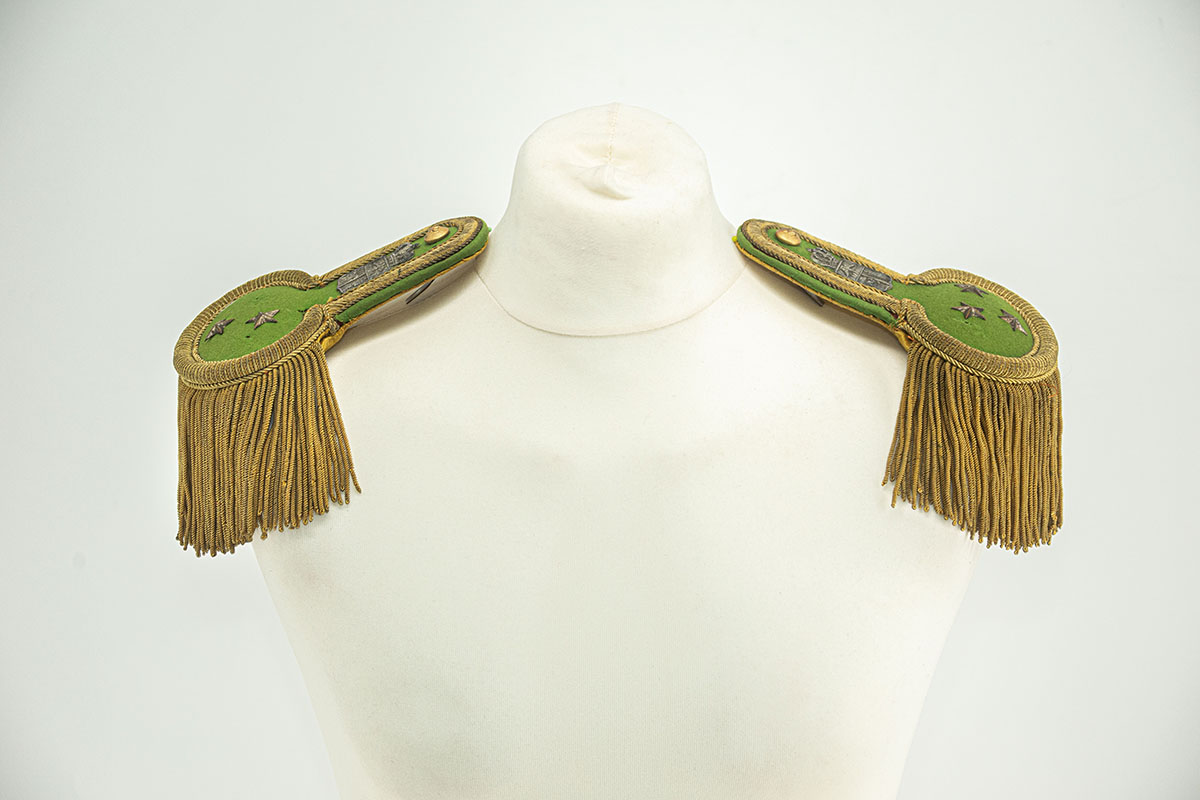
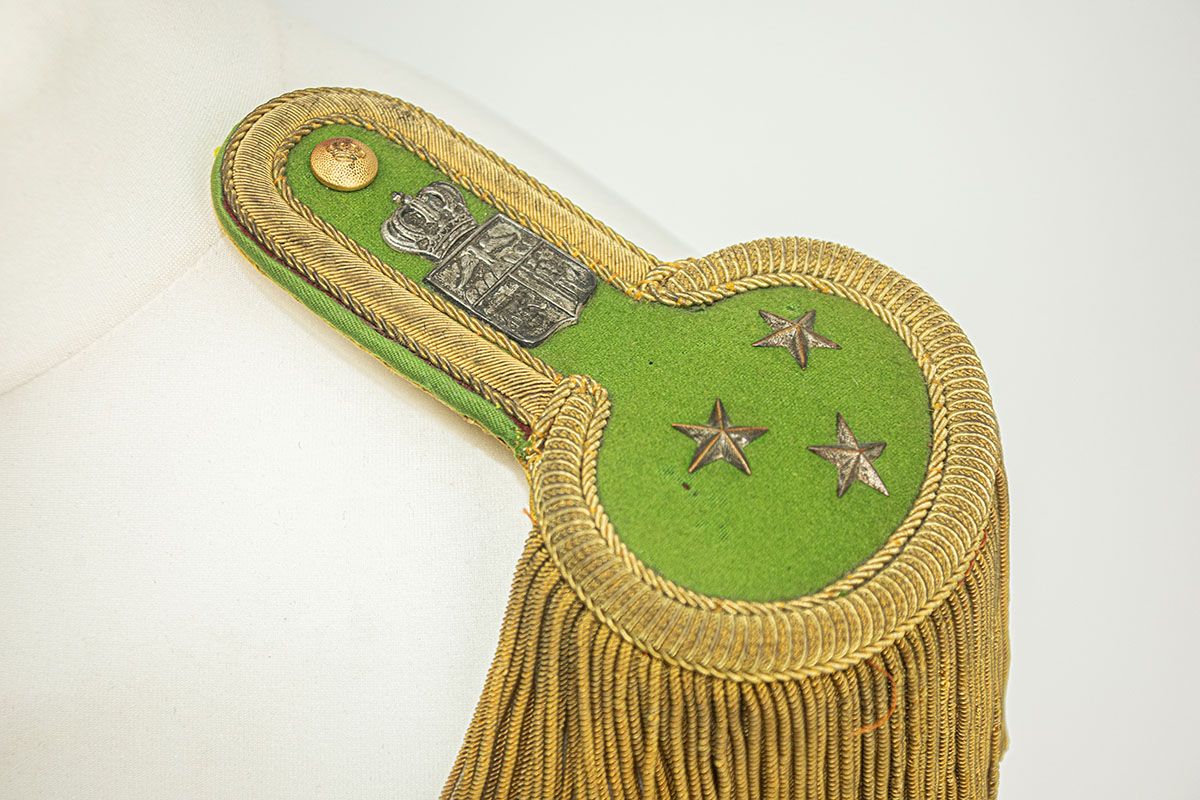
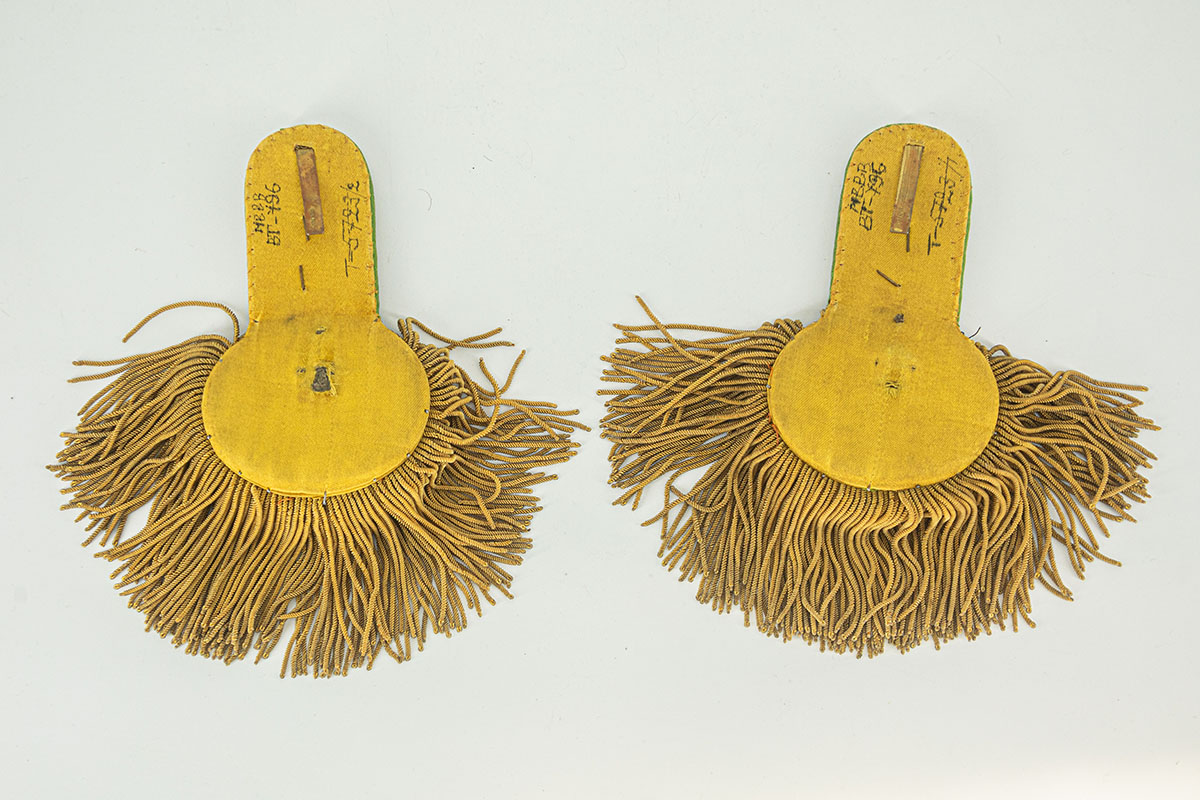
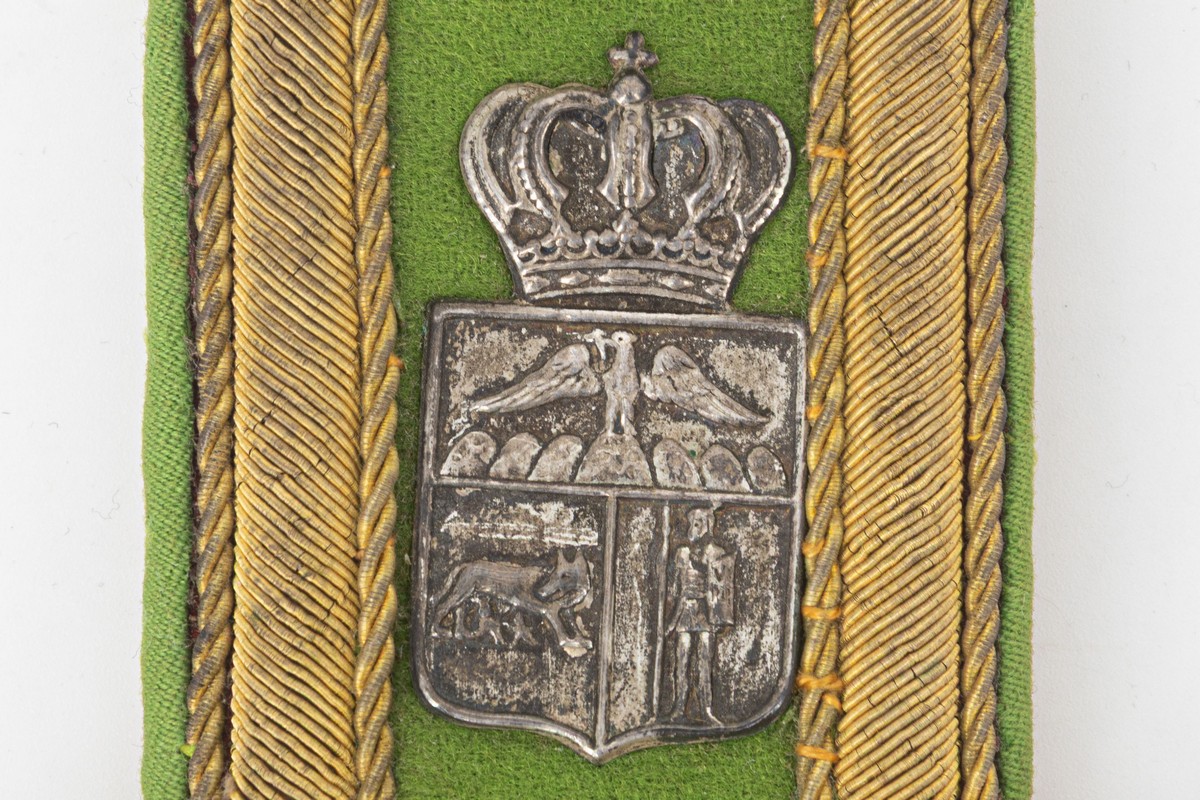
The necks of the epaulettes are bordered with gold passementerie with fringe. The fringe is thick, made of metallized textile cord – purl (bullion). The roots feature buttons and a coat of arms. The buttons are domed with a crown. The coat of arms is heraldic-shaped and divided into three parts. The upper part features an eagle with outspread wings standing on seven mountains, its head turned to the right, holding a cross in its beak. The lower part is divided vertically in half. The left part depicts the Capitoline Wolf, and the right part shows a Roman warrior in armor with a spear. The coat of arms is surmounted by a crown. The lining is made of yellow silk fabric. The reverse side shows the attachment of the coat of arms and a narrow metal plate for fastening to the shoulder of the uniform, engraved with the Latin letters 'PARIS'.