


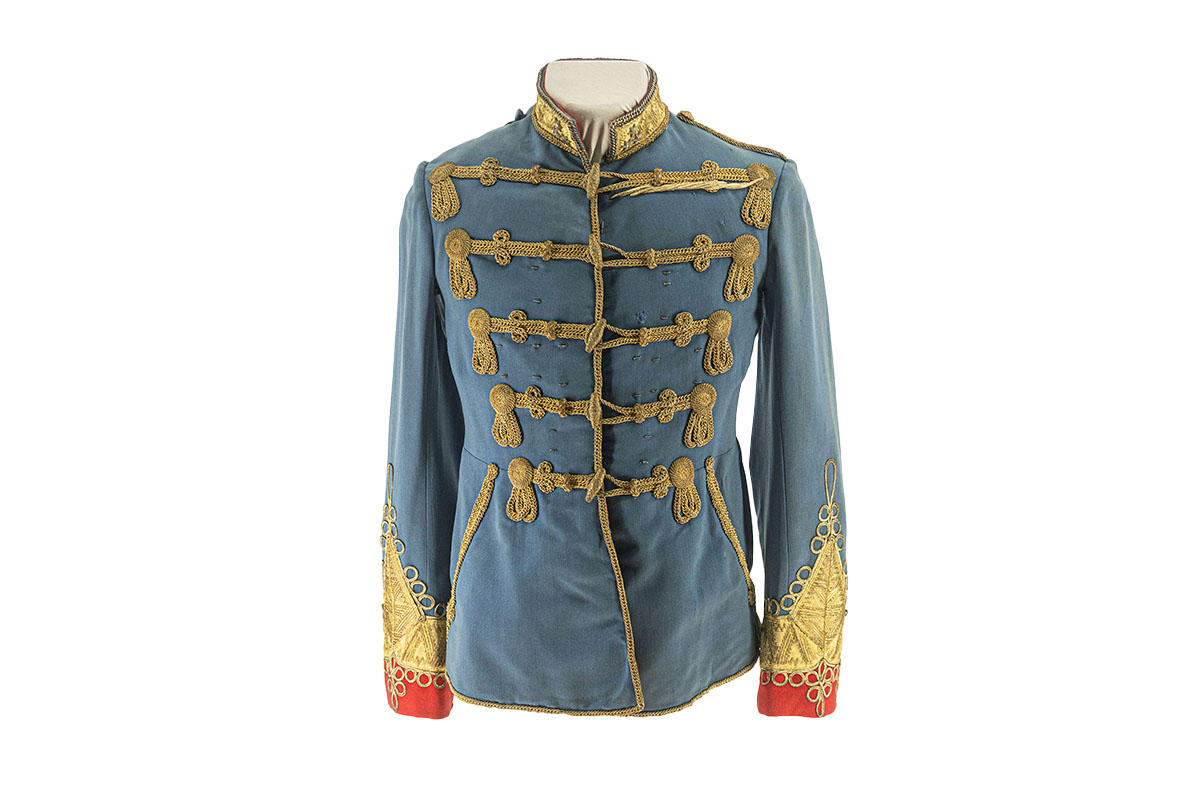
On February 23, 1945, the “Exhibition of Samples of Trophy Armament and Equipment in the City of Kyiv” was opened, which laid the foundation for the museum collection of the Museum of War. Among its exhibits was a short tunic of a cavalry general of the “Attila” type.
It received its name in honor of the legendary leader of the Huns, Attila, as a symbolic ancestor of the Hungarians. The tunics of this type were created in the Austrian army in 1849 on the basis of traditional Hungarian national clothing with the aim of modernizing and cheapening the complex hussar uniform: it replaced at once the short dolman jacket and the heavy fur mentik. Thanks to its successful elongated cut, convenient flat “olive” fastenings, and five rows of characteristic transverse cords (Brandenburgs), which formed a trefoil clover at their outer ends, with small round rosettes sewn in front of them, this tunic quickly gained popularity. Throughout the second half of the 19th and the beginning of the 20th century, the “Attila” served as the official parade-dress and everyday uniform of hussars. The color of the tunic indicated the regiment of the serviceman, while its collar and Hungarian knots on the cuffs indicated the rank.
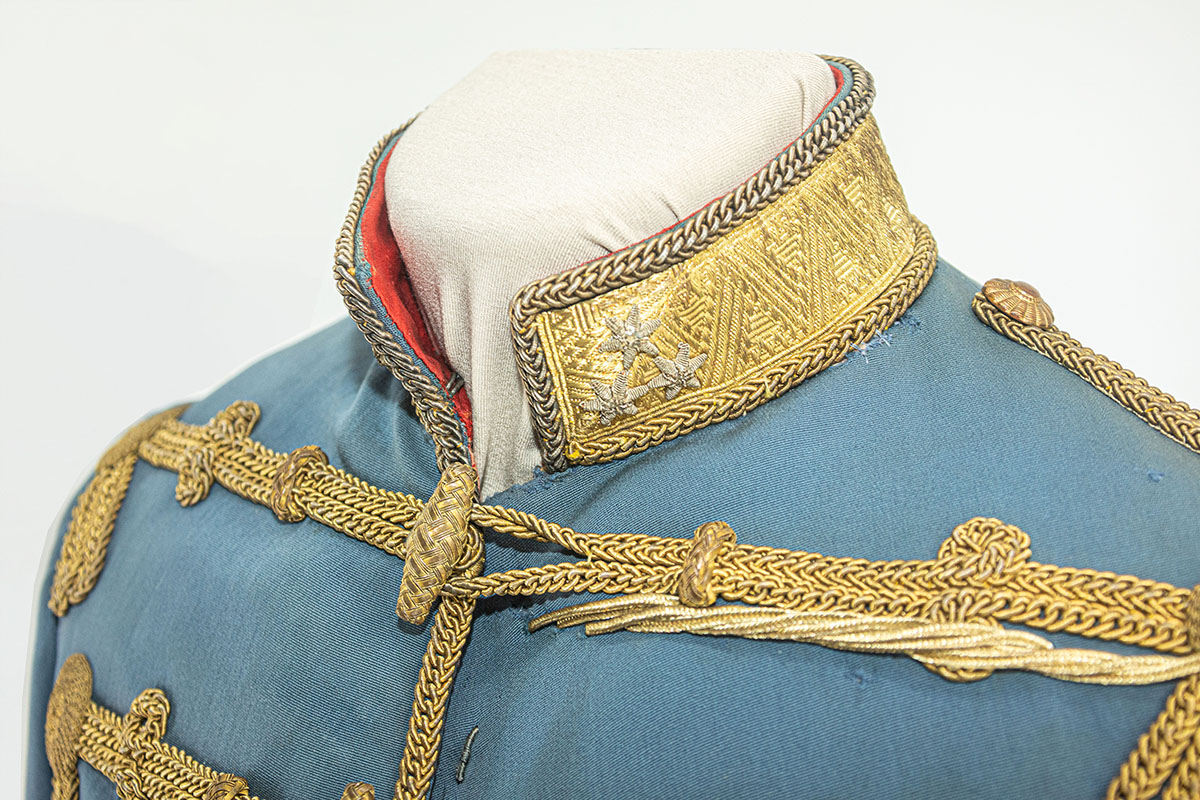
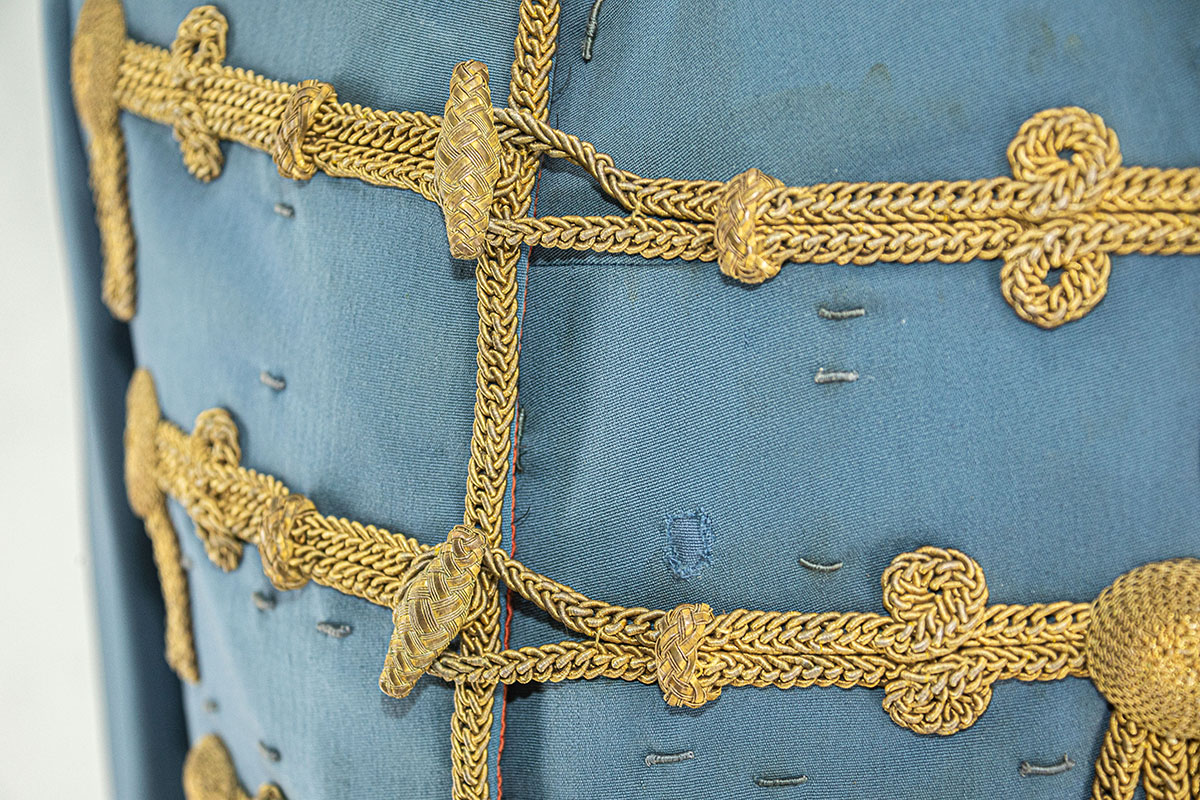
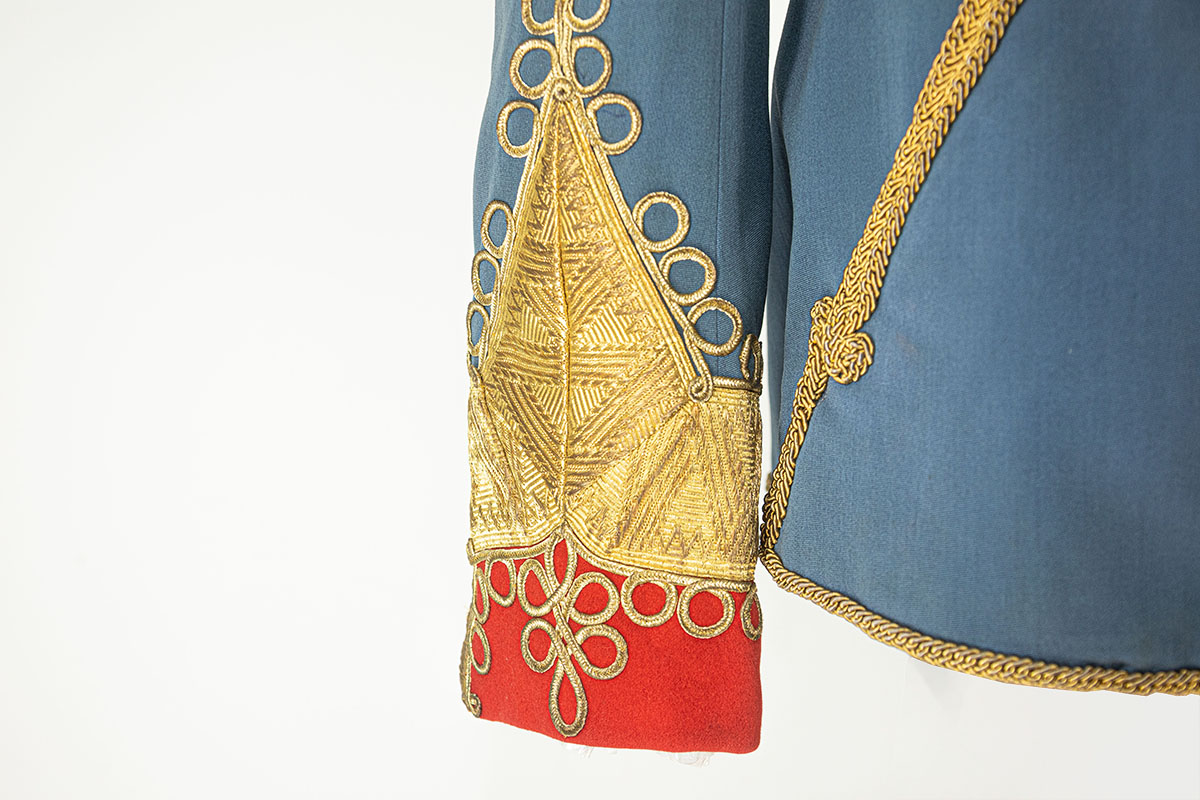
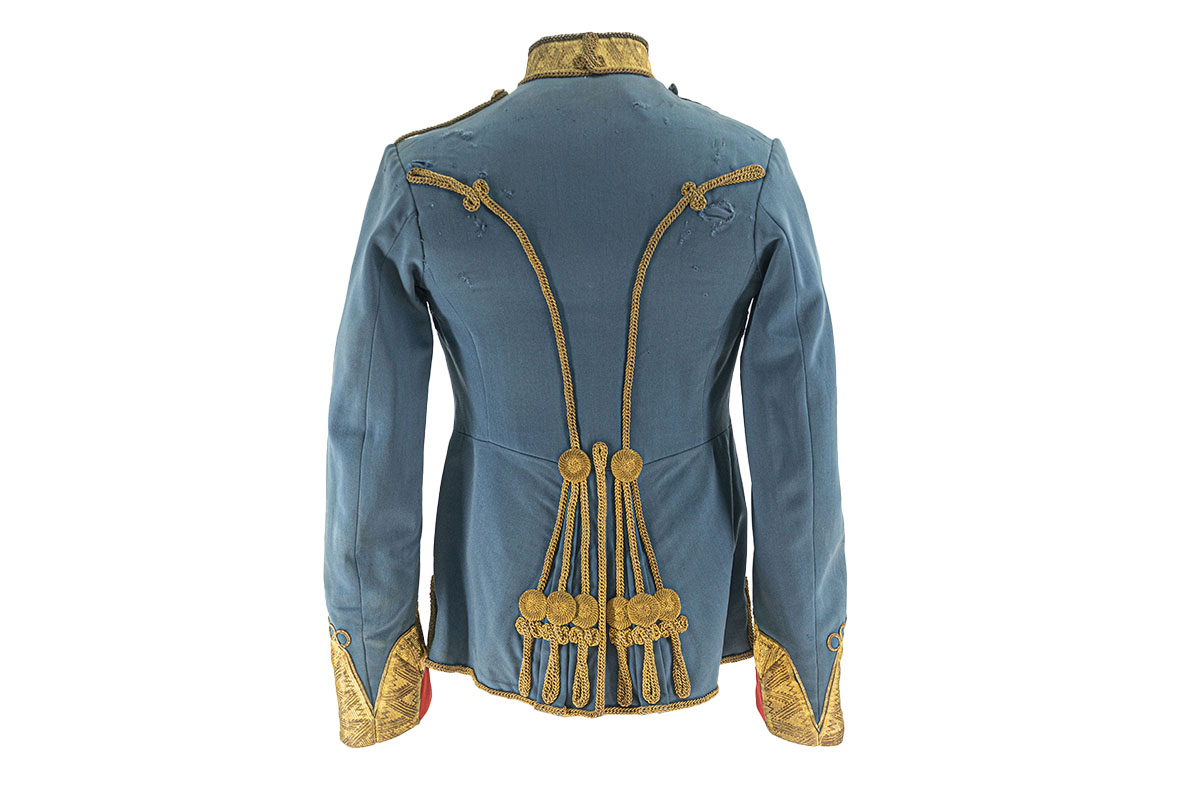
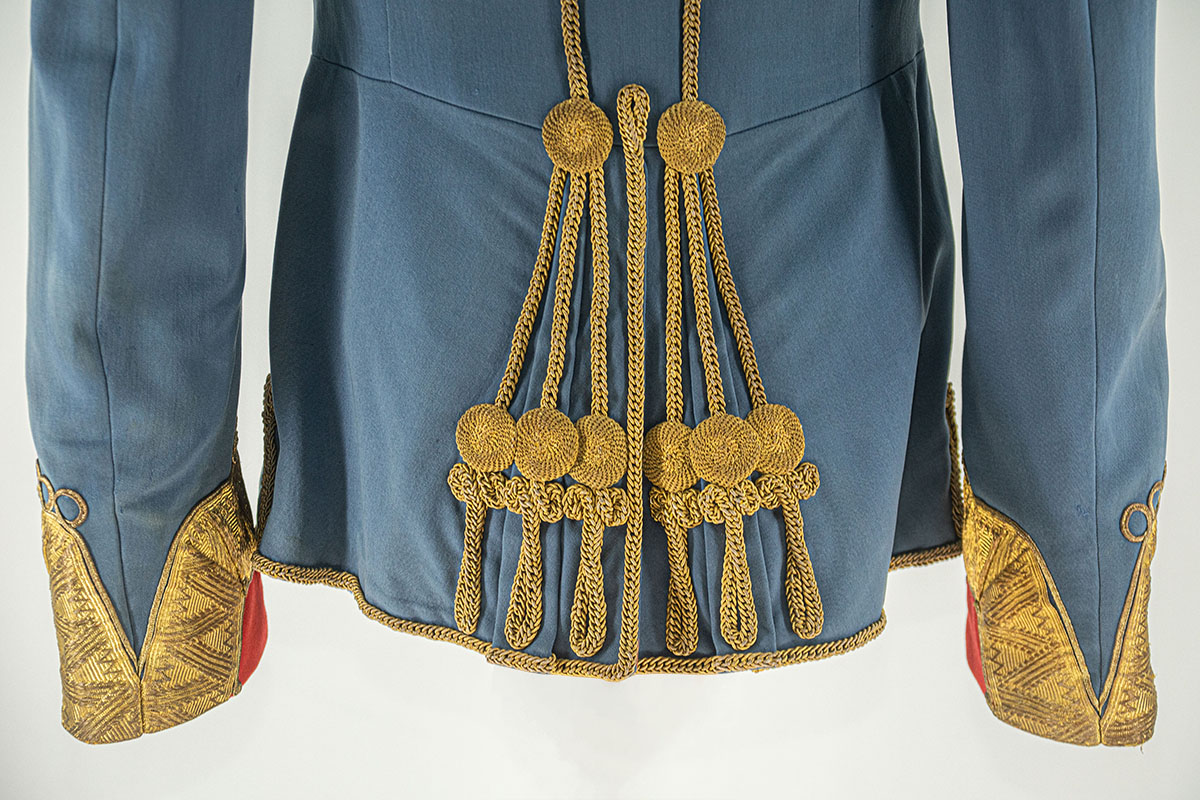
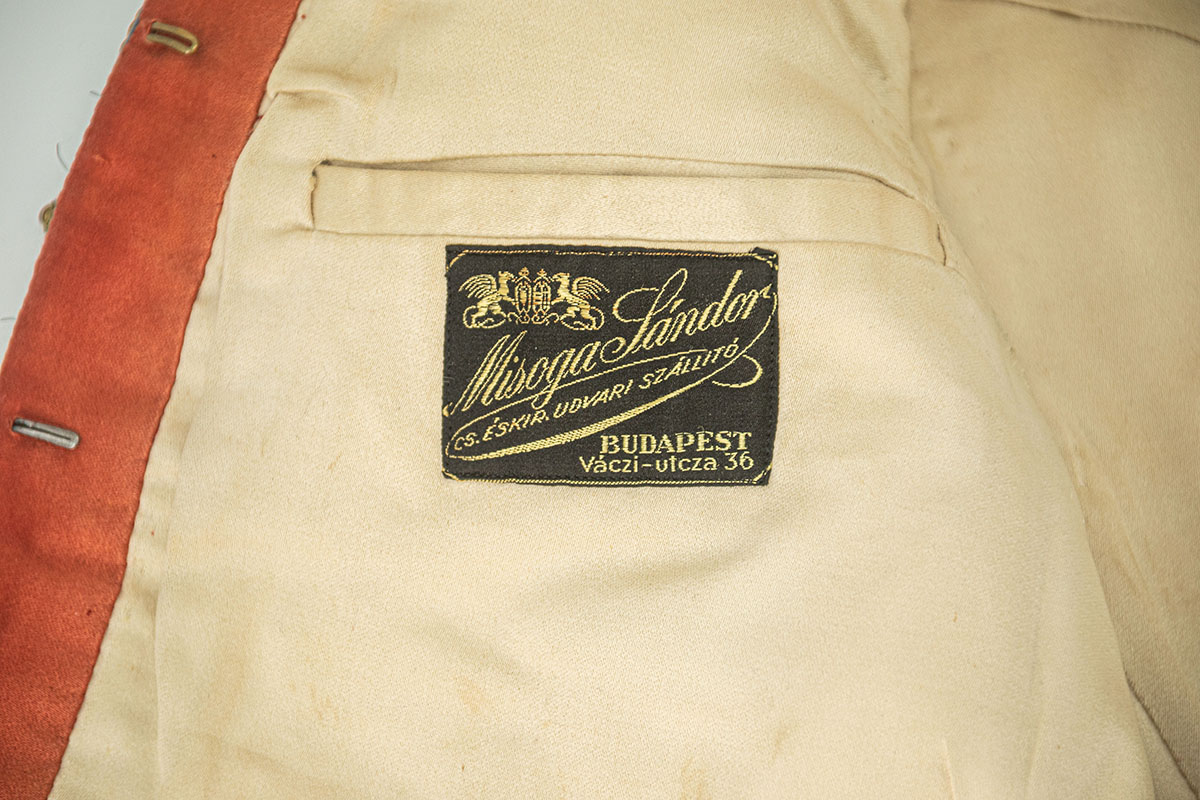
The tunic is made of wool of a blue, so-called “pike-gray” color (Hechtgrau). The front part is decorated with symmetrically placed cord fastenings and loops of the Hungarian type of golden cord. On the left side of the chest (under the upper cord) there are special thread loops intended for attaching military awards. The collar is standing, densely trimmed with a golden wide braid with six hexagonal stars, which is characteristic of the rank of general. The cuffs are decorated with an ornament of golden general’s braid that completely covers the lower part of the cuff over bright-red cloth, which also indicates the rank of general. On the left shoulder there is a loop. The lining is of cotton fabric in red and beige colors. On the right is an inner pocket with the emblem of the manufacturer – Misoga Sándor, a well-known Hungarian tailor of the Austro-Hungarian era who specialized in the manufacturing of tunics and held the status of “supplier to the imperial and royal court” (cs. és kir. udvari szállító). The workshop was located in Budapest at the address Váczi-utcza 36. Above and below the pocket are museum markings in ink.