

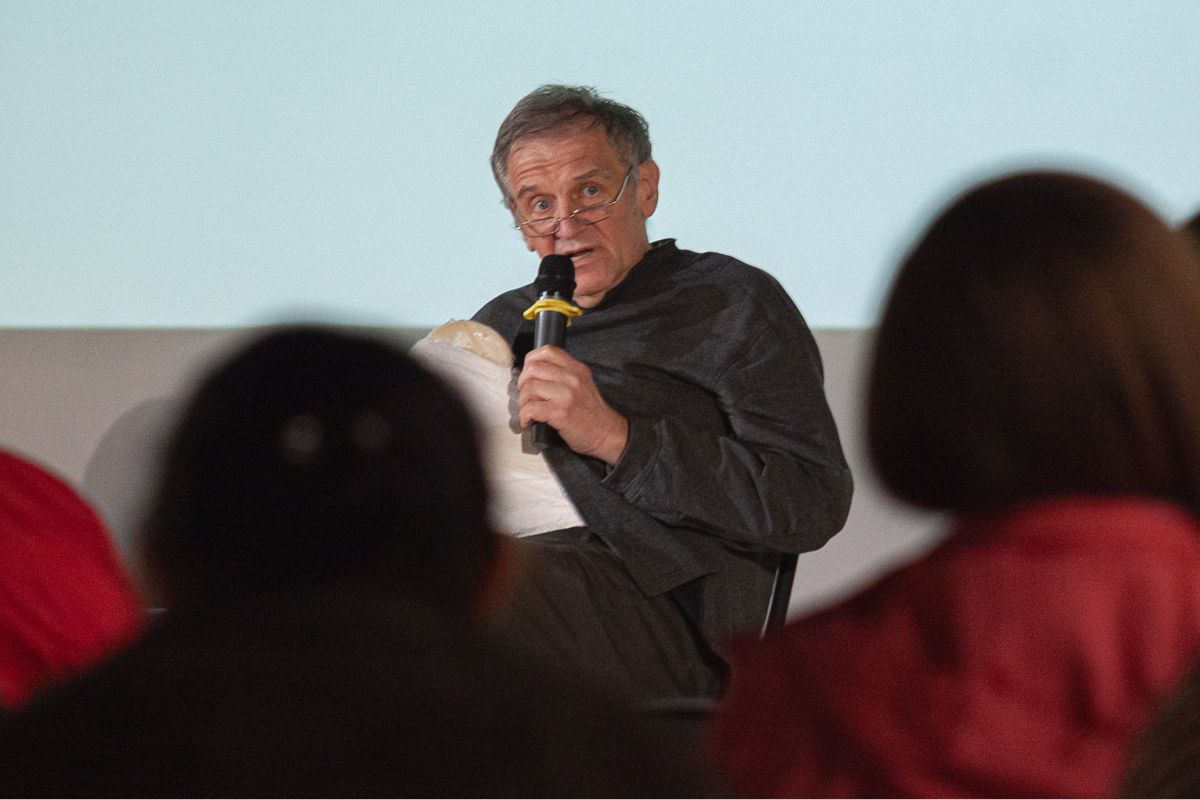
On May 18, International Museum Day, the War Museum hosted a public discussion titled “Ukrainian Identity under the Pressure of russian imperialism: Past and Present.”
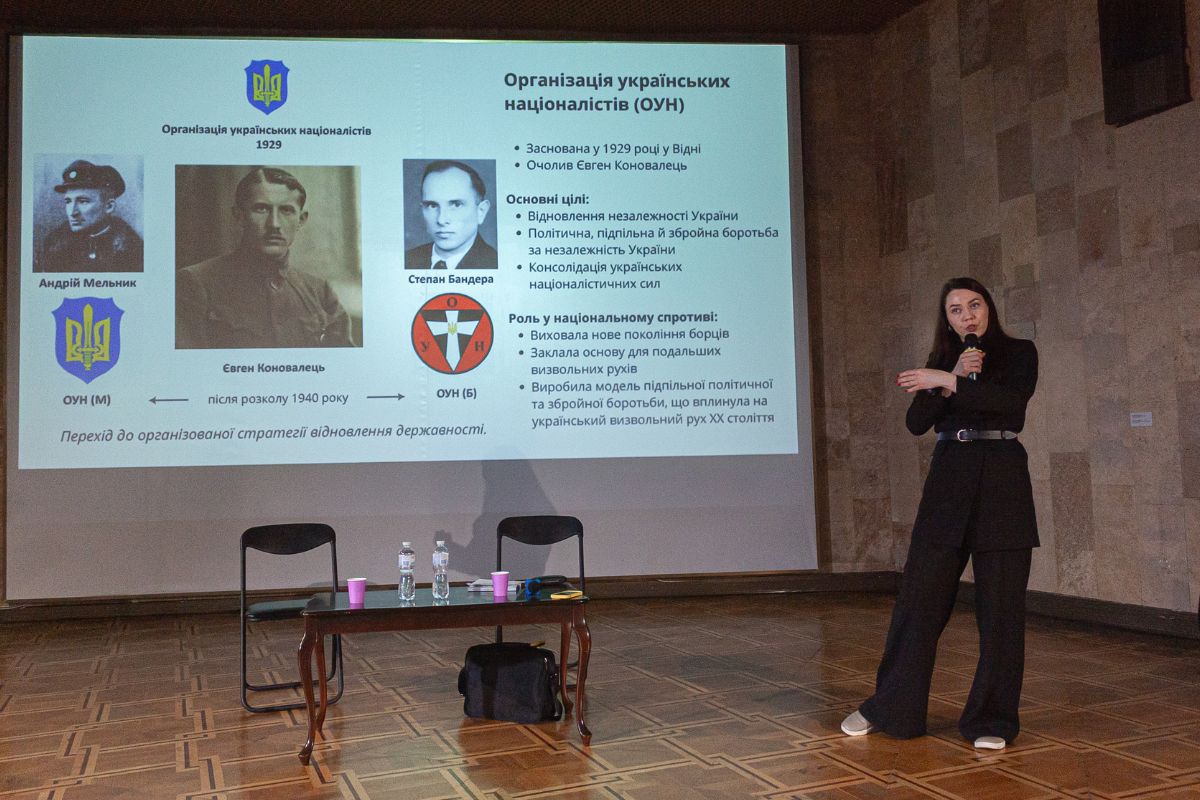
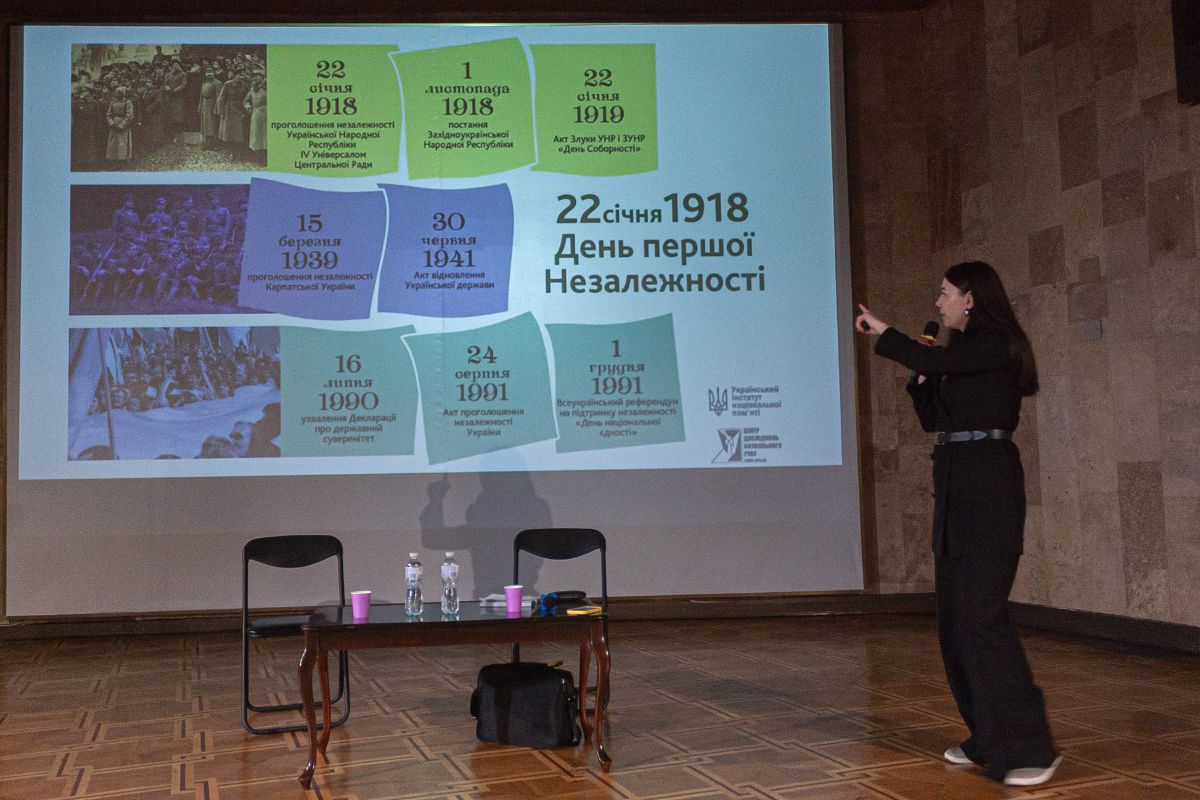
Historian Tetiana Shvydchenko, Associate Professor in the Department of General Education Disciplines at Sigmund Freud University, offered an overview of the 20th century, examining the formation of Ukrainian identity amid the struggle for our statehood at different historical stages. She outlined the main targets of russian attacks: Ukrainian statehood, language, historical memory, and national state-building traditions, as well as political, military, cultural, and academic elites, the church, education, the press, and civil society organizations. The speaker described World War I and the collapse of empires as the first major test of Ukrainian identity. It was then that questions of culture, language, and memory grew into questions of statehood and political self-determination. In 1917–1921, the Ukrainian movement took the form of a state-building project for the first time through the Ukrainian People’s Republic and the West Ukrainian People’s Republic. The figures of this period influenced the formation of a new generation of fighters who laid the groundwork for the liberation movement during World War II, which pursued a strategy of restoring statehood. After the war, Ukrainian activists in exile focused their efforts on preserving Ukrainian identity and advancing the idea of independence, while within the soviet union, the armed and political underground struggle of the Ukrainian Insurgent Army continued, even in the Gulag camps.
Considerable attention was also devoted to the soviet period. The communist regime sought not only to control political life, but also to destroy the environment in which Ukrainian identity was reproduced: family ties, networks of trust, and cultural memory. In the 1960s and 1970s, according to the researcher, the formation of a “controlled Ukrainianness” became especially visible, one that was culturally restricted and increasingly russified.
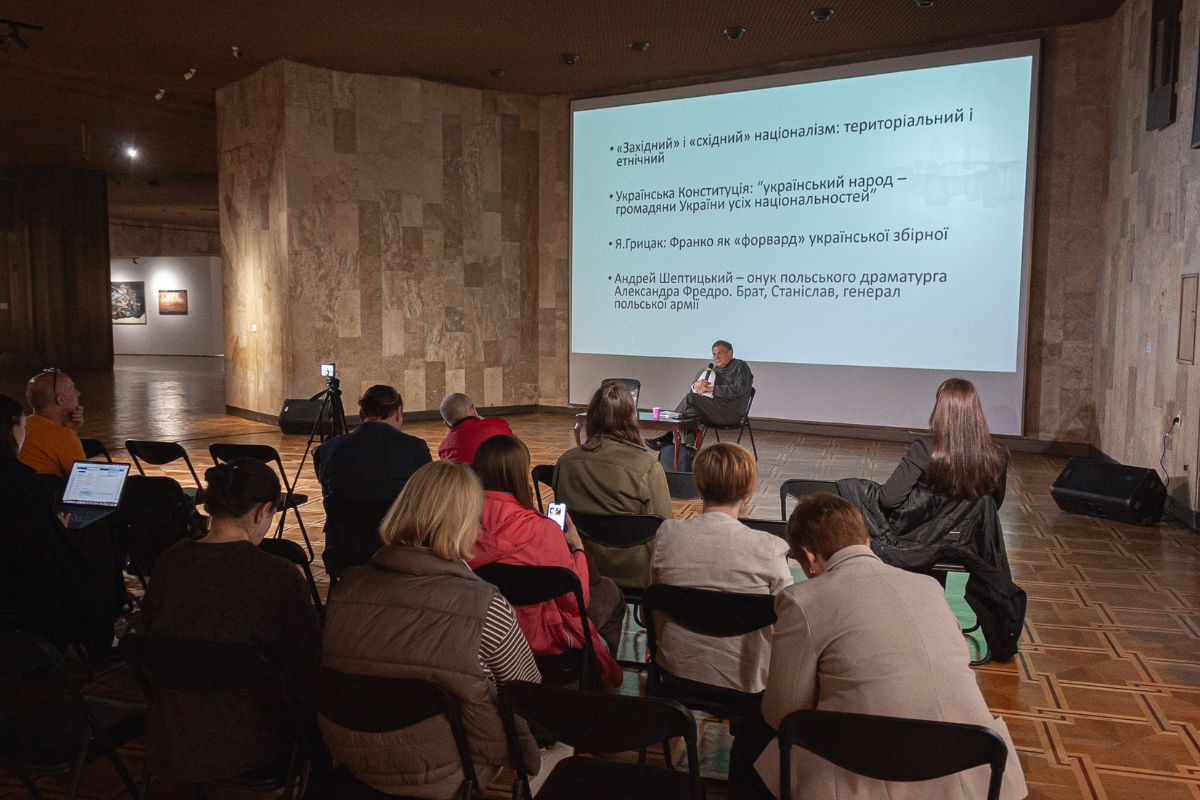
Oleksiy Haran, Professor of Political Science at the National University of Kyiv-Mohyla Academy, spoke about the formation of the Ukrainian political nation after the declaration of independence. He noted that in 1991, Ukrainian society was not homogeneous: most citizens had grown up within the soviet system and could not imagine life outside the ussr. At the same time, independence became possible thanks to a broad social alliance of national democrats, reformist communists, and regional communities, including workers’ movements in eastern and southern Ukraine.
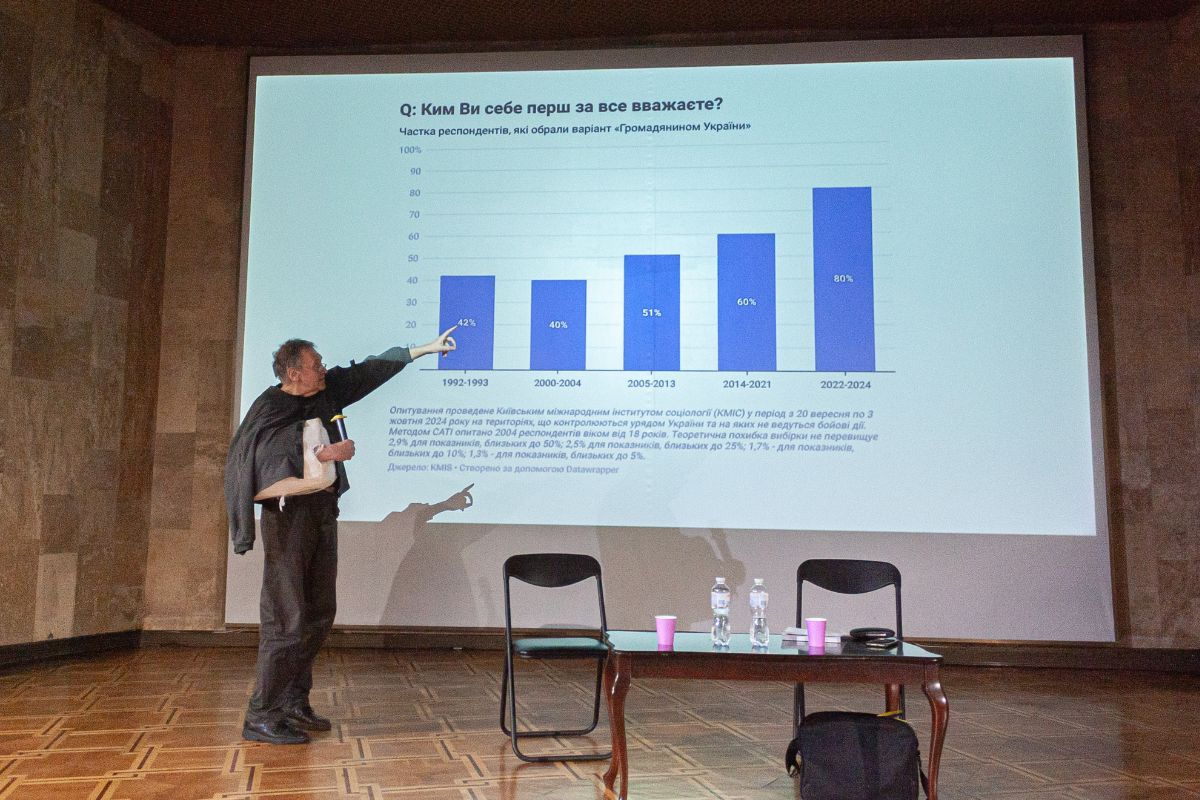
Drawing on sociological research, the speaker showed how Ukrainian identity has changed over the past decades. Particularly significant shifts occurred after 2004, following the Revolution of Dignity and the beginning of russian aggression in 2014, when national identity increasingly prevailed over regional identities.
The event concluded with a discussion on methods of Ukrainization today. Participants highlighted the importance of the language law, which has strengthened the presence of the Ukrainian language in the public sphere. Watch the full recording of the event at the link